Why private equity sees life and annuities as an enticing form of permanent capital

Link: https://www.mckinsey.com/industries/private-equity-and-principal-investors/our-insights/why-private-equity-sees-life-and-annuities-as-an-enticing-form-of-permanent-capital

Graphic:

Excerpt:

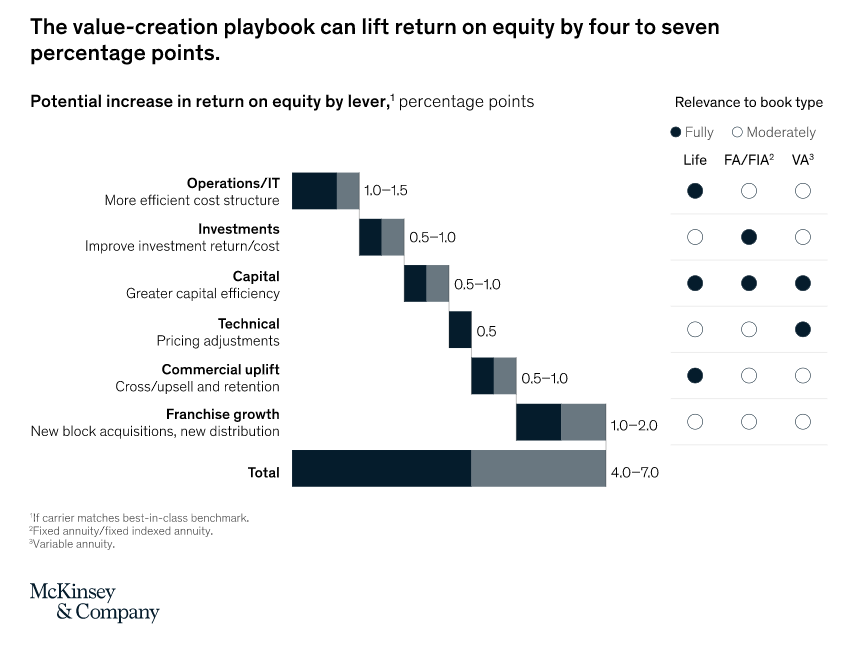
Permanent capital—investment funds that do not have to be returned to investors on a timetable, or at all—is, according to some, the “holy grail” of private investing.1 Permanent capital owes its exalted status to the time and effort that managers can save on fundraising, and the flexibility it provides to invest at times, like a crisis, when other forms of capital can become scarce.

….

The trend is not new: private investing in insurance dates back more than 50 years to Berkshire Hathaway’s acquisition of National Indemnity in 1967. As that example shows, many forms of insurance beyond life and annuities can serve as permanent capital, including specialty and property and casualty (P&C). In this article, however, we’ll focus on the reasons why many PE firms have concluded that life insurance and annuities represent a once-in-a-generation opportunity. We’ll also look at the requirements for PE firms on the sidelines that want to enter the market, discuss some overlooked ways that PE owners can create value, and highlight some implications for life insurers as they consider either selling a portion of their book of business or emulating and competing with this potent new industry force.

Author(s): Ramnath Balasubramanian, Alex D’Amico, Rajiv Dattani, and Diego Mattone

Publication Date: 2 Feb 2022

Publication Site: McKinsey
SFA Update – One New Billion Dollar Filer

Link: https://burypensions.wordpress.com/2022/02/04/sfa-update-one-new-billion-dollar-filer/

Graphic:

Excerpt:

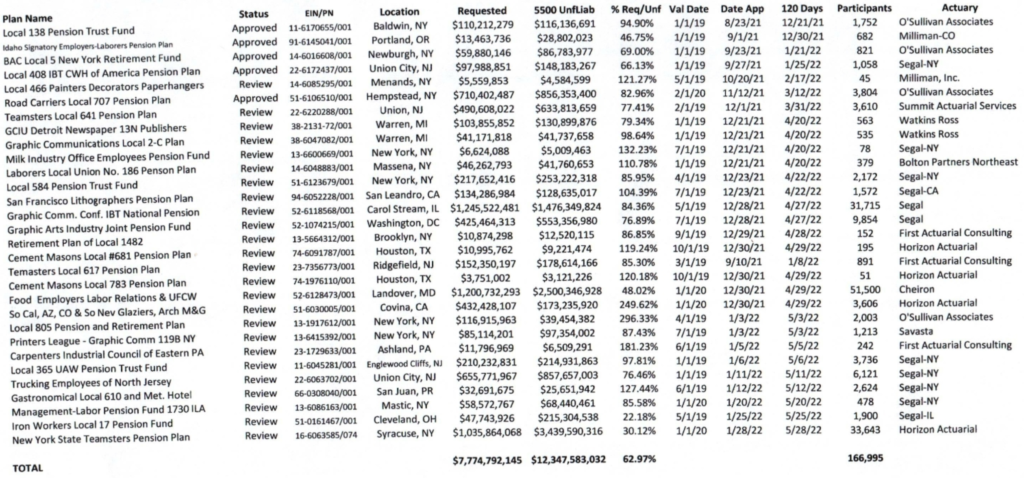
The PBGC Special Financial Assistance program for troubled multiemployer plans weekend update showed one new plan applying – New York State Teamsters Conference Pension Plan out of Syracuse, NY which, when compared to the other applicants, is the second largest by participant count, asking for the third largest dollar amount amount ($1,035,864,068) and the second smallest as a percentage of unfunded liabilities (30.12%).

Author(s): John Bury

Publication Date: 4 Feb 2022

Publication Site: burypensions

A Potential COVID Game-Changer

Link:https://www.dailyposter.com/a-potential-covid-game-changer/

Excerpt:

Progressive lawmakers are calling on President Joe Biden to take advantage of the fact that the U.S. Army’s new pan-coronavirus vaccine recipe is not restricted by intellectual property restrictions and share the information with the world.

According to the Army, early research shows that the Spike Ferritin Nanoparticle (SpFn) vaccine, developed by scientists at the Walter Reed Army Institute of Research, can “provide broad protection” against COVID-19 and future variants. The SpFn vaccine must still undergo Phase 2 and 3 of human trials, but if it proves successful, distributing the new vaccine around the globe could be a game-changer in the fight against the COVID pandemic.

Author(s): WALKER BRAGMAN, ANDREW PEREZ

Publication Date: 1 Feb 2022

Publication Site: Daily Poster

Pritzker budget proposal to include extra $500 million in pension payments

Link:https://chicago.suntimes.com/2022/2/2/22914390/pritzker-budget-proposal-illinois-2023-general-assembly-spending-debt-pensions

Graphic:

Excerpt:

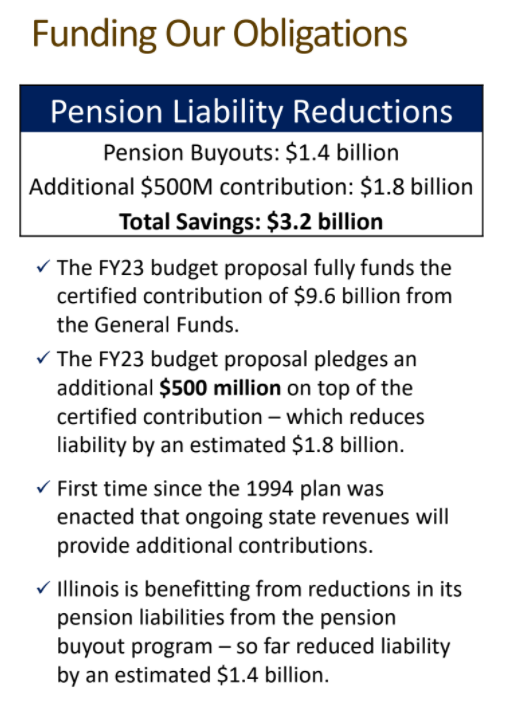
Citing an improved economic outlook in the COVID-19 pandemic, Gov. J.B. Pritzker’s latest budget proposal will devote an extra $500 million to Illinois’ nearly insolvent pension funds, pump $200 million into a “rainy day” fund and tamp down the state’s unpaid bill backlog — all while providing $1 billion in tax cuts, freezes and rebates, administration officials said Wednesday.

Pritzker was scheduled to outline the ambitious $45.4 billion election-year spending plan during his “State of the State” speech at noon in Springfield, in a downsized event held at the Old State Capitol Building due to a massive winter storm sweeping the state.

In a media preview ahead of the speech, the governor’s top advisers claimed the new spending plan keeps the state on track to end in the black for back-to-back years for the first time in 25 years.

Author(s): Mitchell Armentrout

Publication Date: 2 Feb 2022

Publication Site: Chicago Sun-Times

Public sector pensions are prime beneficiary of federal COVID relief grants

Link:https://ctmirror.org/2021/07/07/ct-public-sector-pensions-are-prime-beneficiary-of-federal-covid-relief-grants/

Excerpt:

Yet an analysis by the CT Mirror shows that more than six out of every 10 federal relief dollars built into the new state budget that began July 1 effectively will wind up in public-sector pension accounts.

And while Gov. Ned Lamont and others insist the new state budget — and the billions Congress sent to Connecticut via the American Rescue Plan Act — will be used to heal the state’s wounds, others question whether the administration’s priorities are askew. Pension debt deserves to be addressed after being ignored for decades, they say, but that shouldn’t come at the expense of the state’s response to a once-in-a-century health and economic crisis.

….

Analysts project the newly adopted $46.4 billion, two-year state budget will close in July 2023 with $2.3 billion left over — an amount that exceeds the $1.8 billion in federal coronavirus relief built into the budget. Because the state’s rainy day fund already is filled to the legal maximum, those dollars must go into either the pension fund for state employees or the retirement system for teachers.

And that’s in addition to the nearly $6 billion in required pension deposits Connecticut already plans to make as part of the two-year budget. That’s a supplemental payment of more than 35%.

Author(s): Keith Phaneuf

Publication Date: 7 July 2021

Publication Site: CT Mirror

Mapped: Visualizing U.S. Oil Production by State

Link:https://www.visualcapitalist.com/mapped-u-s-oil-production-by-state/

Graphic:

Excerpt:

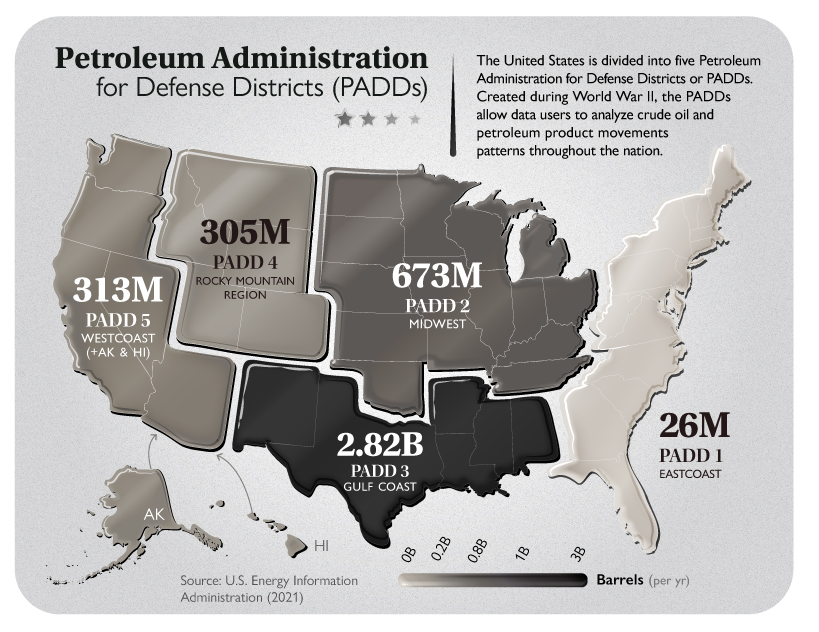
A total of 32 of the 50 U.S. states produce oil. They are divided among five regional divisions for oil production in the U.S., known as the Petroleum Administration for Defense Districts (PADD).

These five regional divisions of the allocation of fuels were established in the U.S. during the Second World War and are still used today for data collection purposes.

Given that Texas is the largest U.S. oil-producing state, PADD 3 (Gulf Coast) is also the largest oil-producing PADD. PADD 3 also includes the federal offshore region in the Gulf of Mexico. There are around 400 operational oil and gas rigs in the country.

Author(s): Anshool Deshmukh

Publication Date: 10 Aug 2021

Publication Site: Visual Capitalist

ILLINOIS FORWARD 2023: ONLY PENSION, BUDGET REFORM CAN SAVE TAXPAYERS WHEN FEDERAL AID ENDS

Link:https://www.illinoispolicy.org/reports/illinois-forward-2023-only-pension-budget-reform-can-save-taxpayers-when-federal-aid-ends/

Graphic:

Excerpt:

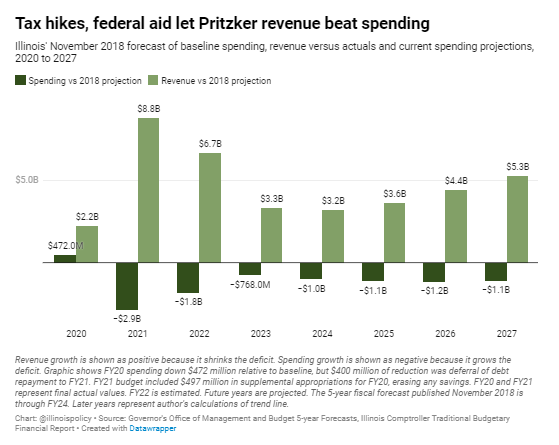
Spending in the state budget actually has increased – significantly – under Gov. J.B. Pritzker relative to baseline expectations in the state budget. Even if lawmakers and the governor make no further increases to spending in the fiscal year 2023 budget, which is unlikely given that Pritzker has proposed spending increases in each February budget address of his term, then total spending during Pritzker’s first term will be up nearly $5 billion, or 3% higher than when he took office.

Author(s): Adam Schuster

Publication Date: accessed 2 Feb 2022

Publication Site: Illinois Policy Institute

Getting Started with Julia for Actuaries

Link:https://www.soa.org/digital-publishing-platform/emerging-topics/getting-started-with-julia/

Graphic:

Excerpt:

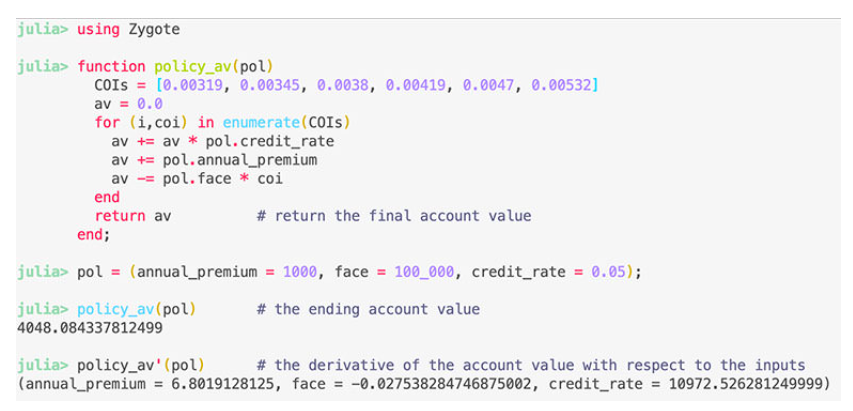
Sensitivity testing is very common in actuarial workflows: essentially, it’s understanding the change in one variable in relation to another. In other words, the derivative!

Julia has unique capabilities where almost across the entire language and ecosystem, you can take the derivative of entire functions or scripts. For example, the following is real Julia code to automatically calculate the sensitivity of the ending account value with respect to the inputs:

When executing the code above, Julia isn’t just adding a small amount and calculating the finite difference. Differentiation is applied to entire programs through extensive use of basic derivatives and the chain rule. Automatic differentiation, has uses in optimization, machine learning, sensitivity testing, and risk analysis. You can read more about Julia’s autodiff ecosystem here.

Author(s): Alec Loudenback, FSA, MAAA; Dimitar Vanguelov

Publication Date: October 2021

Publication Site: SOA Digital, Emerging Topics

Annual Report to the Nation on the Status of Cancer, Part 1: National Cancer Statistics

Link:https://academic.oup.com/jnci/article/113/12/1648/6312532?login=false

Citation: JNCI: Journal of the National Cancer Institute, Volume 113, Issue 12, December 2021, Pages 1648–1669, https://doi.org/10.1093/jnci/djab131

Graphic:

Excerpt:

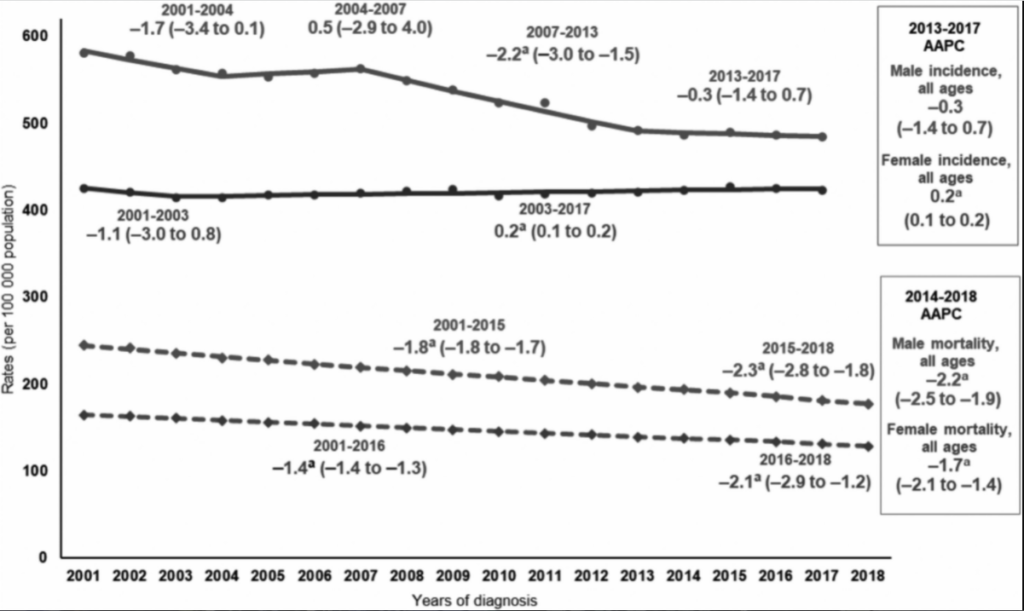
Overall cancer incidence rates (per 100 000 population) for all ages during 2013-2017 were 487.4 among males and 422.4 among females. During this period, incidence rates remained stable among males but slightly increased in females (AAPC = 0.2%, 95% confidence interval [CI] = 0.1% to 0.2%). Overall cancer death rates (per 100 000 population) during 2014-2018 were 185.5 among males and 133.5 among females. During this period, overall death rates decreased in both males (AAPC = −2.2%, 95% CI = −2.5% to −1.9%) and females (AAPC = −1.7%, 95% CI = −2.1% to −1.4%); death rates decreased for 11 of the 19 most common cancers among males and for 14 of the 20 most common cancers among females, but increased for 5 cancers in each sex. During 2014-2018, the declines in death rates accelerated for lung cancer and melanoma, slowed down for colorectal and female breast cancers, and leveled off for prostate cancer. Among children younger than age 15 years and adolescents and young adults aged 15-39 years, cancer death rates continued to decrease in contrast to the increasing incidence rates. Two-year relative survival for distant-stage skin melanoma was stable for those diagnosed during 2001-2009 but increased by 3.1% (95% CI = 2.8% to 3.5%) per year for those diagnosed during 2009-2014, with comparable trends among males and females.

Conclusions

Cancer death rates in the United States continue to decline overall and for many cancer types, with the decline accelerated for lung cancer and melanoma. For several other major cancers, however, death rates continue to increase or previous declines in rates have slowed or ceased. Moreover, overall incidence rates continue to increase among females, children, and adolescents and young adults. These findings inform efforts related to prevention, early detection, and treatment and for broad and equitable implementation of effective interventions, especially among under resourced populations.

Author(s): Farhad Islami, MD, PhD, Elizabeth M Ward, PhD, Hyuna Sung, PhD, Kathleen A Cronin, PhD, Florence K L Tangka, PhD, Recinda L Sherman, PhD, Jingxuan Zhao, MPH, Robert N Anderson, PhD, S Jane Henley, MSPH, K Robin Yabroff, PhD, Ahmedin Jemal, DVM, PhD, Vicki B Benard, PhD

Publication Date: 8 July 2021

Publication Site: Journal of the National Cancer Institute

Electronic Health Records in the Age of Coronavirus: The Covid Crisis Has Accelerated Real-World Adoption

Link:https://www.soa.org/sections/technology/technology-newsletter/2021/october/att-2021-10-timmins/

Graphic:

Excerpt:

As with most things in the world, early 2020 seems like ancient history. In late January last year, I had just finished a white paper for the SOA[1], stating confidently that Electronic Health Records, or EHRs, were not likely to have a major impact for several years amid slow adoption by executives—with significant strategic differences among stakeholders and little signs of compromise.

Then in February came COVID-19, and the urgent need to move rapidly to telemedicine for both COVID and non-COVID afflictions. Government authorities moved quickly to relax restrictions on interstate telehealth, allowing payer coverage for the transfer of sensitive material online and over mobile networks—including Facebook Messenger, Apple Facetime, and Zoom.[2] Although not permanent while a public health emergency, this created an unexpected precedent for interoperability, the Holy Grail of seamless cross-talk of health data between HIPAA-regulated IT systems.

….

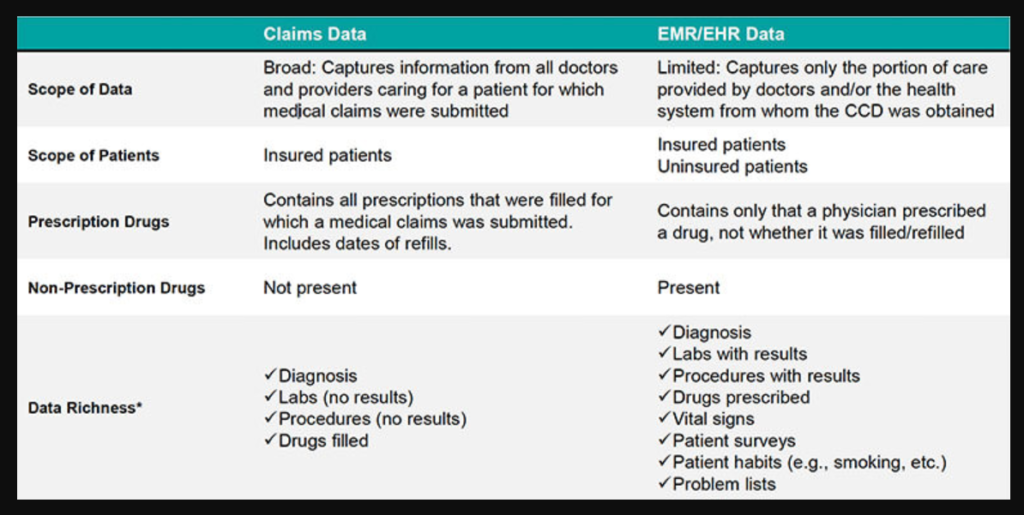
Much remains unknown about the secondary effects of COVID-19, beyond respiratory failure and immune system overload. However, there is likely a significant spike in claims related to COVID-19 building within the insurance industry. It may be important for the insurance industry to monitor these secondary afflictions, at minimum through the claims process (see Figure 3), although the best digital approach to obtain that evolving health information remains unclear at this time. Genomics and epigenetic vulnerability could be a rich data area here.

If insureds would be willing (or mandated) to provide their immunization history to payors, directly or indirectly, this could be a significant asset for actuaries in evaluating this ongoing phenomenon. Claims data also can include non-prescription drug information, which could provide additional clues of COVID exposure.

Author(s): James Timmins

Publication Date: October 2021

Publication Site: Actuarial Technology Today

THE DARTH VADER RULE

Link:https://www.sav.sk/journals/uploads/1030150905-M-O-W.pdf

doi: : 10.2478/v10127-012-0025

Graphic:

Excerpt:

In life insurance mathematics, the concept of a survival function is commonly
used in life expectancy calculations. The survival function of a random variable X
is defined at x as the probability that X is greater than a specific value x. For
a non-negative random variable whose expected value exists, the expected value
equals the integral of the survival function. We propose to designate this result
as the Darth Vader Rule1. It holds for any type of random variable, although its
most general form relies on the integration by parts formula for the Lebesgue-
-Stieltjes integral, fully developed by H e w i t t [3]. This result, while known (and
stated in F e l l e r [1]), is not widely disseminated except in life insurance mathematics texts; but it is worth knowing and popularizing because it provides an
efficient tool for calculation of expected value, and gives insight into a property
common to all types of random variables.
We give a proof of the Darth Vader Rule which works for all random variables which are non-negative almost surely and whose expected value exists.
The proof is based not on the Lebesgue integral formulation of [3], but on the
generalized Riemann integration of H e n s t o c k and K u r z w e i l [2], [4]. Since
every Lebesgue integrable function is also generalized Riemann integrable, the
proof here includes all cases covered by [3].
While the result is simple to state and comprehend, its proof using Lebesgue
integral theory is somewhat complex.

Author(s): Pat Muldowney — Krzysztof Ostaszewski — Wojciech Wojdowski

Publication Date: 2012

Publication Site: Tatra Mountains Mathematical Publications

An Epidemic of Bad Budgeting

Link: https://www.city-journal.org/covid-19-lockdowns-exposed-cities-deep-seated-financial-troubles

Graphic:

Excerpt:

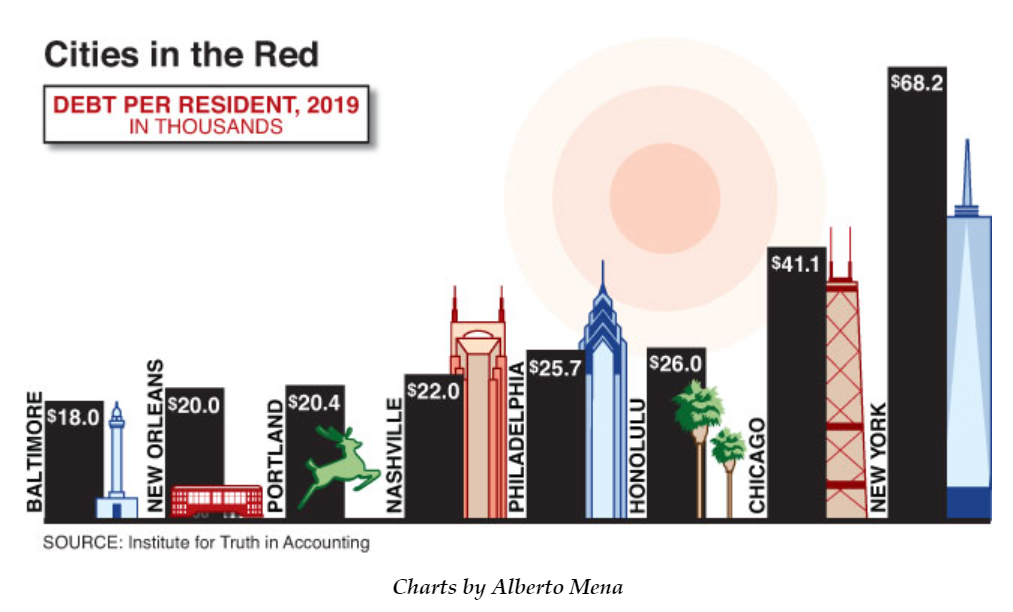
The past year has been a fiscal nightmare for Nashville. Covid-19 helped punch a $332 million hole in the city’s $2.46 billion budget. Tennessee state comptroller Justin Wilson warned that, without drastic action, the state might take over management of Nashville’s affairs. In response, the city council raised property taxes 34 percent, spurring a citizen revolt in the form of a ballot initiative to overturn the tax hike. Without the extra revenue, however, Mayor John Cooper’s administration said that drastic cuts would be unavoidable: “Few corners of the Metro government, including emergency services and schools, would be spared significant reductions or eliminations.”

Nashville’s budget woes predate the pandemic: the city began borrowing money to cover deficits after the Great Recession of 2008–09. City leaders, at the same time, went into heavy debt to build new government-owned attractions, offered workers health retirement benefits that they haven’t funded, and deep-sixed pension reforms that saved the state billions of dollars. In fact, back in December 2019, the state comptroller issued a similar warning to Nashville about its shaky finances.

The Music City isn’t alone. The Covid health emergency and accompanying economic downturn caused budget crises for municipalities—cities, counties, and school districts—across America. A February letter from 400 mayors to President Biden said that the pandemic-inflicted strain on municipal budgets had “resulted in budget cuts, service reductions, and job losses” throughout local government. America’s largest city, New York, grappled with a nearly $10 billion budget deficit in the spring of 2020, while Chicago struggled with a $2 billion gap. Dozens of local governments used the crisis to justify budget maneuvers that fiscal experts generally frown upon, from borrowing money to close deficits to issuing bonds to fund employee pensions.

Author(s): Steven Malanga

Publication Date: Summer 2021

Publication Site: City Journal