Malaria could stop an army in its tracks. In 413 BC, at the height of the disastrous Sicilian Expedition, malaria sucked the life out of the Athenian army as it lay siege to Syracuse. Athens never recovered from its losses and fell to the Spartans in 404 BC.
But while malaria helped to destroy the Athenians, it provided the Roman Republic with a natural barrier against invaders. The infested Pontine Marshes south of Rome enabled successive generations of Romans to conquer North Africa, the Middle East and Europe with some assurance they wouldn’t lose their own homeland. Thus, the spread of classical civilization was carried on the wings of the mosquito. In the 5th century, though, the blessing became a curse as the disease robbed the Roman Empire of its manpower.
Throughout the medieval era, malaria checked the territorial ambitions of kings and emperors. The greatest beneficiary was Africa, where endemic malaria was deadly to would-be colonizers. The conquistadors suffered no such handicap in the New World.
per Brian Graff who has spent 25 years at ASPPA and got some recognition for it at the end of this session.
….
Hispanic and Black coverage in 401(k) plans is low and if this situation it does not improve private sector plans could be eliminated in favor of a government option as in Australia. States (first Oregon, then CA, and 8 others) are setting up their own plans and forcing companies to be in it if they don’t have their own plans. This is good for us in that companies do not want to give their money to states (especially in CA and NJ) so they set up their own plans that need to administered by us.
Proposal that may be effective in 2023 is requiring all companies with at least six employees in the last two years to set up a 401(k) plan with auto-enrollment at 6% going up to 10%. Pie would increase by 62 million participants (from 95 million now) and 600,000 plans (on top of 800,000 now).
Advanced refunding bonds allowed governments to refinance debt earlier, thus letting them take advantage of lower interest rates years sooner and save taxpayer money. The 2017 tax reform eliminated their tax-exempt status which effectively nixed their cost-saving value for governments. But the move increased federal government revenues by billions of dollars each year. Reinstating the bonds, according to a report from the Joint Committee on Taxation (JCT), would cost $11 billion over the next five years.
A federally subsidized taxable bond — what market watchers are calling BABs 2.0 — works differently. Unlike tax-exempt municipal bonds, BABs are taxable, and, as a result, open up the municipal market to new investors, such as pension funds or those living abroad. More buyers is a good thing, but BABs are also more expensive for governments. So to defray the added cost, the federal government in 2009 offered a direct subsidy of 35% of state and local governments’ interest payments on BABs.
BABs 2.0 would work similarly, but also lock in the federal subsidy — a much better deal for governments. They’re expected to cost the federal government more than $22.5 billion between 2022 and 2031, according to estimates from the JCT.
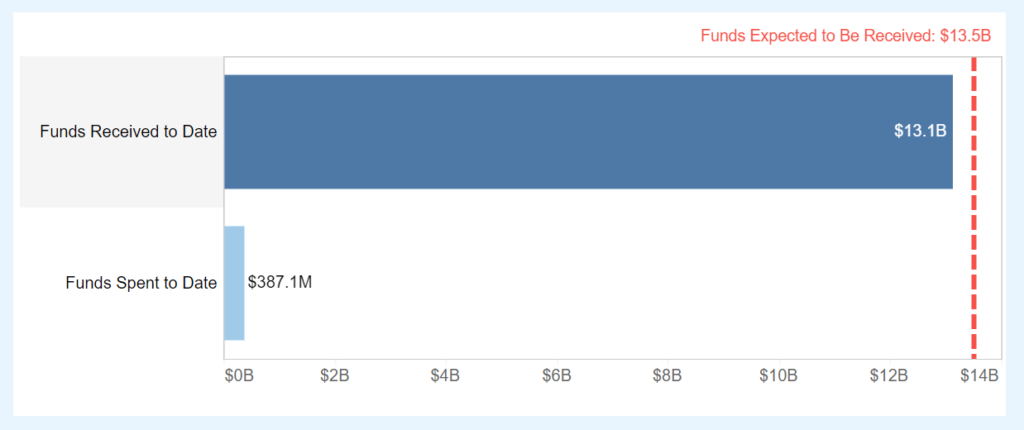
The Office of the State Comptroller has created this dashboard to track federal relief funds received during the pandemic and eight programs that offer targeted assistance to New Yorkers most severely impacted by the COVID-19 pandemic.
The tracker explains when each funding stream or program was authorized, how it is designed and how much has been received and spent to date. The data will be updated monthly and will be expanded over time as more information becomes available. We hope the information presented here can be used to help New Yorkers understand how federal aid is used and to inform future conversations about budget investments.
Select a relief program to view its funding and spending, or download this month’s data for all programs.
Author(s):Thomas DiNapoli
Publication Date: accessed 17 Oct 2021
Publication Site: Office of the Comptroller of the State of New York
The state has received $21 billion in federal pandemic relief money and has spent $6.1 billion since the end of September, according to a new online tracker released by the state comptroller’s office.
Despite less than a third of the money being spent to date, much of the federal cash has a general spending plan ascribed to it. The state has received just over half of its expected federal aid, which is to total $39.8 billion, according to the tracker.
“Thankfully New York is getting billions of dollars of federal funding that really has been a lifeline,” state Comptroller Thomas P. DiNapoli told the Times Union. “When you’re seeing an infusion of funding at that magnitude, it is important to follow the money and make sure it is spent as intended.”
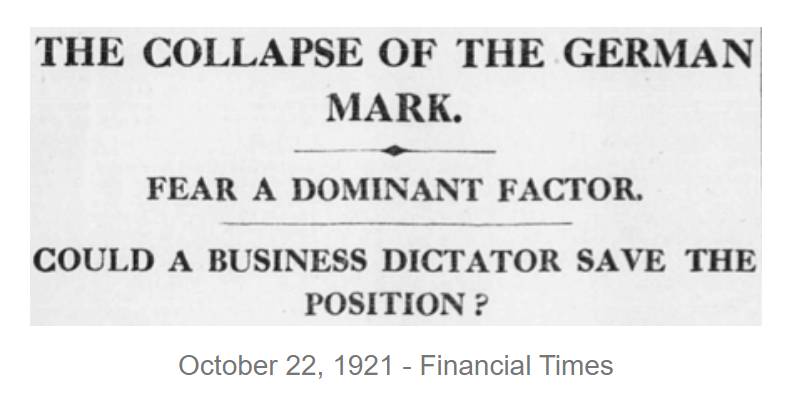
The prominent German industrialist Hugo Stinnes suggests a fringe dictatorship might seize power because the poorly drawn up armistice extracts too great a toll on the Teutonic nation. He reckons that one of the infant right wing parties could take power some day. Whatever the case, trouble is brewing.
The Treasury proposal would have banks report “gross inflows and outflows with a breakdown for physical cash, transactions with a foreign account, and transfers to and from another account with the same owner.” Banks already report interest income over $10 on Form 1099-INT; this proposal would add a few lines to that tax document.
Treasury officials have said that fears of stepped-up audits are unfounded, and the administration has pledged not to increase audits on people earning under $400,000 a year, but focus enforcement “on higher earners who do not fully report their tax liabilities.”
Officials emphasize the IRS would not learn about individual spending patterns — only total money going in or out.
“The proposal involves no reporting of individual transactions of any individual,” Treasury Secretary Janet Yellen told CBS Evening News’ Norah O’Donnell. “If somebody reports an income of $10,000 and they had 3 million [dollars] go out of their checking account, that tells the IRS that’s an individual you might audit.”
In recent articles, I have lamented poorly designed components of the Reconciliation Bill, from a poorly-designed “free childcare” program to a family leave plan that’s designed to be “free” rather than funded by the workers who benefit, to a Medicare drug benefit that’s planned to be implemented at the same time as Part A Medicare is facing insolvency, to a mandate that employers provide retirement plan access that leaves virtually all of the specifics up to a bureaucratic agency. And this just scratches at the surface of the expansive programs on tap if the bill is passed as currently drafted. But there’s one piece of legislation that advocates have been calling for, for years, which didn’t make the cut: an increase in the benefits for the poorest of the poor elderly and disabled who receive Supplemental Security Income, or SSI.
…..
So why didn’t SSI make the cut, when the Democrats compiled their list of programs for the “American Family Plan”? Do some of these changes go too far, increase benefits too much? Did they want to avoid opening up a can of worms with respect to larger plan design issues with the system, for example, concerns that the children’s benefits have become an “alternative welfare system” providing benefits for children equal to those for adults, even with mild conditions such as ADHD, that mean no one wants to touch the system?
Or does an enhancement of SSI benefits simply fail to meet the Democrats’ objective of making voters happy with broad outlays of cash benefitting the middle class as well as the poor?
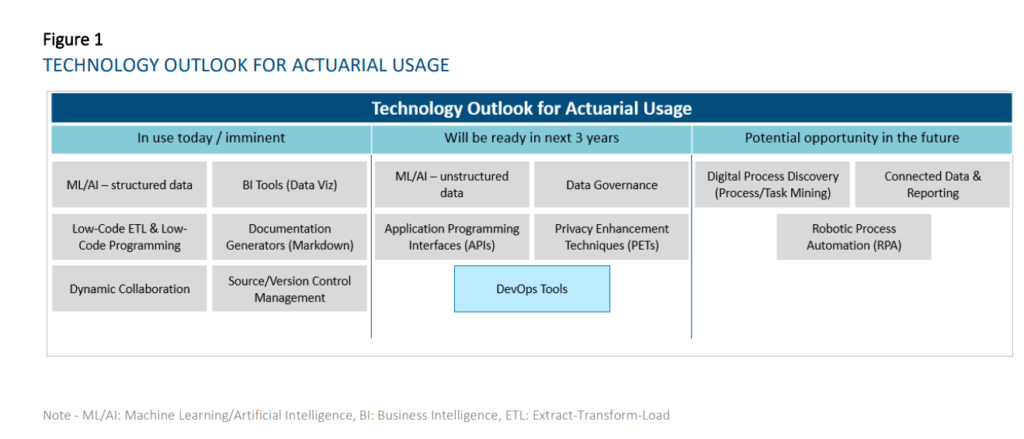
Technologies that have reached widespread adoption today: o Dynamic Collaboration Tools – e.g., Microsoft Teams, Slack, Miro – Most companies are now using this type of technology. Some are using the different functionalities (e.g., digital whiteboarding, project management tools, etc.) more fully than others at this time. • Technologies that are reaching early majority adoption today: o Business Intelligence Tools (Data Visualization component) – e.g., Tableau, Power BI — Most respondents have started their journey in using these tools, with many having implemented solutions. While a few respondents are lagging in its adoption, some companies have scaled applications of this technology to all actuaries. BI tools will change and accelerate the way actuaries diagnose results, understand results, and communicate insights to stakeholders. o ML/AI on structured data – e.g., R, Python – Most respondents have started their journey in using these techniques, but the level of maturity varies widely. The average maturity is beyond the piloting phase amongst our respondents. These are used for a wide range of applications in actuarial functions, including pricing business, modeling demand, performing experience studies, predicting lapses to support sales and marketing, producing individual claims reserves in P&C, supporting accelerated underwriting and portfolio scoring on inforce blocks. o Documentation Generators (Markdown) – e.g., R Markdown, Sphinx – Many respondents have started using these tools, but maturity level varies widely. The average maturity for those who have started amongst our respondents is beyond the piloting phase. As the use of R/Python becomes more prolific amongst actuaries, the ability to simultaneously generate documentation and reports for developed applications and processes will increase in importance. o Low-Code ETL and Low-Code Programming — e.g., Alteryx, Azure Data Factory – Amongst respondents who provided responses, most have started their journey in using these tools, but the level of maturity varies widely. The average maturity is beyond the piloting phase with our respondents. Low-code ETL tools will be useful where traditional ETL tools requiring IT support are not sufficient for business needs (e.g., too difficult to learn quickly for users or reviewers, ad-hoc processes) or where IT is not able to provision views of data quickly enough. o Source Control Management – e.g., Git, SVN – A sizeable proportion of the respondents are currently using these technologies. Amongst these respondents, solutions have already been implemented. These technologies will become more important in the context of maintaining code quality for programming-based models and tools such as those developed in R/Python. The value of the technology will be further enhanced with the adoption of DevOps practices and tools, which blur the lines between Development and Operations teams to accelerate the deployment of applications/programs
Author(s):
Nicole Cervi, Deloitte Arthur da Silva, FSA, ACIA, Deloitte Paul Downes, FIA, FCIA, Deloitte Marwah Khalid, Deloitte Chenyi Liu, Deloitte Prakash Rajgopal, Deloitte Jean-Yves Rioux, FSA, CERA, FCIA, Deloitte Thomas Smith, Deloitte Yvonne Zhang, FSA, FCIA, Deloitte
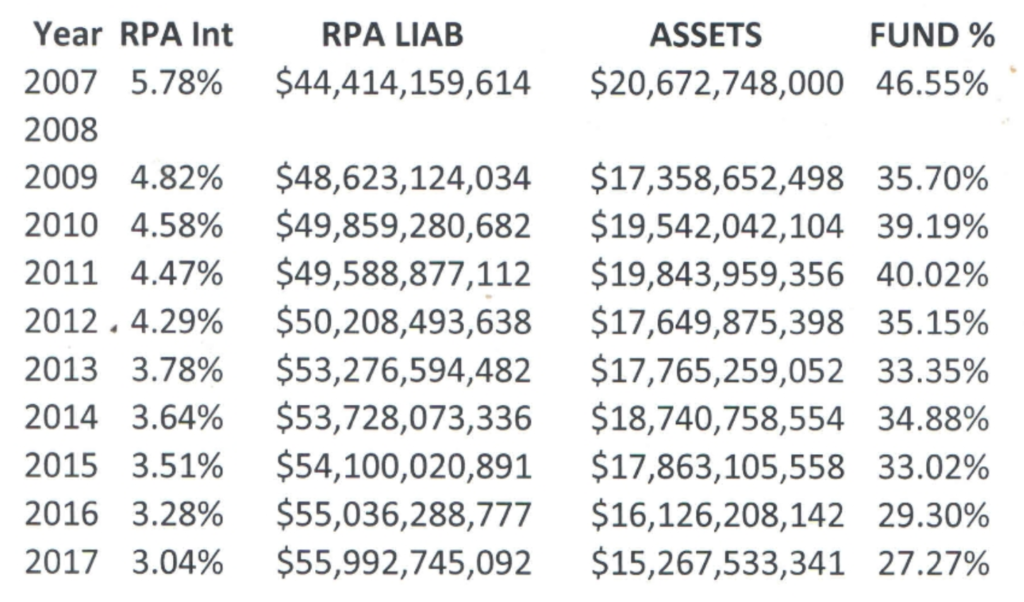
Using an 80% funded ratio as a benchmark for whether pension plans are healthy is inappropriate.
No single level of funding defines a line between a “healthy” and an “unhealthy” pension plan.
Pension plans are generally better evaluated on the strategy in place to attain a funded ratio of 100% within a reasonable period of time.
The financial health of a pension plan depends on many factors in addition to funded status— including the size of any shortfall compared with the resources of the plan sponsor.
Projections under a range of scenarios can be particularly useful in evaluating the plan’s expected funding trajectory and assessing plan health.