In the months leading up to the first COVID-19 vaccine shipments, Washington state health officials agonized over which residents should be vaccinated before others. They surveyed 18,000 people and convened focus groups, debating race, age and essential occupations.
But unlike some other states, the state Department of Health (DOH) neglected to plan for basic logistics that would have allowed for quick vaccination of those most vulnerable to the disease.
They didn’t enlist the National Guard. They didn’t centralize vaccine appointments. Key scheduling and reporting software arrived late. Providers were given vials but no strategy to process patients.
Two variants of the SARS-CoV-2 coronavirus that causes covid-19 have combined their genomes to form a heavily mutated hybrid version of the virus. The “recombination” event was discovered in a virus sample in California, provoking warnings that we may be poised to enter a new phase of the pandemic.
The hybrid virus is the result of recombination of the highly transmissible B.1.1.7 variant discovered in the UK and the B.1.429 variant that originated in California and which may be responsible for a recent wave of cases in Los Angeles because it carries a mutation making it resistant to some antibodies.
The recombinant was discovered by Bette Korber at the Los Alamos National Laboratory in New Mexico, who told a meeting organised by the New York Academy of Sciences on 2 February that she had seen “pretty clear” evidence of it in her database of US viral genomes.
Last month, Pritzker announced he would delay the implementation of economic incentives outlined in the so-called Blue Collar Jobs Act passed in 2019, and this week he announced he’d be seeking the closure of “corporate tax loopholes” in order to shore up the state’s budget.
Rep. Keith Wheeler (R-Oswego) said delaying the agreed-upon tax credits in the middle of the COVID-19 pandemic and recession will end up hurting the state’s economy in the long-term.
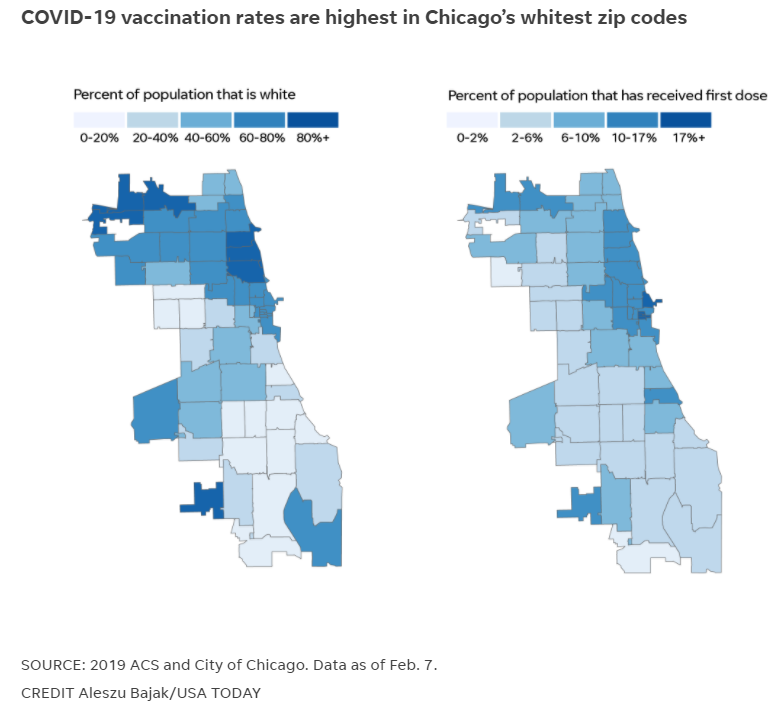
It’s possible some majority-white ZIP codes have higher rates of vaccination in part because they have higher concentrations of people in groups prioritized for the first round of vaccines.
Experts said the findings reflect festering systemic problems, including poor health care access and distrust of vaccines, colliding amid a chaotic rollout that failed to ensure equal access to communities of color.
Illinois taxpayers pay more than $2.1 million a month to retired part-time state legislators or their surviving spouses from a fund that’s only 16% funded. The individual monthly payouts are as high as $18,000 per month. Some pensioners aren’t actually retired but still getting paid.
There are 425 people drawing off the General Assembly Retirement System, ranging from $122 a month to $18,000.
At 16% funded, state Rep. Mark Batinick, R-Plainfield, said GARS is the worst of the state’s five public sector pension funds.
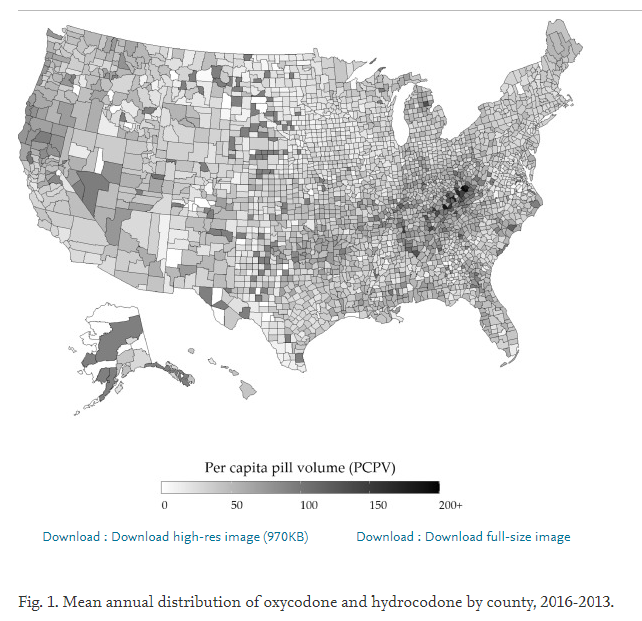
The dataset summarized in this article is a combination of several of U.S. federal data resources for the years 2006-2013, containing county-level variables for opioid pill volumes, demographics (e.g. age, race, ethnicity, income), insurance coverage, healthcare demand (e.g. inpatient and outpatient service utilization), healthcare infrastructure (e.g. number of hospital beds or hospices), and the supply of various types of healthcare providers (e.g. medical doctors, specialists, dentists, or nurse practitioners). We also include indicators for states which permitted opioid prescribing by nurse practitioners. This dataset was originally created to assist researchers in identifying which factors predict per capita opioid pill volume (PCPV) in a county, whether early state Medicaid expansions increased PCPV, and PCPV’s association with opioid-related mortality. Missing data were imputed using regression analysis and hot deck imputation. Non-imputed values are also reported.
Taken together, our data provide a new level of precision that may be leveraged by scholars, policymakers, or data journalists who are interested in studying the opioid epidemic. Researchers may use this dataset to identify patterns in opioid distribution over time and characteristics of counties or states which were disproportionately impacted by the epidemic. These data may also be joined with other sources to facilitate studies on the relationships between opioid pill volume and a wide variety of health, economic, and social outcomes.
Author(s): Kevin N. Griffith, Yevgeniy Feyman, Samantha G. Auty, Erika L. Crable, Timothy W. Levengood
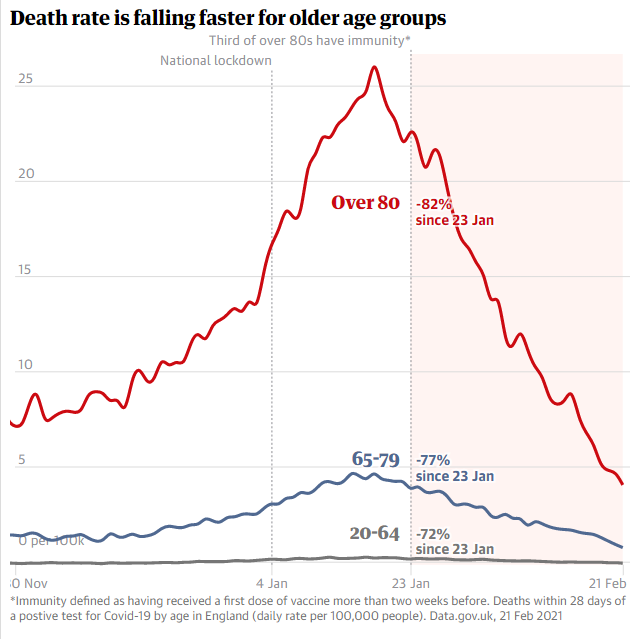
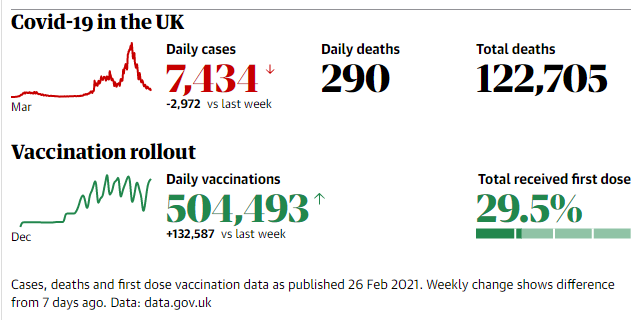
Deaths from coronavirus have fallen by 62% among over-80s since 24 January, the point at which a third of that age group had some level of immunity against coronavirus, having received their first vaccine dose at least two weeks earlier, data analysis by the Guardian showed.
This drop was larger than among groups with a lower level of vaccination. Among people aged between 20 and 64 the drop in deaths was 47%, while the drop among those aged 65 to 79 was 51%.
Author(s): Anna Leach, Ashley Kirk, and Pamela Duncan
Winter storms paralyzing the United States have left millions without power and sent health officials scrambling to protect freezers full of COVID-19 vaccines, which have to be kept at extremely low temperatures or risk going bad.
Rolling blackouts through Texas took out at least one set of freezers full of the Moderna vaccine; 5,000 doses were sent to a university, a jail, and a handful of hospitals before they expired. The Oregon Health Authority is moving vaccines to places with power, although the agency isn’t disclosing which storage sites have their systems down. As part of its storm preparations, Kentucky made sure places holding COVID-19 vaccines had contingency plans.
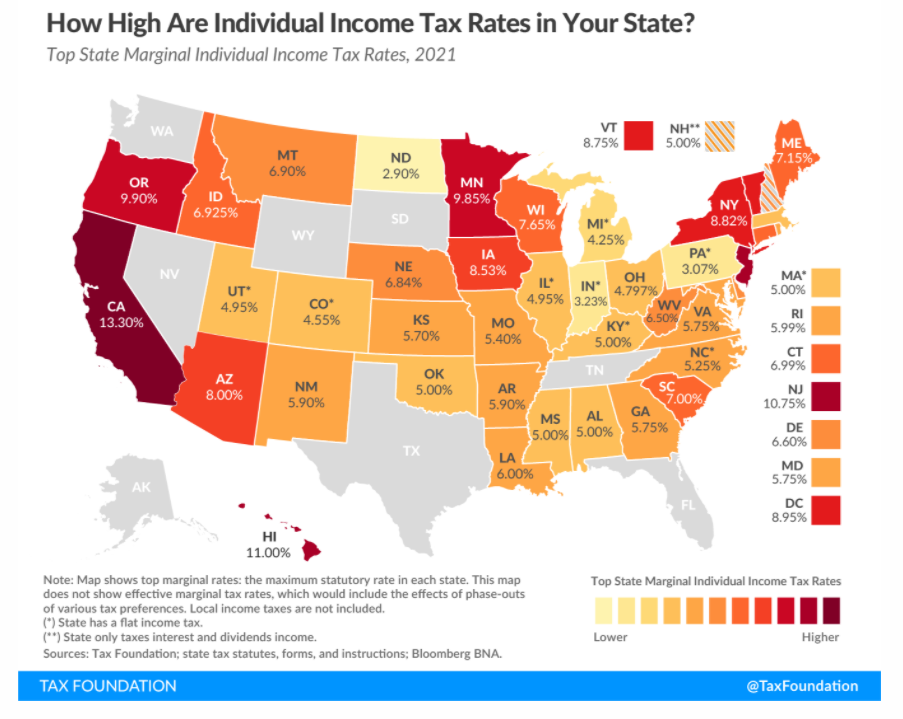
Individual income taxes are a major source of state government revenue, accounting for 38 percent of state tax collections in fiscal year 2018, the latest year of data available.
Forty-two states levy individual income taxes. Forty-one tax wage and salary income, while one state—New Hampshire—exclusively taxes dividend and interest income. Eight states levy no individual income tax at all.
Of those states taxing wages, nine have single-rate tax structures, with one rate applying to all taxable income. Conversely, 32 states and the District of Columbia levy graduated-rate income taxes, with the number of brackets varying widely by state. Hawaii has 12 brackets, the most in the country.
The world’s first coronavirus human challenge study will begin in the UK in a matter of weeks, following approval from the country’s clinical trials ethics body, the business department said.
Approval has been given for an initial trial that will involve up to 90 carefully screened, healthy, adult volunteers aged between 18 and 30. They will be exposed to the coronavirus in a safe, controlled environment. It is hoped further trials will follow.
“These are quite unique studies, able to accelerate not only understanding of diseases caused by infection, but also to accelerate the discovery of new treatments and of vaccines,” said Peter Openshaw, a professor of experimental medicine at Imperial College London.
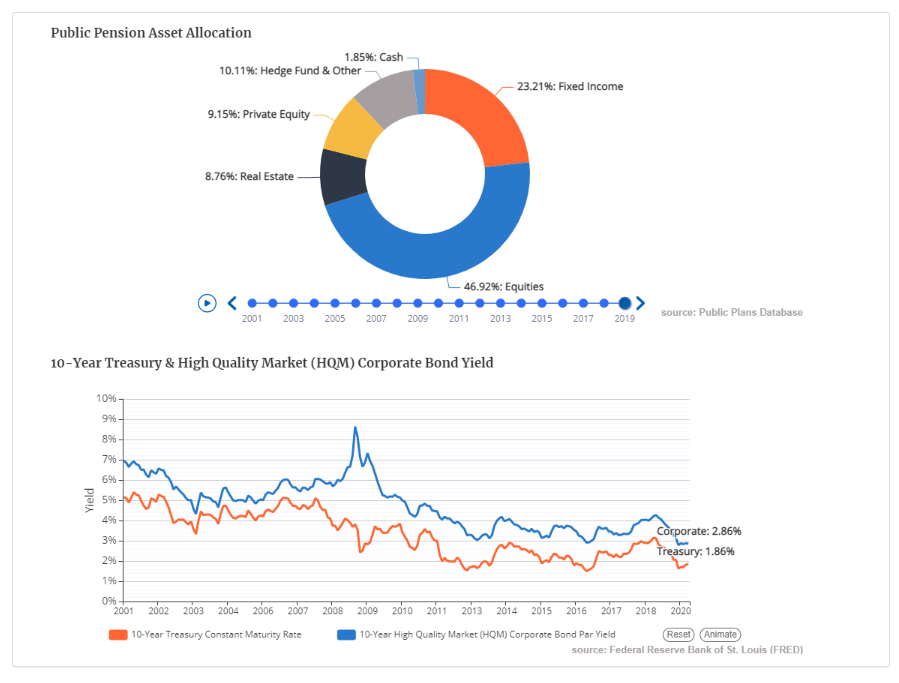
The visualizations display how private equity investments have grown in popularity. Private equity allocations are now the third-largest asset class for public pension plans, growing from 3.62 of nationwide plan portfolios in 2001 to 9.15 percent in 2019.
Portfolio managers should be free to pursue whatever investment philosophies they believe are in the best long-run interests of their plan members. However, policymakers, pension plan members, and taxpayers should be aware of these trends and the risks that come with them. Pension systems and lawmakers need to address the growing risk of volatility in ways that maintain a plan’s resiliency to unpredictable market factors. Also, plan stakeholders should be wary of a situation where the tail wags the dog—with pension systems swapping safety for risk and volatility as they chase outdated and overly optimistic investment return assumptions.
Results During 2001 to 2015, 22 million deaths (8 million women and 14 million men) occurred among individuals aged 20 to 64 years in the selected populations. Among women, US Latina individuals had the lowest premature mortality rates (ASMR for 2015, 144 deaths per 100 000 population) and US African American women had the highest premature mortality rate (ASMR for 2015, 340 deaths per 100 000 population) of the 16 populations studied. Rates among US white women shifted from the sixth lowest in 2001 (ASMR, 231 deaths per 100 000 population) to the 12th lowest in 2015 (ASMR, 235 deaths per 100 000 population). Among men, Peru had the lowest premature mortality rates (ASMR for 2015, 219 deaths per 100 000 population), and Belize had the highest premature mortality rates (ASMR for 2015, 702 deaths per 100 000 population). White men in the United States shifted from the fifth lowest rates in 2001 (ASMR, 396 deaths per 100 000 population) to the eighth lowest rates in 2015 (ASMR, 394 deaths per 100 000 population). Rates for both women and men decreased in all the populations studied from 2001 to 2015 (average annual percentage change range, 0.4% to 3.8% per year) except among US white populations, for which the rate plateaued (average annual percentage change, 0.02% per year [95% CI, −0.3% to 0.2% per year] for women; −0.2% per year [95% CI, −0.4% to 0.0% per year] for men) and among Nicaraguan men, for whom the rates increased (0.6% per year [95% CI, 0.2% to 1.0% per year]). The populations with the lowest mortality rates in 2015 had lower rates from all major causes, but rates were particularly lower for heart disease (21 deaths per 100 000 population) and cancer (50 deaths per 100 000 population).
Author(s): Yingxi Chen, MD, PhD; Neal D. Freedman, PhD; Erik J. Rodriquez, PhD; et al