Graphic:
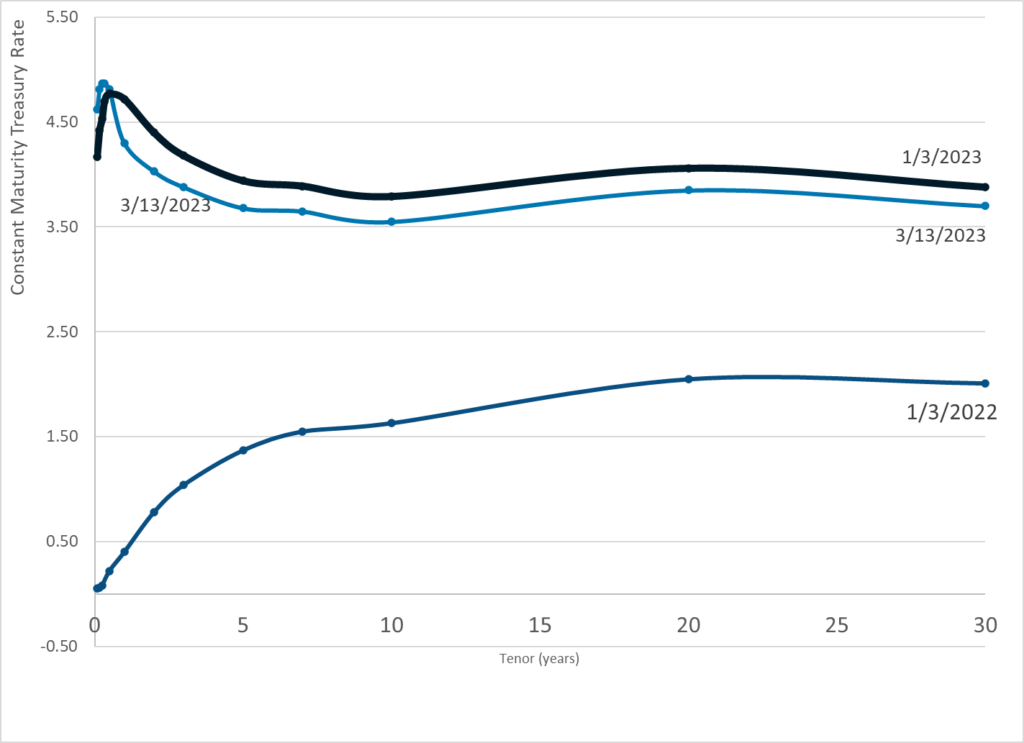
Publication Date: 13 Mar 2023
Publication Site: Treasury Department
All about risk
Graphic:
Publication Date: 13 Mar 2023
Publication Site: Treasury Department
Excerpt:
The Treasury and Federal Reserve stepped in late Sunday to contain the financial damage from Friday’s closure of Silicon Valley Bank, guaranteeing even uninsured deposits and offering loans to other banks so they don’t have to take losses on their fixed-income assets.
This is a de facto bailout of the banking system, even as regulators and Biden officials have been telling us that the economy is great and there was nothing to worry about. The unpleasant truth—which Washington will never admit—is that SVB’s failure is the bill coming due for years of monetary and regulatory mistakes.
Wall Street and Silicon Valley were in full panic over the weekend demanding that the Treasury and Fed intervene to save the day. It’s revealing to see who can keep a cool head in a crisis—and it wasn’t billionaire hedge-fund operator Bill Ackman or venture investor David Sacks, both frantic panic spreaders.
The Federal Deposit Insurance Corp. closed SVB, and the cleanest solution would be for the agency to find a private buyer for the bank. This has been the first resort in most previous financial panics, and the FDIC was holding an auction that closed Sunday afternoon.
….
But there is political risk from a bailout too. If the Administration acts to guarantee deposits without Congressional approval, it will face legitimate legal questions. The White House may choose to jam House Speaker Kevin McCarthy if markets aren’t mollified. But Mr. McCarthy has a restive GOP caucus as it is, and a bailout for rich depositors will feed populist anger against Washington.
The critics have a point. For the second time in 15 years (excluding the brief Covid-caused panic), regulators will have encouraged a credit mania, and then failed to foresee the financial panic when the easy money stopped. Democrats and the press corps may try to pin the problem on bankers or the Trump Administration, but these are political diversions.
Author(s): WSJ Editorial Board
Publication Date: 12 Mar 2023
Publication Site: WSJ
Link: https://mishtalk.com/economics/yellen-said-no-bailout-but-its-a-huge-bailout-of-the-banking-system
Excerpt:
It won’t matter but I am pleased the Journal blasted Bill Ackman and venture investor David Sacks, as “frantic panic spreaders“.
There’s more in the article about how Rohit Chopra, an Elizabeth Warren acolyte on the FDIC board, is hostile to bank mergers on ideological grounds, perhaps preventing a merger.
The Journal speculates how Biden might illegally act to guarantee all deposits or pressure House Speaker Kevin McCarthy.
….
Once again, the Fed kept interest rates too low, too long, encouraged speculation, then bailed out the banks.
Spare me the sap about this was a depositor bailout not a bank bailout.
When you value assets at par so that banks don’t have losses, what the hell is it.
Author(s): Mike Shedlock
Publication Date: 12 Mar 2023
Publication Site: Mish Talk
Graphic:
Publication Date: 10 Mar 2023
Publication Site: Treasury Department
Graphic:
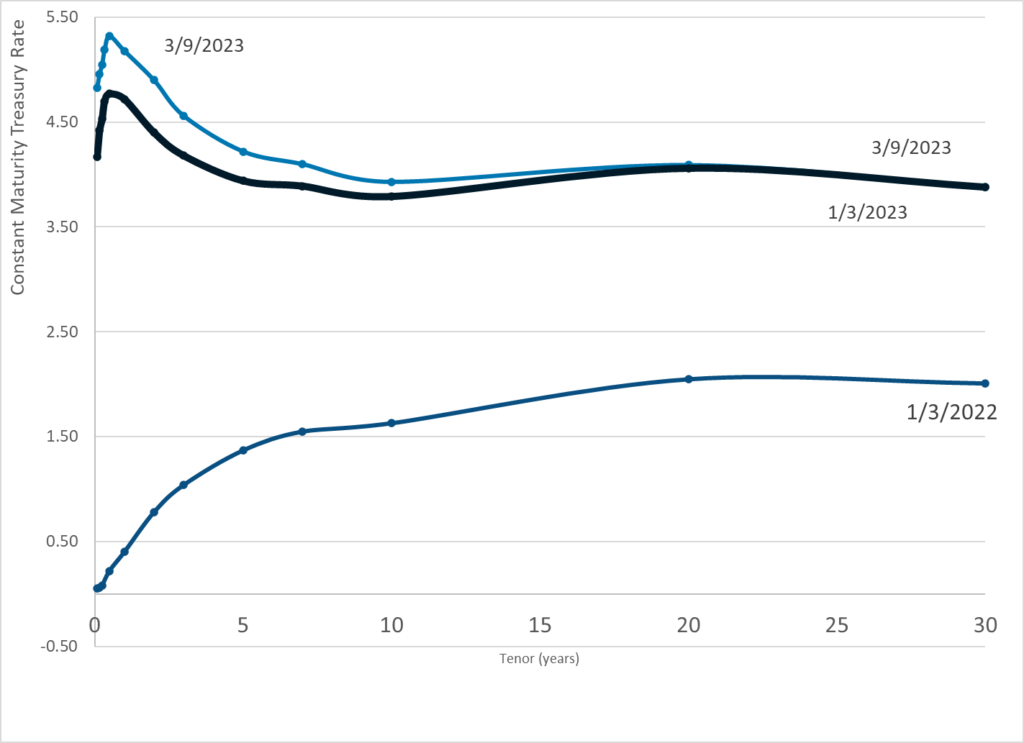
Publication Date: 9 Mar 2023
Publication Site: Treasury Department
Graphic:
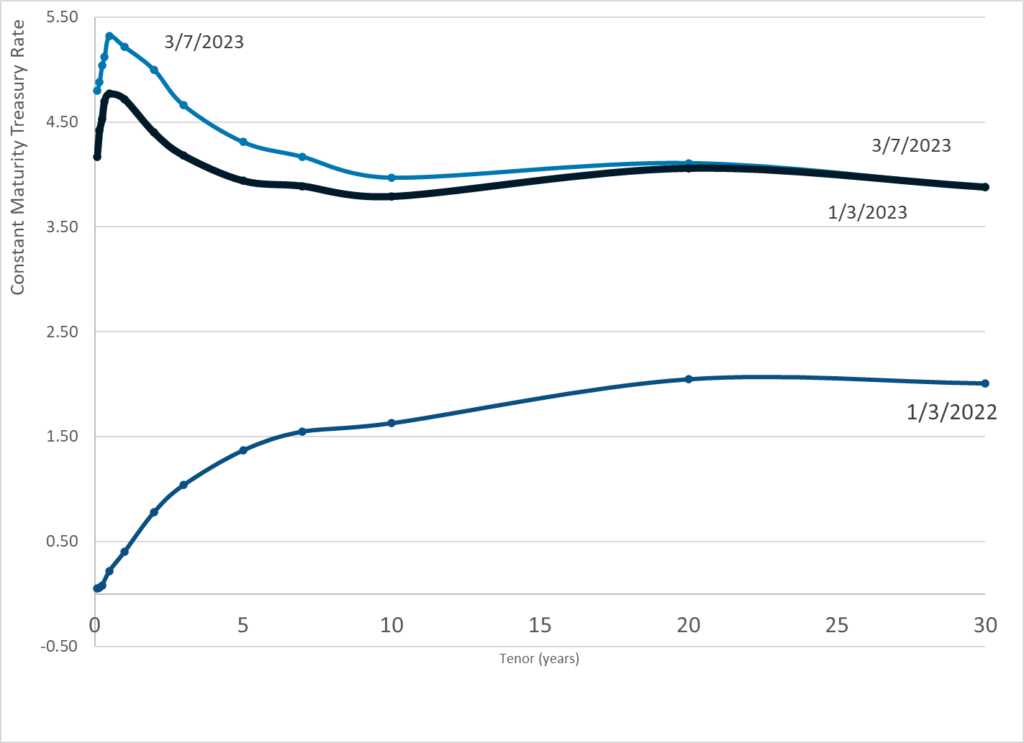
Publication Date: 7 Mar 2023
Publication Site: Treasury Dept
Graphic:
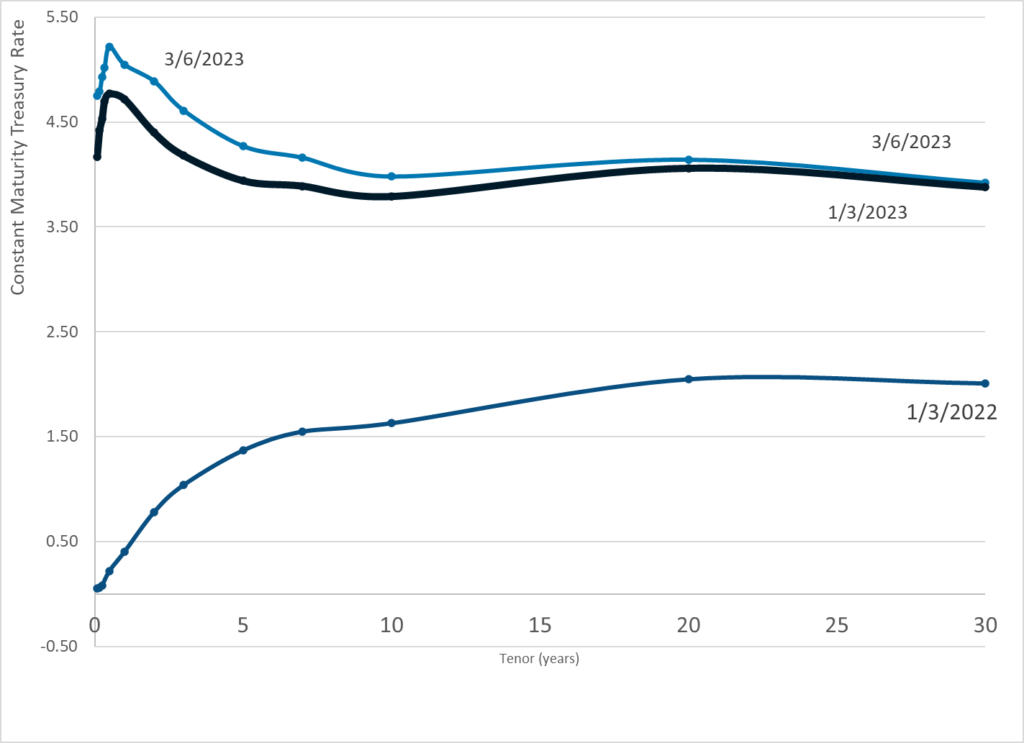
Publication Date: 6 Mar 2023
Publication Site: Treasury Department
Link: https://www.oecd.org/daf/fin/private-pensions/launch-publication-mortality-provision-retirement.htm
Graphic:
Video:
Excerpt:
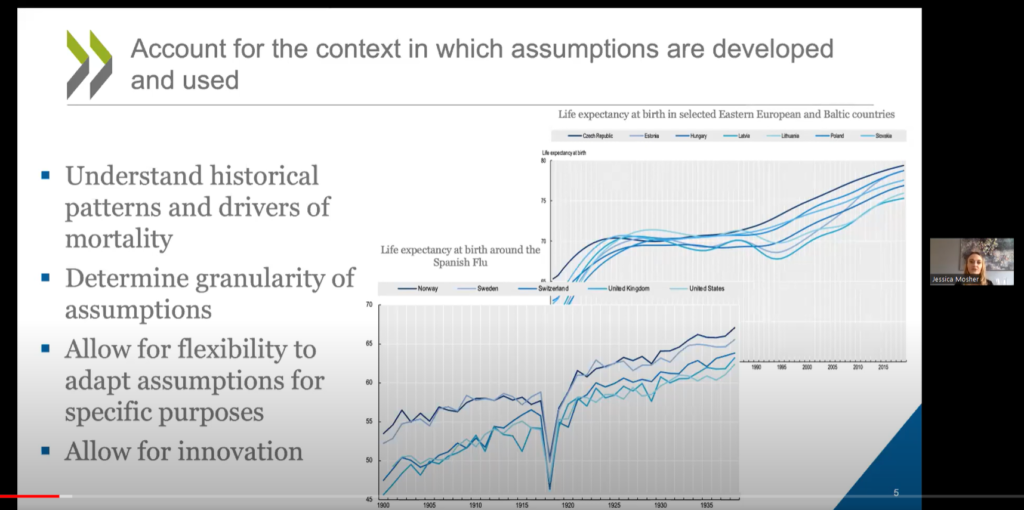
The report analyses the development of mortality assumptions to build mortality tables to better protect retirement income provision. It first provides an international overview of longevity trends and drivers over the last several decades, including the impact of the COVID-19 pandemic. It then explores considerations and traditional approaches for developing mortality tables, and details the standard mortality tables developed across OECD member countries. It concludes with guidelines to assist regulators and supervisors in assessing whether the mortality assumptions and tables used in the context of retirement income provision are appropriate.
The OECD will provide an overview of the publication, followed by a roundtable discussion with government and industry stakeholders. Topics discussed will include:
- Recent mortality trends and drivers
- How mortality trends/drivers can inform future expectations, and how to account for that in modelling
- The challenge of accounting for COVID in setting mortality assumptions
- Trade-offs for different modelling approaches
- The usefulness of the guidelines included in the report in practice
- How to better communicate around mortality assumptions to non-experts
Publication Date: 2 Feb 2023
Publication Site: OECD
Graphic:
Excerpt:
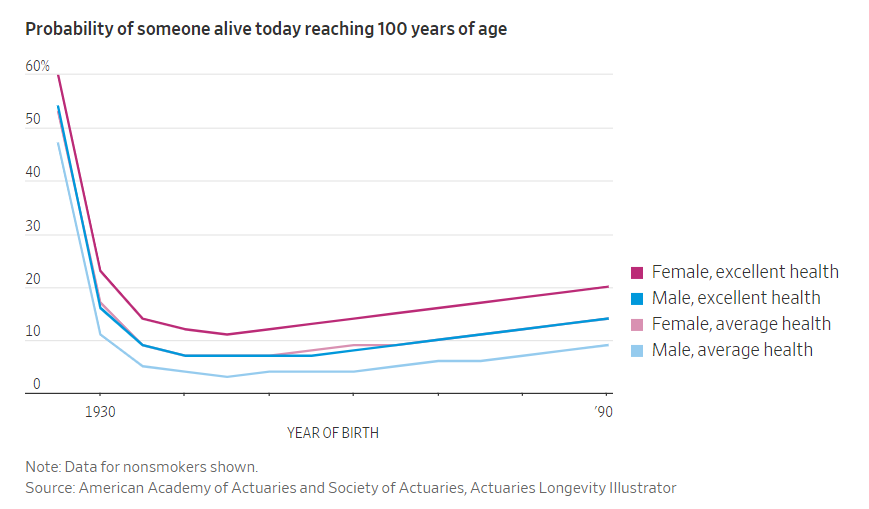
Demographers and actuaries make the following distinction between life expectancy and longevity: Life expectancy refers to the average number of years someone will live from a given age, whereas longevity refers to how long he or she might live if everything goes well, typically expressed as the probability of living beyond a certain age such as 85, 90 or even 100.
A growing body of evidence shows that many people are ignorant of their so-called longevity risk—the probability of living a very long time—and the complications that presents.
….
Drs. Hurwitz and Mitchell note that retirement calculators provide information about average life expectancy, but not longevity. They have found that about five times as many Census Bureau publications relate to life expectancy as longevity. Thus, people who have planned appropriately for their life expectancy might miss how likely they are to live longer.
….
People can look up their longevity risk with an online Longevity Illustrator maintained by the American Academy of Actuaries and Society of Actuaries, based off the latest mortality data from the Social Security Administration.
Author(s): Josh Zumbrun
Publication Date: 10 Feb 2023
Publication Site: WSJ
Graphic:

Publication Date: 3 March 2023
Publication Site: Treasury Dept
Graphic:

Publication Date: 2 Mar 2023
Publication Site: Treasury Department
Excerpt:
A significant portion of U.S.-based asset managers think further Federal Reserve rate hikes would lead to a recession or some disruption in global financial markets, according to research last month by London-based CoreData Research.
The greatest anticipated risk of continued Federal Reserve rate hikes is a possible recession. Overall, 59% of survey respondents took a neutral look at a recession scenario, that there would be “a moderate recession in 2023, followed by a gradual recovery as central bank policies bring down inflation over time,” while 14% opted for a bull case, defined as “a mild recession in the first half of 2023, followed by a strong recovery, falling inflation and rising equity markets [in the second half of 2023],” and 27% said they agree with a bear case, defined as a scenario in which “stagflation and a deep recession [occur] in 2023, accompanied by a 10-20% fall in the equity markets, as central banks struggle to defeat inflation which remains high.”
….
Within fixed income, 36% of respondents said they are increasing allocations to investment-grade corporate bonds, the most of any fixed-income subtype, and 33% are set to increase allocations to government bonds. A further 23% of respondents said they plan to cut their exposures to emerging-market debt as a consequence of higher yields domestically.
Author(s): Dusty Hagedorn
Publication Date: 24 Feb 2023
Publication Site: ai-CIO