Predictable country-level bias in the reporting of COVID-19 deaths

Link:https://www.sciencedirect.com/science/article/pii/S2667319321000124

Graphic:

Abstract:

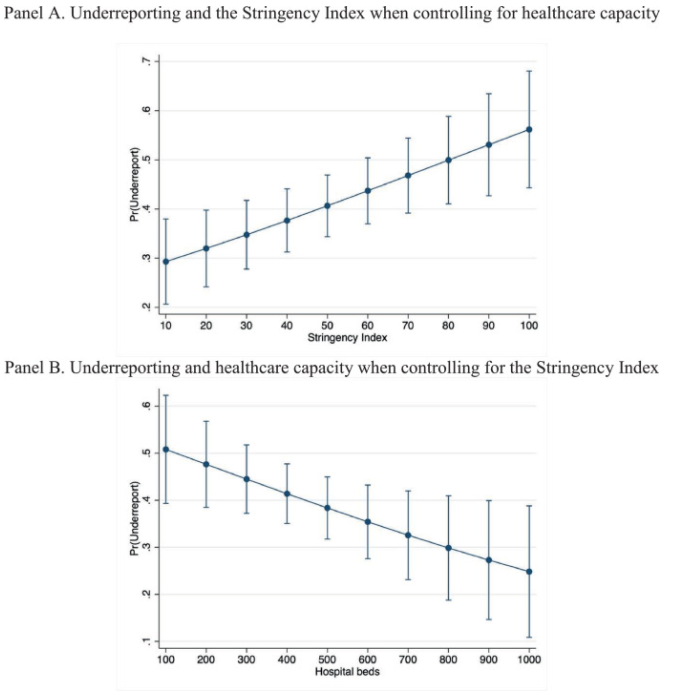
We examine whether a country’s management of the COVID-19 pandemic relate to the downward biasing of the number of reported deaths from COVID-19. Using deviations from historical averages of the total number of monthly deaths within a country, we find that the probability of underreporting of COVID-related deaths for countries with the most stringent policies was 58.6%, compared to a 28.2% for countries with the least stringent policies. Countries with the lowest ex ante healthcare capacity in terms of number of available beds underreport deaths by 52.5% on average, compared to 23.1% for countries with the greatest capacity.

https://doi.org/10.1016/j.jge.2021.100012

Author(s): Botir Kobilov, Ethan Rouen, George Serafeim

Publication Date: Summer 2021

Publication Site: Journal of Government and Economics

COVID-19: Eight Dead, 89 Infected In Outbreak At Connecticut Nursing Home

Link:https://dailyvoice.com/new-york/northsalem/news/covid-19-eight-dead-89-infected-in-outbreak-at-connecticut-nursing-home/819985/

Excerpt:

Eight residents of a Connecticut nursing home have died during a COVID-19 outbreak that has lasted nearly six weeks.

A total of 89 employees and residents have tested positive since the outbreak began at the Geer Nursing and Rehabilitation Center, located in Litchfield County, in the Town of Canaan, on Thursday, Sept. 30.

“Despite seeing significant numbers of residents recovering from Covid,” the facility’s chief executive Kevin O’Connell and nursing director Cady Bloodgood said in a statement. “testing has resulted in one additional positive case among fully vaccinated residents and staff members. Sadly, we have lost eight residents with serious underlying health issues to Covid.”

Author(s): Joe Lombardi

Publication Date: 14 Nov 2021

Publication Site: Daily Voice

Why COVID-19 Probably Killed More People Than We Realize

Link:https://hbswk.hbs.edu/item/why-covid-19-probably-killed-more-people-than-we-realize

Graphic:

Excerpt:

As the number of casualties from COVID-19 ballooned at an alarming rate last year, some feared that government officials were failing to report several coronavirus-related losses and the actual death toll was much higher worldwide.

While the official count shows more than 5 million people have died of the disease, a new study of underreported casualties in several countries indicates that COVID has actually killed hundreds of thousands more people than government records document.

….

The HBS researchers gathered the reported monthly numbers of deaths during the pandemic in each of the 51 countries from a variety of sources, including reports in the New York Times and the European Commission’s database, Eurostat. They compared that data to figures from the same months for the past three to five years to calculate excess deaths. Subtracting the number of official COVID deaths for each country helped them gauge potential underreporting.

…..

In fact, countries with more stringent policies in place did, on average, have 59 percent higher unexplained excess deaths—that is, 159 deaths for every 100 reported for COVID.

Author(s): Ethan Rouen, George Serafeim

Publication Date: 2 Nov 2021

Publication Site: Working Knowledge at Harvard Business School

Year-to-Date Murder Comparisons

Link:https://datastudio.google.com/embed/u/0/reporting/133bc335-b4e9-41f4-890d-3adb7de5a141/page/QX9NC

Graphic:

Excerpt:

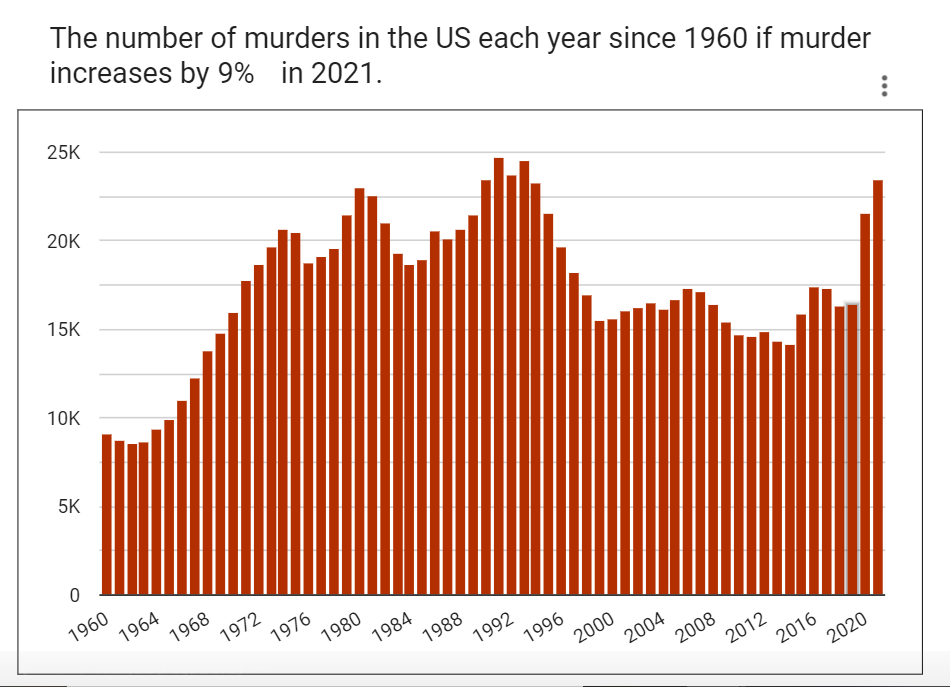
Murder rose by roughly 25 percent in 2020 according to preliminary data from the FBI. The graph on the right shows why analyzing data from big cities is the best way we have to understand current murder trends. These figures will be updated throughout the year, and data later in the year will give a much clearer picture of our anticipated murder trend compared to data collected early in the year. 

Date Accessed: 11 Nov 2021

Publication Site: Datalytics

Wave of COVID-19 Deaths Hit RGA Hard

Link: https://www.thinkadvisor.com/2021/11/08/wave-of-covid-19-deaths-hit-rga-hard/

Excerpt:

After the second quarter, RGA executives told analysts they were optimistic about the effects of COVID-19 vaccination programs on mortality.

Instead, “the third quarter saw increases in both COVID-19 and non-COVID-19 general population mortality,” Porter said.

In the United States and India, the typical age of people dying of COVID-19 is falling, Porter added.

That hurts life insurers because people under 65 are more likely than older people to have life insurance.

Author(s): Allison Bell

Publication Date: 8 Nov 2021

Publication Site: Think Advisor

An Unsolved Mystery: Why Do More Men Die of Covid-19?

Link:https://www.nytimes.com/2021/11/02/opinion/men-covid-19-deaths.html

Excerpt:

Men are much more likely than women to die of Covid-19 and are more likely to be intubated and have long hospitalizations. This disparity in Covid-related deaths has existed since early in the pandemic, before there were any vaccines. Men are also more likely to develop certain rare complications from some Covid-19 vaccines and to experience a faster decline in measures of immunity once vaccinated. The reasons remain unclear.

Historically, women have been largely excluded from medical studies, and health issues that predominantly affect women have been underresearched. This is both morally wrong and medically foolish because it limits physicians’ ability to deliver optimal care. Rather than ignore sex differences in Covid-19 outcomes, scientists should pay attention to them to better understand the disease and how to treat it.

Data from the Centers for Disease Control and Prevention shows that in the United States, women account for 45.6 percent of Covid-19 deaths so far and men account for 54.4 percent. (Men make up slightly less than half the U.S. population.) Among Americans ages 65 to 84 — the group at highest risk for severe Covid-19 — the gap is even larger: 57.9 percent of deaths have occurred among men and 42.1 percent among women. According to the Brookings Institution, at least 65,000 more men than women have died of Covid-19 in the United States. Globally, the death rate has been about 50 percent higher for men.

A July 2021 study found that compared to women, men with Covid-19 had an almost 50 percent higher rate of respiratory intubation and a 22 percent longer hospital stay.

Author(s): Ezekiel Emanuel

Publication Date: 2 Nov 2021

Publication Site: New York Times

On Covid, Excess Mortality by Race/Ethnicity, and Geographic Patterns

Link:https://marypatcampbell.substack.com/p/on-covid-excess-mortality-by-raceethnicity

Graphic:

Video:

Excerpt:

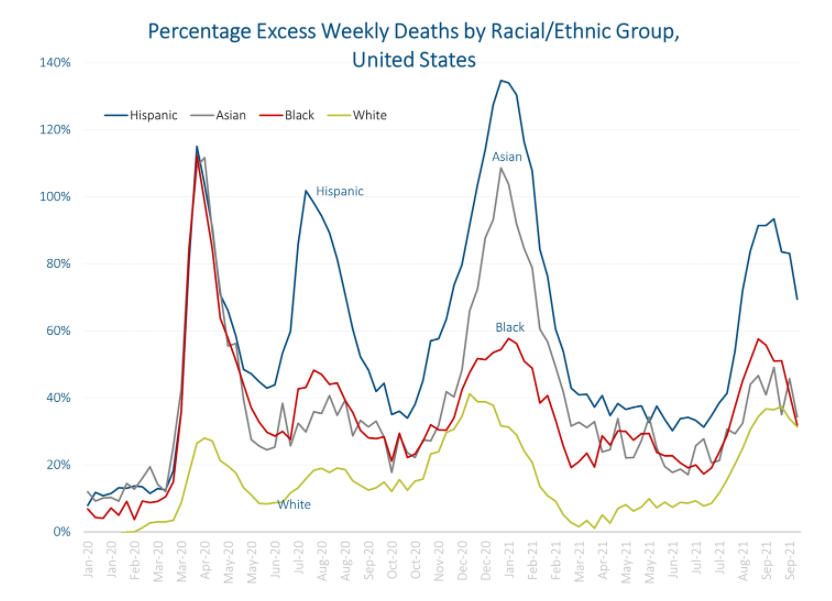
And now you can see it — the blue curve for Hispanics has a summer 2020 peak much higher than that for whites, Blacks, and Asians.

I want to note the high peak for Asian deaths in winter 2020-2021.

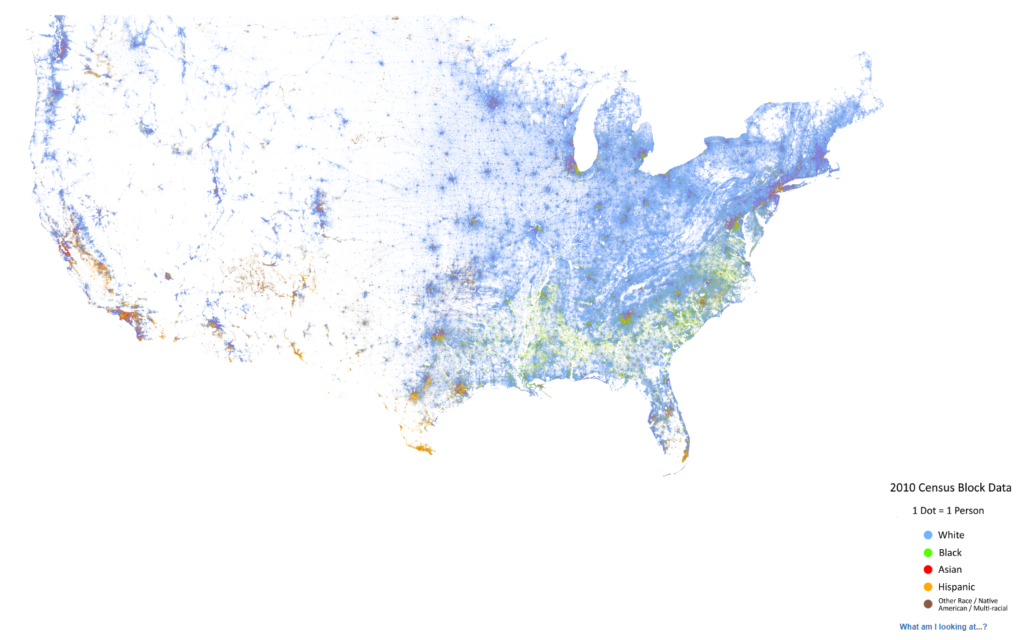
See that there is a high spike for Asian, Hispanic, and Black in that first NYC-centered wave that we’ve known so well… but a little blip for White. And I want you to think about that a little. Because that really explains a lot of the disproportionate effects on minorities in the U.S. and it goes back to Charles Blow’s question at the top of this post.

The answer to all of this being geographic distribution.

Author(s): Mary Pat Campbell

Publication Date: 6 Nov 2021

Publication Site: STUMP at substack

HOW TO BELIEVE IN ASTROLOGY

Link:https://www.firstthings.com/article/2021/10/how-to-believe-in-astrology

Excerpt:

Until the eighteenth century, the London Bills of Mortality would frequently list a cause of death as “planet.” This meant that a man had died without apparent cause, but the reason was clear. He had fallen under the influence of an evil star. A planet had killed this man, as directly as if a trillion tons of livid space-rock had come screaming out of the sky to conk him on the head. This is what it means to believe in astrology: accepting that at any moment, the mathematically preordained rhythms of the heavens might simply decide to kill you.

Author(s): Sam Kriss

Publication Date: October 2021

Publication Site: First Things

Insurers Continue To Flirt With Electronic Health Records

Link:https://www.thewealthadvisor.com/article/insurers-continue-flirt-electronic-health-records

Excerpt:

The use of electronic health records in insurance underwriting has long held terrific potential to boost the industry. Progress has been slow to date, but that is about to change.

By late-2022, EHR will be standard at 50% of the top 20 carriers, said Nicholas Irwin, director of life underwriting at Verisk.

“I think once we get to that 50% hit rate threshold and same-day turnaround time, I’d be very surprised it didn’t become a standard at that point,” Irwin said Tuesday during the Society of Insurance Research annual conference.

The acquisition of a medical record, a crucial part of life underwriting risk-assessment, largely remains largely an inefficient paper process. The availability of healthcare information as a data stream is a critical advantage for insurers using rules-based decision engines for accelerated underwriting.

Author(s): John Hilton, InsuranceNewsNet

Publication Date: 24 Oct 2021

Publication Site: The Wealth Advisor

“Ending Jim Crow Life Insurance Rates”: A Professionalism Case Study Webcast

Link: https://www.soa.org/prof-dev/webcasts/2021-ending-jim-crow/

Description:

This session will introduce a late 19th century article by actuary FL Hoffman. This article provided a justification for racially discriminatory life insurance premiums – a practice that existed well into the 20th century and was consistent with “Jim Crow” thinking. Join the presenters as they discuss the reasons that Hoffman’s article was actuarially unsound using commentaries at the time it was written as well as recent publications that include important reflections on the actuarial profession that apply both historically and in the present. The session will discuss thoughts about how Hoffman’s work would be received and handled today, including the role of the ABCD in such matters, several rules and regulations that now guide actuarial conduct and are designed to prevent discriminatory practices, and actuarial ethical responsibilities. The session will conclude with an observation that one of the best ways for the actuarial profession to prevent the use of racially discriminatory practices in our work is by having a diverse actuarial profession with members who will provide first-hand perspectives about inappropriate actuarial practices.

Author(s):

Jay M. Jaffe, FSA, MAAA

Reinsurance Administration, Ltd.

Webcast Date (to come): 10 November 2021

Publication Site: SOA

Who Had Covid-19 Vaccine Breakthrough Cases?

Link:https://www.nytimes.com/interactive/2021/10/28/us/covid-breakthrough-cases.html

Graphics:

Excerpt:

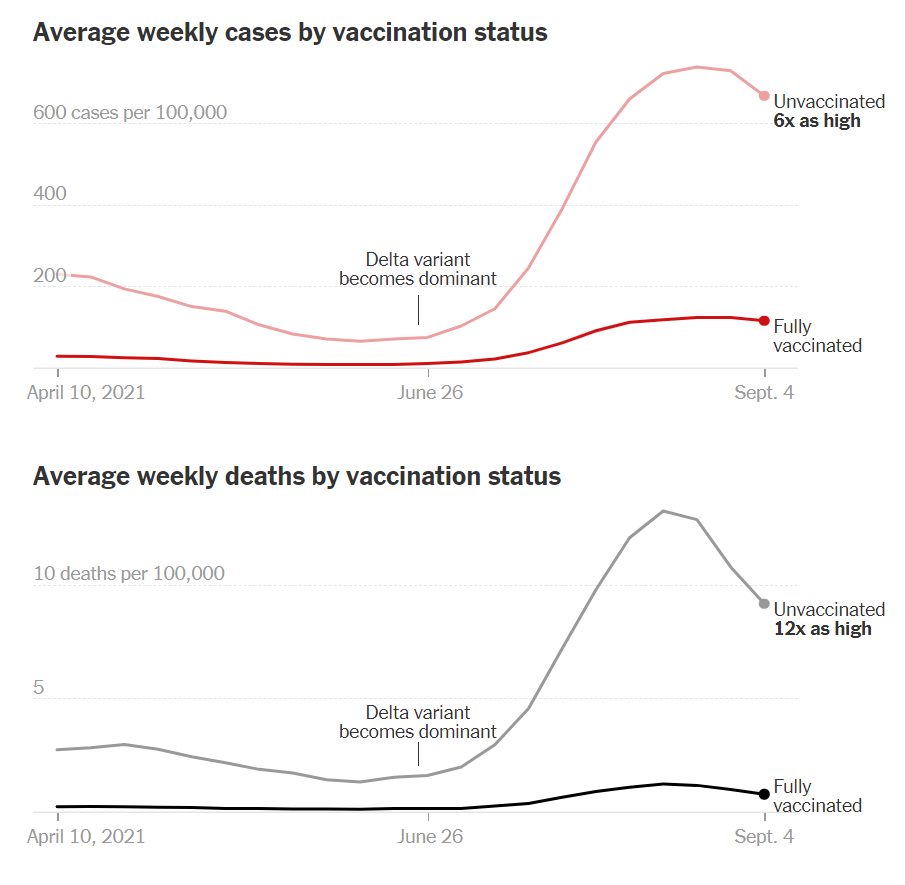
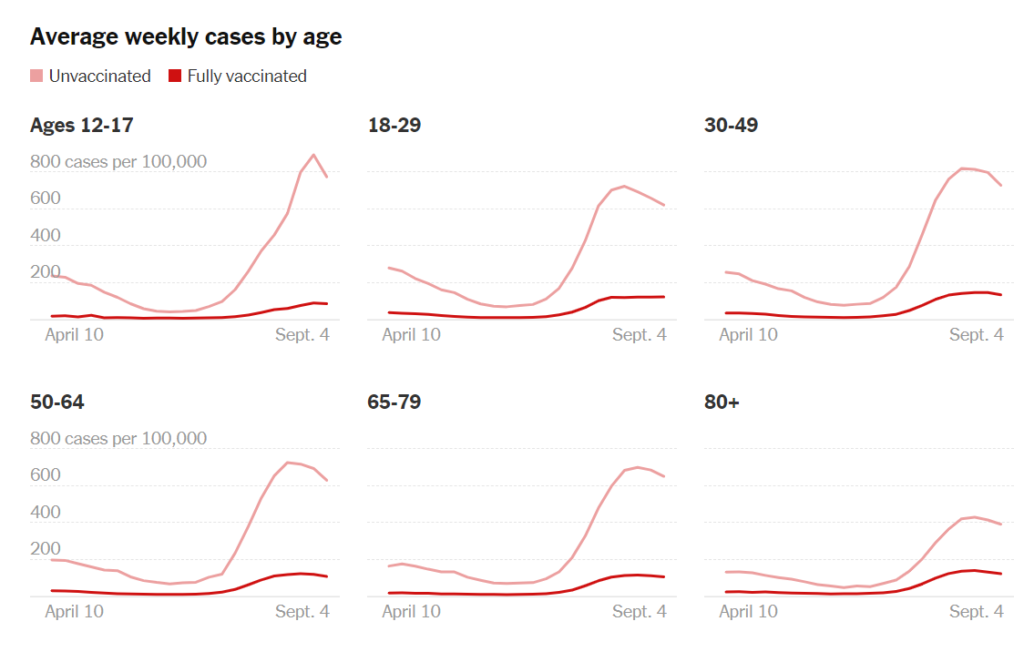
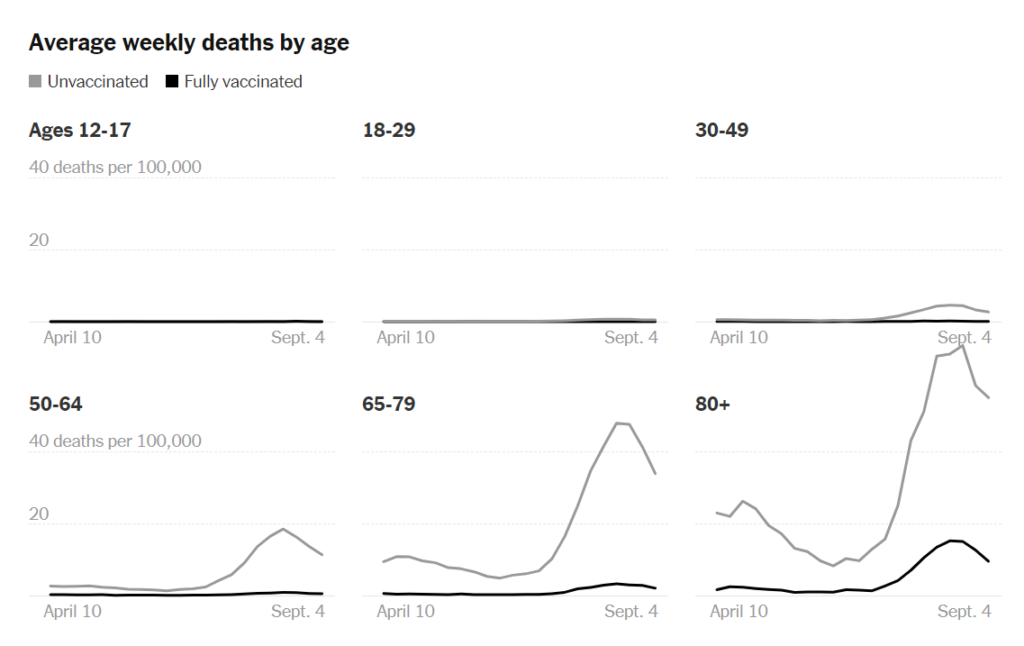
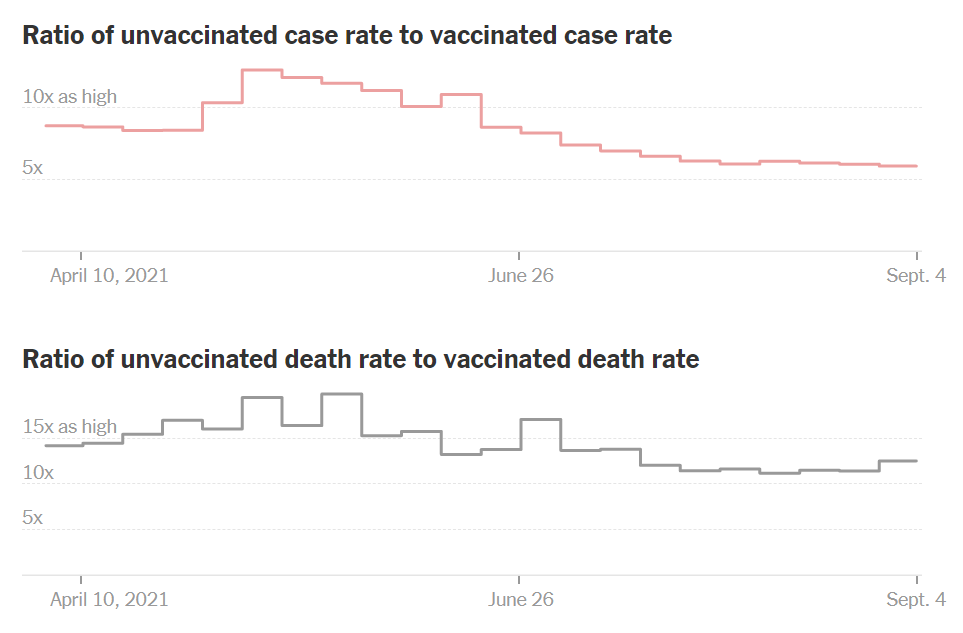
Compared with the unvaccinated, fully vaccinated people overall had a much lower chance of testing positive for the virus or dying from it, even through the summer’s Delta surge and the relaxation of pandemic restrictions in many parts of the country. But the data indicates that immunity against infection may be slowly waning for vaccinated people, even as the vaccines continue to be strongly protective against severe illness and death.

“The No. 1 take-home message is that these vaccines are still working,” said Dr. David Dowdy, an epidemiologist at the Johns Hopkins Bloomberg School of Public Health. “If you saw these data for any disease other than Covid, what everyone’s eyes would be drawn to is the difference between the unvaccinated and fully vaccinated lines.”

The data shows notable differences in breakthrough death rates by age and slight differences in both case and death rates by vaccine brand, trends that experts say are important to consider as tens of millions of Americans weigh whether to get a booster shot.

Author(s): Aliza Aufrichtig, Amy Schoenfeld Walker

Publication Date: 28 Oct 2021

Publication Site: NYT

How Jefferson and Franklin Helped End Smallpox in America

Link:https://www.governing.com/context/how-jefferson-and-franklin-helped-end-smallpox-in-america.html

Excerpt:

In the new world, inoculation had a very rough reception. When John Dalgleish and Archibald Campbell began inoculating individuals in Norfolk, Virginia, an angry mob burned down Campbell’s house. Similar incidents occurred in Salem and Marblehead, Mass. In Charleston, S.C., an inoculation control law of 1738 imposed a fine of £500 on anyone providing or receiving inoculation within two miles of the city. A similar law was passed in New York City in 1747. 

The measures in New England were so draconian that Benjamin Waterhouse noted the paradox: “New England, the most democratical region on the face of the earth voluntarily submitted to more restrictions and abridgements of liberty, to secure themselves against that terrific scourge, than any absolute monarch could have enforced.” (This, strangely prescient, anticipates the current debate about liberty versus public health). It was in the middle colonies — Maryland, Pennsylvania, New Jersey — that inoculation was most tolerated in the second half of the 18th century. That’s why Jefferson made the long journey to Philadelphia to be inoculated in 1766. 

Jefferson first became aware of the discovery of a true smallpox vaccine from the newspapers he read in Philadelphia and the new capitol in Washington, D.C. Then, on Dec. 1, 1800, just after Jefferson’s election to the presidency, Benjamin Waterhouse sent him his pamphlet on the vaccine with a lovely cover letter saying that he regarded Jefferson as “one of our most distinguished patriots and philosophers.” Jefferson responded immediately, thanking Waterhouse for the publication and declaring, with his usual grace, that “every friend of humanity must look with pleasure on this discovery, by which one evil the [more] is withdrawn from the condition of man: and contemplating the possibility that future improvements & discoveries, may still more & more lessen the catalogue of evils. in this line of proceeding you deserve well of your [country?] and I pray you to accept my portion of the tribute due you.” 

Author(s): Clay Jenkinson, Editor-at-Large

Publication Date: 29 April 2020

Publication Site: Governing