Mortality Basics with Meep: Age-Adjusted Death Rates v. Crude Death Rates for U.S. 1968-2020

Link: https://marypatcampbell.substack.com/p/mortality-basics-with-meep-age-adjusted

Graphic:
Excerpt:

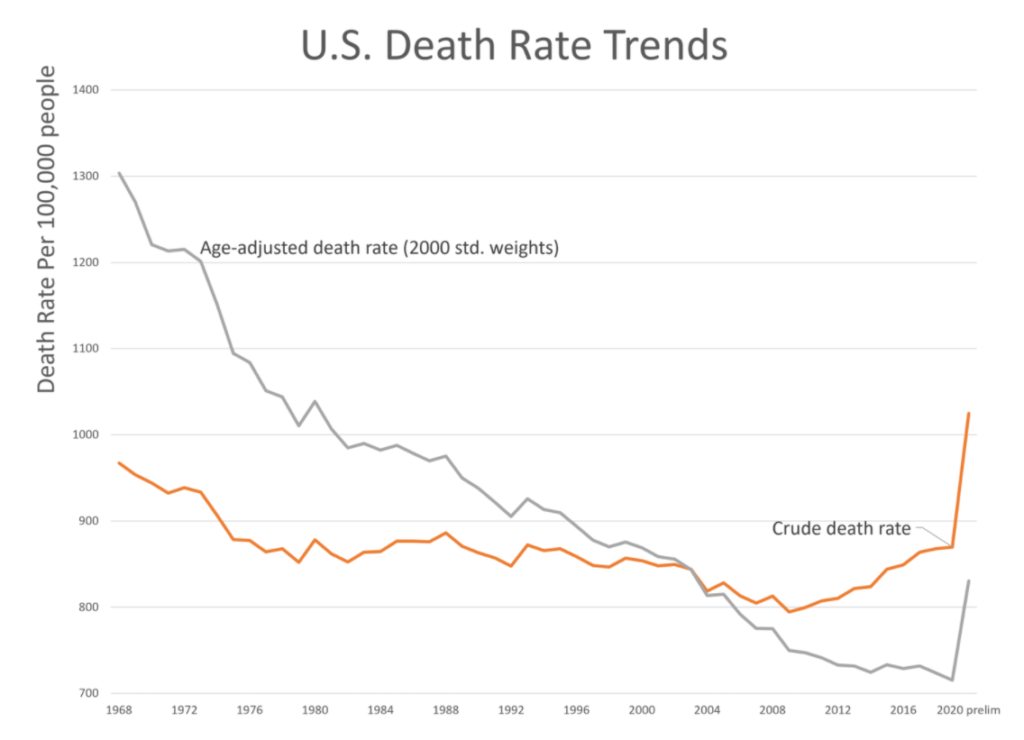
The crude death rate in 2019, pre-pandemic, was 870 per 100,000 people.

There was a similar crude death rate in 1989 (871 per 100,000) — do we really believe that the mortality experience, across the board, was the same thirty years apart?

This is the reason there is the same crude death rate in the two years: the age structure of the population was very different.

….

The main point, though, was that the population skewed younger in 1989 than in 2019. The median age in the U.S. was 38.4 in 2019. It was 32.9 years old in 1989.

In 1989, only 12.4% of the population was age 65 or older. In 2019, we had 16.5% of the population in that age bucket.

The changing age structure means that one can have mortality rates trending down for all ages, but the crude death rate climbs because the population is getting older. It’s definitely driven by people living longer (due to those lower mortality rates), but also driven by fewer babies being born.

Author(s): Mary Pat Campbell

Publication Date: 28 July 2021

Publication Site: STUMP at substack
Mortality with Meep: Cause of Death Trend — Cancer — 1999-2020

Link: https://marypatcampbell.substack.com/p/mortality-with-meep-cause-of-death-76e

Video:

Graphic:

Excerpt:

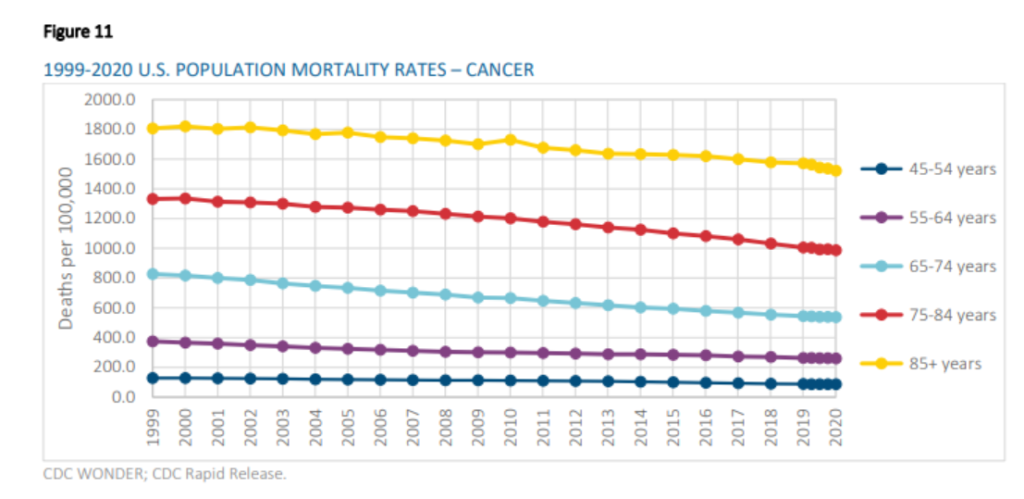
As with heart disease, we see improvement at all ages, but the percentage improvement is not as high with cancer as it was with heart disease.

One of the biggest things, though, is how death rates go up by age group. I will use 2020Q1 cause of death rates to make comparisons, as these are in the SOA report, and the COVID impact didn’t come fully until 2020Q2.

Heart disease death rate for those aged 85+ was 3766 per 100K, and those aged 75-84 was 986. That’s a ratio of 3.8.

Cancer deaths for those aged 85+ was 1562 per 100K, and those aged 75-84 was 1004. That’s a ratio of 1.6.

Two things to note:

Cancer death rate for those age 75-84 was higher than the heart disease death rate for the same group

Heart disease death rates climb much more rapidly than cancer death rates by age

Author(s): Mary Pat Campbell

Publication Date: 4 August 2021

Publication Site: STUMP at substack
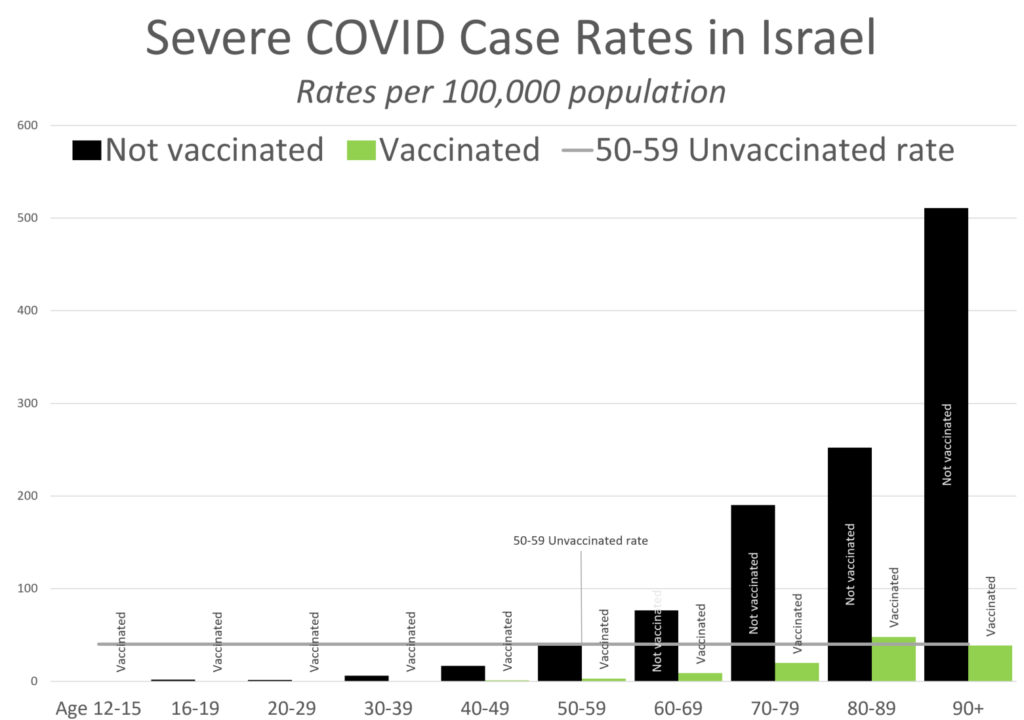
COVID and Simpson’s Paradox: Why So Many Vaccinated People are Among the Current Wave of Hospitalizations

Link: https://marypatcampbell.substack.com/p/covid-and-simpsons-paradox-why-so

Graphic:

Excerpt:

when you’ve got really steep differences between subpopulations and the subpopulations are of very different sizes, the overall population average will be very different from simply looking at the average of the two populations.

Basically:

– The base risk rates for each group are extremely different (3.9 per 100K for young, and 91.9 per 100K for old)
– The percentage each subpopulation makes up in the larger population is very different (67% young, 33% old)
– The vaccination rates are very different by population (76% young, 92% old)

Author(s): Mary Pat Campbell

Publication Date: 19 August 2021

Publication Site: STUMP at substack
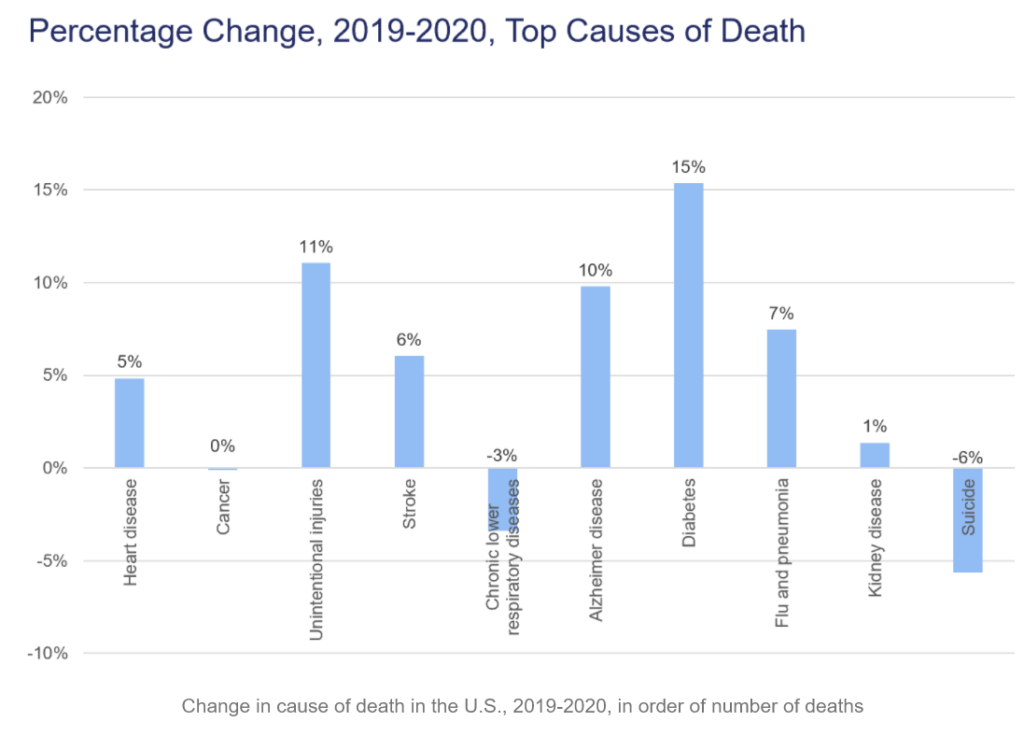
Mortality with Meep: Cause of Death Trend — Heart Disease — 1999-2020

Link: https://marypatcampbell.substack.com/p/mortality-with-meep-cause-of-death

Video:

Graphic:

Excerpt:

The long-term trend has been improvement for this cause of death, with it most obvious for the oldest age groups. This trend has been driven by improvement in medical treatment for the condition, but also due to the decrease in smoking rates… decades ago. Some causes of death have behavior that precedes the death by decades, which can get tricky to track for our top two causes of death: heart disease and cancer. Even so, smoking cigarettes has been a huge driver for both these causes, and made a large differentiator by sex and smoking status for a long time.

Author(s): Mary Pat Campbell

Publication Date: 26 July 2021

Publication Site: STUMP at substack
America’s Delta data problem

Link: https://www.axios.com/america-coronavirus-vaccines-delta-data-ababc99b-df6b-4ddb-b4b2-341733933a27.html

Excerpt:

The big picture: The Biden administration is ultimately trying to figure out how well-protected different demographics are against the virus, and for how long. From there, they can decide who should get booster shots.

But while the administration waits for more information, telling the public only that boosters aren’t necessary right now, drug companies and other countries are filling the data and communication void.

“Just think we live in a country which is incapable of telling us the percent vaccinated or unvaccinated who require hospitalization for covid. No less any more data about them. Or track breakthrough infections. Thanks @CDCgov,” tweeted Eric Topol, executive vice president of Scripps Research.

Author(s): Caitlin Owens

Publication Date: 9 August 2021

Publication Site: Axios

New York Times quashed COVID origins inquiry

Link: https://spectatorworld.com/topic/new-york-times-quashed-covid-origins-inquiry/

Excerpt:

Atop editor at the New York Times instructed Times staffers not to investigate the origins of COVID-19, two Times employees confirmed today.

‘In early 2020,’ a veteran Times employee tells me, ‘I suggested to a senior editor at the paper that we investigate the origins of COVID-19. I was told it was dangerous to run a piece about the origins of the coronavirus. There was resistance to running anything that could suggest that [COVID-19 was manmade or had leaked accidentally from a lab].’

….

In November 2019, it emerged that China Daily had failed to disclose to federal authorities millions of dollars in payments to US outlets including the Times and the Washington Post. In August 2020, the Times quietly scrubbed the China-funded advertorials from its website. Still, in October 2020, the Times ran an op-ed by Regina Ip, a member of Hong Kong’s Executive Council, justifying the repression of anti-government protests in the Hong Kong SAR.

Author(s): Dominic Green

Publication Date: 2 August 2021

Publication Site: The Spectator

US overdose deaths hit record 93,000 in pandemic last year

Link: https://apnews.com/article/overdose-deaths-record-covid-pandemic-fd43b5d91a81179def5ac596253b0304

Excerpt:

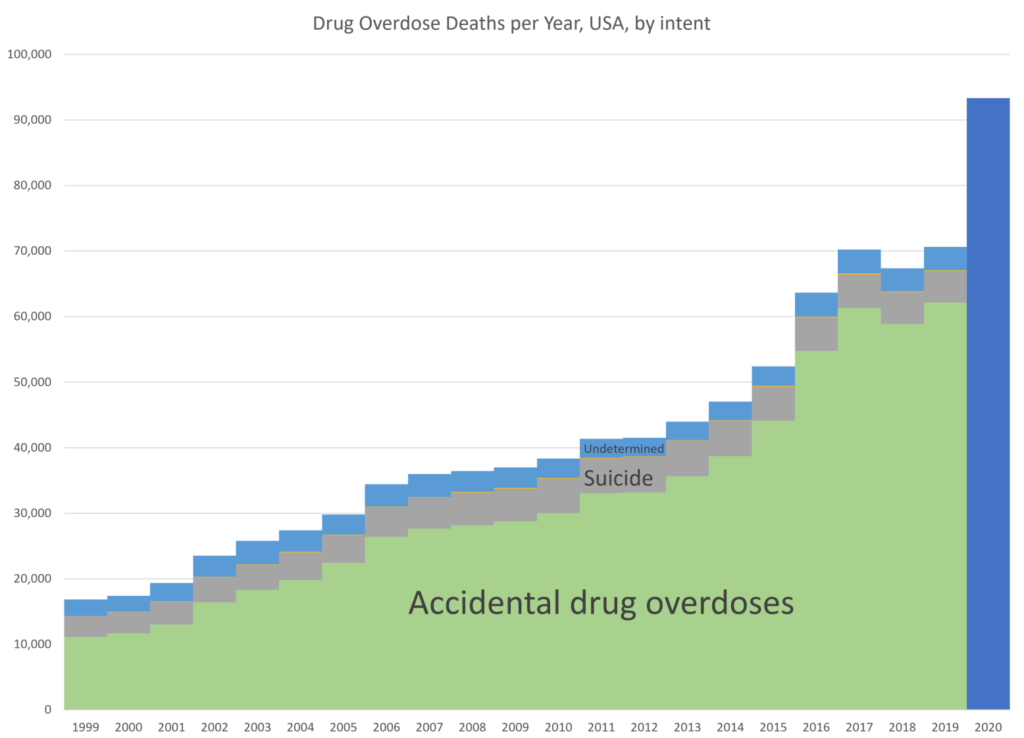
Overdose deaths soared to a record 93,000 last year in the midst of the COVID-19 pandemic, the U.S. government reported Wednesday.

That estimate far eclipses the high of about 72,000 drug overdose deaths reached the previous year and amounts to a 29% increase.

“This is a staggering loss of human life,” said Brandon Marshall, a Brown University public health researcher who tracks overdose trends.

Author(s): Mike Stobbe

Publication Date: 14 July 2021

Publication Site: Associated Press

Mortality with Meep: Huge Increase in Death by Drug Overdose in 2020

Link: https://marypatcampbell.substack.com/p/mortality-with-meep-huge-increase

Graphic:

Excerpt:

In 2020, there were over 93K deaths due to drug overdoses — a 30% increase over 2019.

This is super-bad, and worse than what I have seen for increases in other causes of death. I knew it was going to be bad, but I didn’t realize it was going to be this bad.

Author(s): Mary Pat Campbell

Publication Date: 14 July 2021

Publication Site: STUMP at substack
Study: Two in five people in U.S. who died of COVID-19 had diabetes

Link: https://www.upi.com/Health_News/2021/07/15/diabetes-high-risk-condition-death/2781626314320/

Excerpt:

As many as two of every five Americans who’ve died from COVID-19 were suffering from diabetes, making the chronic disease one of the highest-risk conditions during the pandemic, an expert says.

About 40% of deaths from COVID-19 in the United States were among diabetics, a “really quite sobering” statistic that should prompt people with the ailment to get vaccinated, said Dr. Robert Gabbay, chief scientific and medical officer for the American Diabetes Association.

……

That diabetes was implicated in up to 40% of COVID-19 deaths is particularly staggering if you consider only 10% of the U.S. population suffers from the condition.

The study, conducted by scientists at the University of Texas at El Paso, also found that one in 10 people with diabetes hospitalized with COVID-19 die within one week.

Author(s): Dennis Thompson, HealthDay News

Publication Date: 15 July 2021

Publication Site: UPI

Is life insurance a human capital derivatives business?

Link: https://math.illinoisstate.edu/Krzysio/KO-JII-Invited.pdf

Graphic:

Abstract:

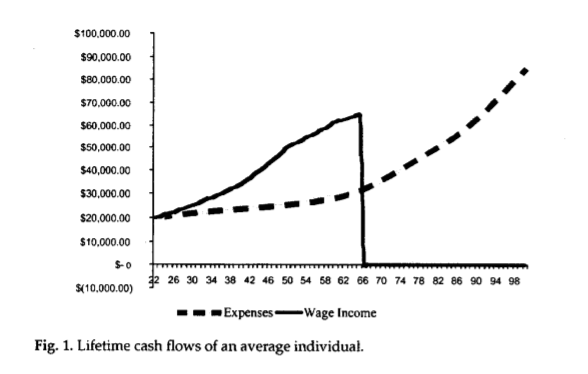
Life and disability insurance, as well as annuities, traditionally have been analyzed as products providing protection against random losses. This article proposed that these products can be viewed as derivative instruments created to address the uncertainties and inadequacies of an individual’s human capital, if human capital is viewed as a financial instrument. In short, life insurance (including disability insurance and annuities) is the business of human capital securitization.

Author(s): Krzysztof M. Ostaszewski, PhD, MAAA, FSA, CFA

Publication Date: 2003 — vol 26, pp. 1-14

Publication Site: Journal of Insurance Issues

Covid-19 deaths in Russia are soaring

Link: https://www.economist.com/europe/2021/07/10/covid-19-deaths-in-russia-are-soaring

Graphic:

Excerpt:

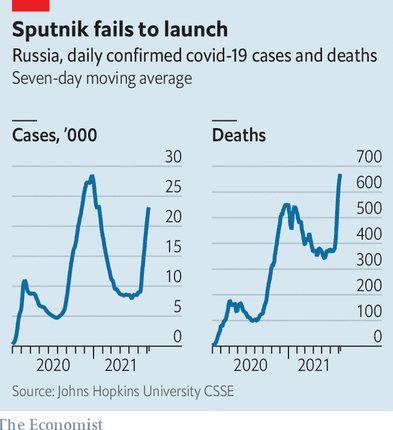
The number of new daily cases is currently around 25,000, somewhat fewer than in Britain, and rising. But whereas in Britain this surge has translated into an average of 18 daily deaths over the past week, in Russia it has resulted in an average of 670 deaths a day.

The contrast is all the more striking because Russia was the first country in the world to approve a working vaccine, one based on the same science as the British-Swedish AstraZeneca one and apparently just as effective. But whereas in Britain 78% of the population has received at least one jab, in Russia the proportion is only 20%. The difference is not the availability or the efficacy of the jab, but people’s trust in the government and its vaccines.

All of this could have been avoided. A year ago the government decided to lift a partial lockdown (Mr Putin called it “a holiday”), hoping to save itself money and to prop up the president’s faltering popularity after a prolonged slump in incomes. Mr Putin’s ratings did go back up—but so did the risk of infection.

Publication Date: 10 July 2021

Publication Site: The Economist

The economic value of targeting aging

Link: https://www.nature.com/articles/s43587-021-00080-0?fbclid=IwAR30GYDrmx1ck_1CkFvkoJUR4EttL4OxkNOgD9ZYft_jvqYa-inOhhthZao

Graphic:

Excerpt:

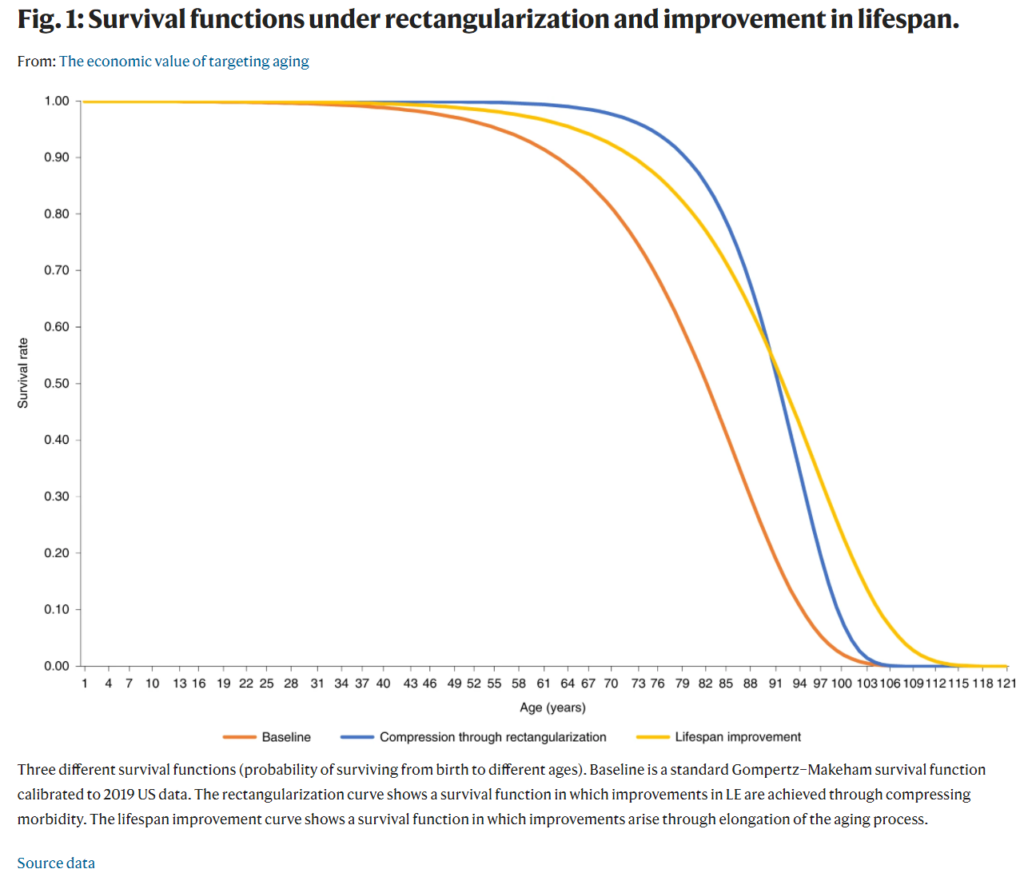
Developments in life expectancy and the growing emphasis on biological and ‘healthy’ aging raise a number of important questions for health scientists and economists alike. Is it preferable to make lives healthier by compressing morbidity, or longer by extending life? What are the gains from targeting aging itself compared to efforts to eradicate specific diseases? Here we analyze existing data to evaluate the economic value of increases in life expectancy, improvements in health and treatments that target aging. We show that a compression of morbidity that improves health is more valuable than further increases in life expectancy, and that targeting aging offers potentially larger economic gains than eradicating individual diseases. We show that a slowdown in aging that increases life expectancy by 1 year is worth US$38 trillion, and by 10 years, US$367 trillion. Ultimately, the more progress that is made in improving how we age, the greater the value of further improvements.

Author(s): Andrew J. Scott, Martin Ellison, David A. Sinclair

Publication Date: 5 July 2021

Publication Site: Nature Aging