The Spanish flu pandemic gives us the demonstration of what happens when there is a short-term large increase in mortality.
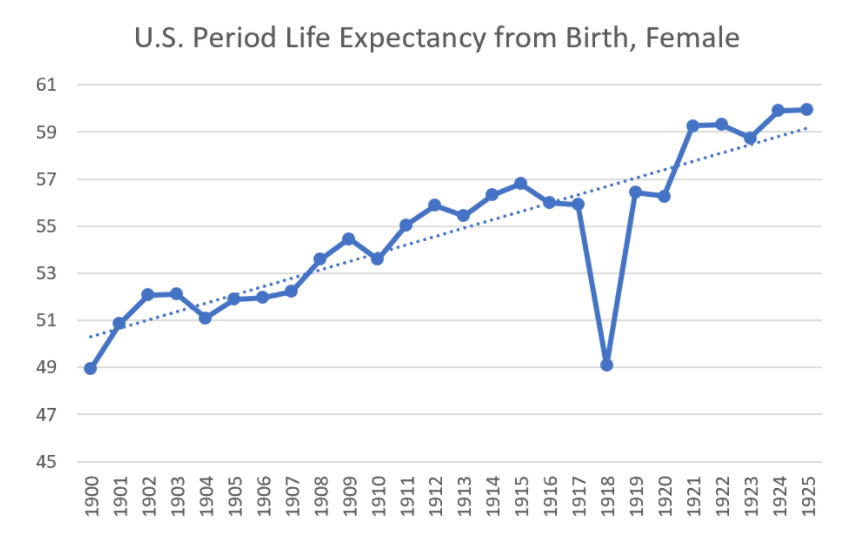
Using Social Security records of period life expectancy, there was a huge drop in life expectancy in 1918…. and then a huge increase in 1919. But going from 1917 to 1919 wasn’t really that big of a difference.
The period life expectancy drop was 12% for females, 13% for males in 1918.
Then there was an increase of 15% for females, 20% for males in 1919. The Spanish flu hit the U.S. hard in 1918, and let up in 1919.
If you compare 1919 against 1917, the life expectancy from birth increase was 1% for females, and 4% increase for males — male life expectancy was down in 1917 compared to 1916, probably related to World War I.
Now, because the pandemic produced higher death rates in 2020 compared to prior years, a period life expectancy calculated for 2020 produced lower life expectancies compared to period life expectancies calculated for prior years. That’s because it’s assumed that the elevated death rates we experienced in 2020 would apply to all future years. But if the death rates decline in 2021, then any period life expectancies calculated for 2021 would most likely be higher. And that’s certainly the hope, given that a large portion of the population has received a vaccine, which is already resulting in a dramatic decline in new infections and hospitalizations.
If you’ve survived the pandemic with your health relatively intact and if you’ve also received the vaccine, then it’s highly likely the virus won’t shorten your lifespan. Of course, new deadly variants or future deadly viruses could change that conclusion, but for now, the outlook is positive.
“Cohort life expectancies” on the other hand, are calculated for a group of people reflecting their characteristics and the experience they might expect over their lifetimes. These life expectancies are calculated in the same way as period life expectancies, except that the death rates used to estimate someone’s remaining future years are modified to reflect anticipated future changes in death rates. If you want to estimate your own remaining lifespan, a cohort life expectancy is often most appropriate.
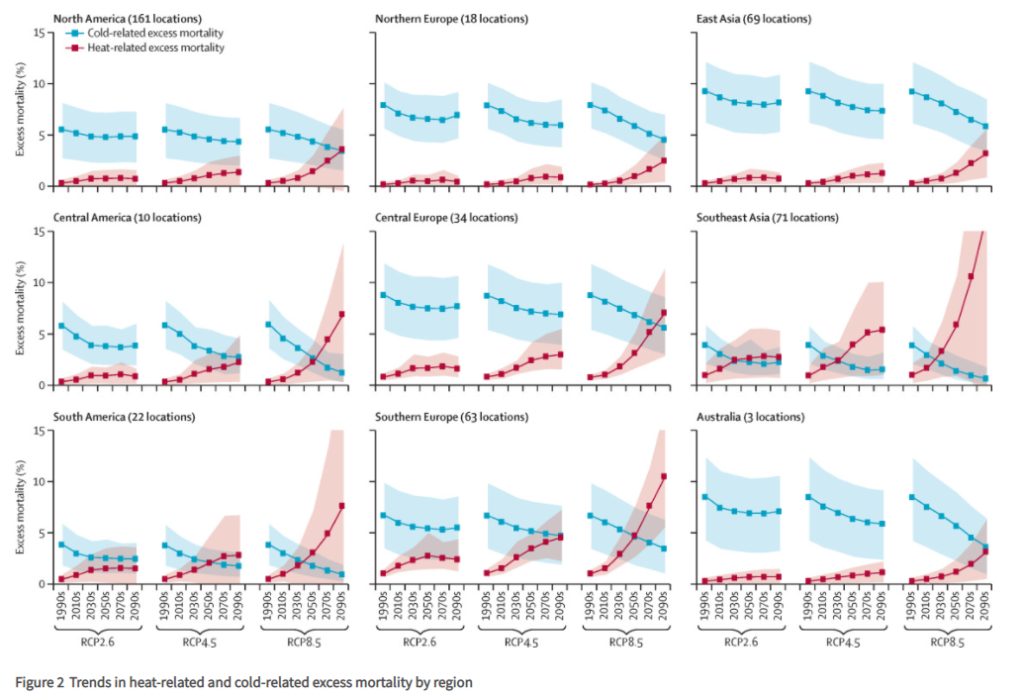
Our dataset comprised 451 locations in 23 countries across nine regions of the world, including 85 879 895 deaths. Results indicate, on average, a net increase in temperature-related excess mortality under high-emission scenarios, although with important geographical differences. In temperate areas such as northern Europe, east Asia, and Australia, the less intense warming and large decrease in cold-related excess would induce a null or marginally negative net effect, with the net change in 2090–99 compared with 2010–19 ranging from −1·2% (empirical 95% CI −3·6 to 1·4) in Australia to −0·1% (−2·1 to 1·6) in east Asia under the highest emission scenario, although the decreasing trends would reverse during the course of the century. Conversely, warmer regions, such as the central and southern parts of America or Europe, and especially southeast Asia, would experience a sharp surge in heat-related impacts and extremely large net increases, with the net change at the end of the century ranging from 3·0% (−3·0 to 9·3) in Central America to 12·7% (−4·7 to 28·1) in southeast Asia under the highest emission scenario. Most of the health effects directly due to temperature increase could be avoided under scenarios involving mitigation strategies to limit emissions and further warming of the planet.
Author(s):
Antonio Gasparrini, PhD Yuming Guo, PhD Francesco Sera, MSc Ana Maria Vicedo-Cabrera, PhD Veronika Huber, PhD Prof Shilu Tong, PhD Micheline de Sousa Zanotti Stagliorio Coelho, PhD Prof Paulo Hilario Nascimento Saldiva, PhD Eric Lavigne, PhD Patricia Matus Correa, MSc Nicolas Valdes Ortega, MSc Haidong Kan, PhD Samuel Osorio, MSc Jan Kyselý, PhD Aleš Urban, PhD Prof Jouni J K Jaakkola, PhD Niilo R I Ryti, PhD Mathilde Pascal, PhD Prof Patrick G Goodman, PhD Ariana Zeka, PhD Paola Michelozzi, MSc Matteo Scortichini, MSc Prof Masahiro Hashizume, PhD Prof Yasushi Honda, PhD Prof Magali Hurtado-Diaz, PhD Julio Cesar Cruz, MSc Xerxes Seposo, PhD Prof Ho Kim, PhD Aurelio Tobias, PhD Carmen Iñiguez, PhD Prof Bertil Forsberg, PhD Daniel Oudin Åström, PhD Martina S Ragettli, PhD Prof Yue Leon Guo, PhD Chang-fu Wu, PhD Antonella Zanobetti, PhD Prof Joel Schwartz, PhD Prof Michelle L Bell, PhD Tran Ngoc Dang, PhD Prof Dung Do Van, PhD Clare Heaviside, PhD Sotiris Vardoulakis, PhD Shakoor Hajat, PhD Prof Andy Haines, FMedSci Prof Ben Armstrong, PhD
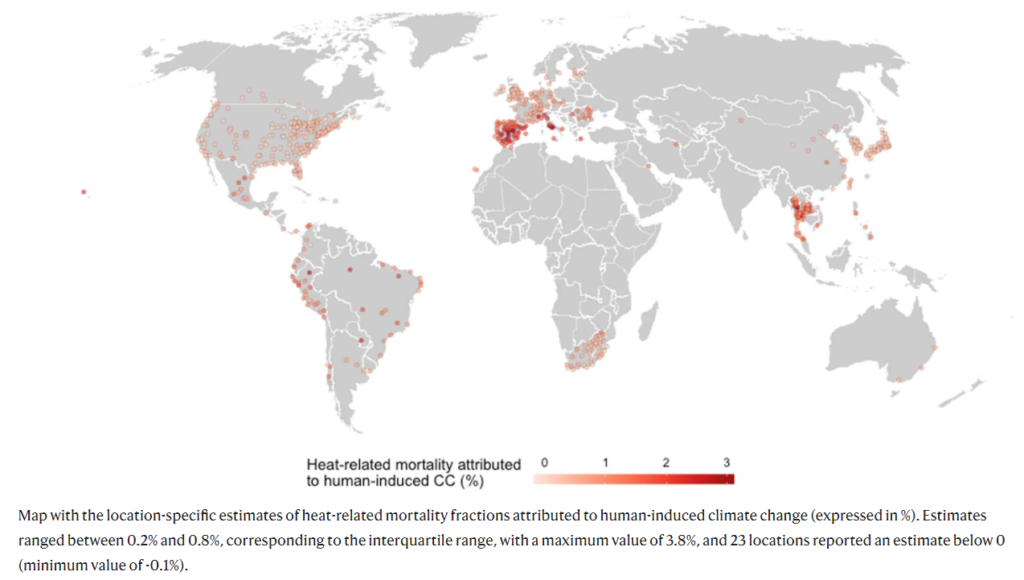
Climate change affects human health; however, there have been no large-scale, systematic efforts to quantify the heat-related human health impacts that have already occurred due to climate change. Here, we use empirical data from 732 locations in 43 countries to estimate the mortality burdens associated with the additional heat exposure that has resulted from recent human-induced warming, during the period 1991–2018. Across all study countries, we find that 37.0% (range 20.5–76.3%) of warm-season heat-related deaths can be attributed to anthropogenic climate change and that increased mortality is evident on every continent. Burdens varied geographically but were of the order of dozens to hundreds of deaths per year in many locations. Our findings support the urgent need for more ambitious mitigation and adaptation strategies to minimize the public health impacts of climate change.
Vicedo-Cabrera, A.M., Scovronick, N., Sera, F. et al. The burden of heat-related mortality attributable to recent human-induced climate change. Nat. Clim. Chang.11, 492–500 (2021). https://doi.org/10.1038/s41558-021-01058-x
Author(s): A. M. Vicedo-Cabrera, N. Scovronick, A. Gasparrini
Earlier this month, a landmark study in Nature made headlines around the world. Rising temperatures from global warming increase the number of heat deaths, now causing a third of all heat deaths, or about 100,000 deaths per year.
Obviously, this is a powerful narrative to justify urgent climate policies.
But the study left out glaring truths that even its own authors have abundantly documented. Heat deaths are declining in countries with good data, likely because of ever more air conditioning. This is abundantly clear for the US, which has seen increasing hot days since 1960 affecting a much greater population. Yet, the number of heat deaths has halved. So while global warming could result in more heat deaths, technological development in, for instance, the US, is actually resulting in fewer heat deaths.
India has officially recorded more than 390,000 coronavirus deaths, but families who have lost loved ones, health experts and statisticians say that vastly undercounts the true toll. Families like Mrs. Singh’s have been left struggling to get compensation that some states have set up for Covid-19 victims.
India’s undercount has also left a huge gap in the world’s understanding of the impact of the Delta variant, which health experts believe helped drive one of the world’s worst Covid-19 surges in April and May. India was the first to detect the highly infectious variant, which has hopscotched around the world. It is fueling a surge in the U.K., and is expected to become the dominant variant in the U.S.
The undercounting of infections and deaths is a problem world-wide, even in countries with widespread testing. The World Health Organization said last month that the global Covid-19 death toll could be two or three times the official number. The problem, however, is particularly acute in the developing world, where access to healthcare and coronavirus testing is often more limited.
….. To qualify for its Covid-19 compensation payment of 400,000 rupees, equivalent to about $5,400, the state requires a report from a certified lab, which at the time were taking days to process.The family got a test strip from the lab indicating that Mrs. Singh was positive and rushed to a doctor. …… Health experts say many Covid-19 deaths have gone uncounted among India’s vast population of rural poor, who have little access to healthcare or Covid-19 testing.
Mr. Banaji, the mathematician, says the central government has tended to praise states with low death counts and castigate those with higher counts as incompetent. “This narrative of success and failure centered on fatality numbers is very dangerous,” he said.
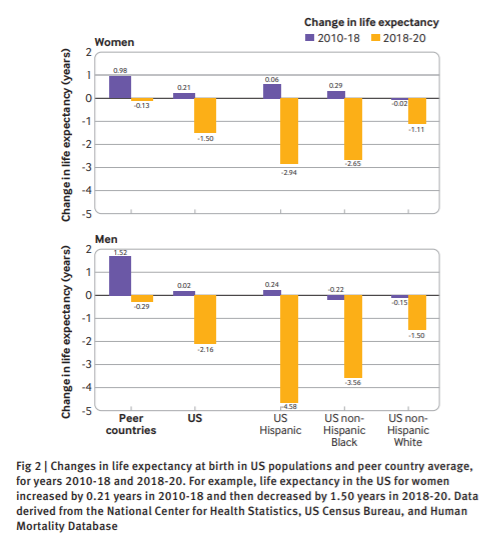
Life expectancy in the United States between 2018 and 2020 decreased by 1.87 years (to 76.87 years), which is 8.5 times the average decrease in other high-income nations. What’s more, decreases in life expectancy among Hispanic and non-Hispanic Black people were about two to three times greater than in the non-Hispanic White population, reversing years of progress in reducing racial and ethnic disparities. The life expectancy of Black men (67.73 years) is the lowest since 1998.
Those are key findings of a study conducted by researchers at the Virginia Commonwealth University School of Medicine, the University of Colorado Population Center and the Urban Institute in Washington, D.C., and published in The BMJ — a peer-reviewed medical trade journal of the British Medical Association.
Results Between 2010 and 2018, the gap in life expectancy between the US and the peer country average increased from 1.88 years (78.66 v 80.54 years, respectively) to 3.05 years (78.74 v 81.78 years). Between 2018 and 2020, life expectancy in the US decreased by 1.87 years (to 76.87 years), 8.5 times the average decrease in peer countries (0.22 years), widening the gap to 4.69 years. Life expectancy in the US decreased disproportionately among racial and ethnic minority groups between 2018 and 2020, declining by 3.88, 3.25, and 1.36 years in Hispanic, non-Hispanic Black, and non-Hispanic White populations, respectively. In Hispanic and non-Hispanic Black populations, reductions in life expectancy were 18 and 15 times the average in peer countries, respectively. Progress since 2010 in reducing the gap in life expectancy in the US between Black and White people was erased in 2018-20; life expectancy in Black men reached its lowest level since 1998 (67.73 years), and the longstanding Hispanic life expectancy advantage almost disappeared.
Conclusions The US had a much larger decrease in life expectancy between 2018 and 2020 than other high income nations, with pronounced losses among the Hispanic and non-Hispanic Black populations. A longstanding and widening US health disadvantage, high death rates in 2020, and continued inequitable effects on racial and ethnic minority groups are likely the products of longstanding policy choices and systemic racism.
Indeed, new research published Wednesday in the BMJ shows just how wide that gap has grown. Life expectancy across the country plummeted by nearly two years from 2018 to 2020, the largest decline since 1943, when American troops were dying in World War II, according to the study. But while white Americans lost 1.36 years, Black Americans lost 3.25 years and Hispanic Americans lost 3.88 years. Given that life expectancy typically varies only by a month or two from year to year, losses of this magnitude are “pretty catastrophic,” said Dr. Steven Woolf, a professor at Virginia Commonwealth University and lead author of the study.
Over the two years included in the study, the average loss of life expectancy in the U.S. was nearly nine times greater than the average in 16 other developed nations, whose residents can now expect to live 4.7 years longer than Americans. Compared with their peers in other countries, Americans died not only in greater numbers but at younger ages during this period.
The U.S. mortality rate spiked by nearly 23% in 2020, when there were roughly 522,000 more deaths than normally would be expected. Not all of these deaths were directly attributable to covid-19. Fatal heart attacks and strokes both increased in 2020, at least partly fueled by delayed treatment or lack of access to medical care, Woolf said. More than 40% of Americans put off treatment during the early months of the pandemic, when hospitals were stretched thin and going into a medical facility seemed risky. Without prompt medical attention, heart attacks can cause congestive heart failure; delaying treatment of strokes raises the risk of long-term disability.
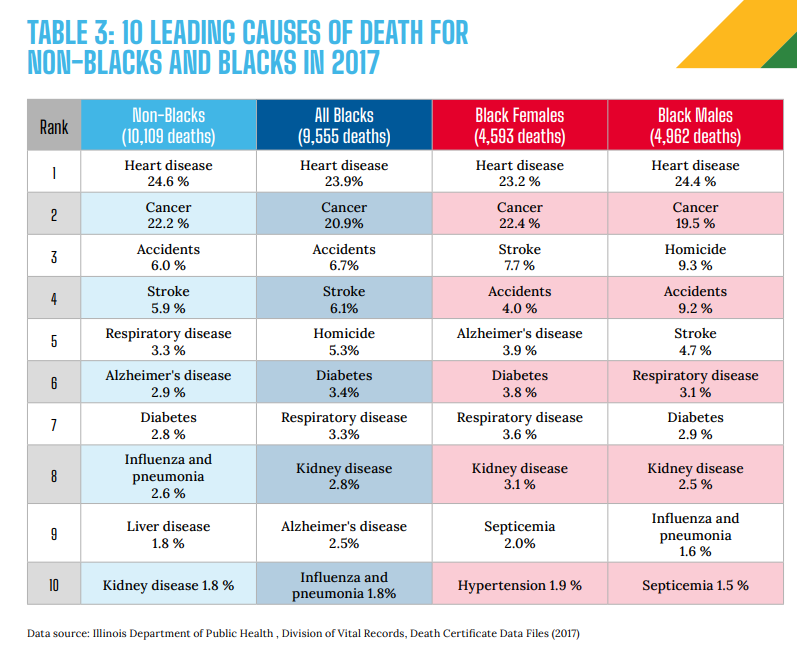
Leading causes of death among Blacks differ by sex. Among Black males, homicide and accidents (such as drug overdoses and motor vehicle accidents) combined make up almost as many deaths as deaths due to cancer. Stroke and kidney disease cause higher proportion of deaths among Black females compared to males and non-Blacks.
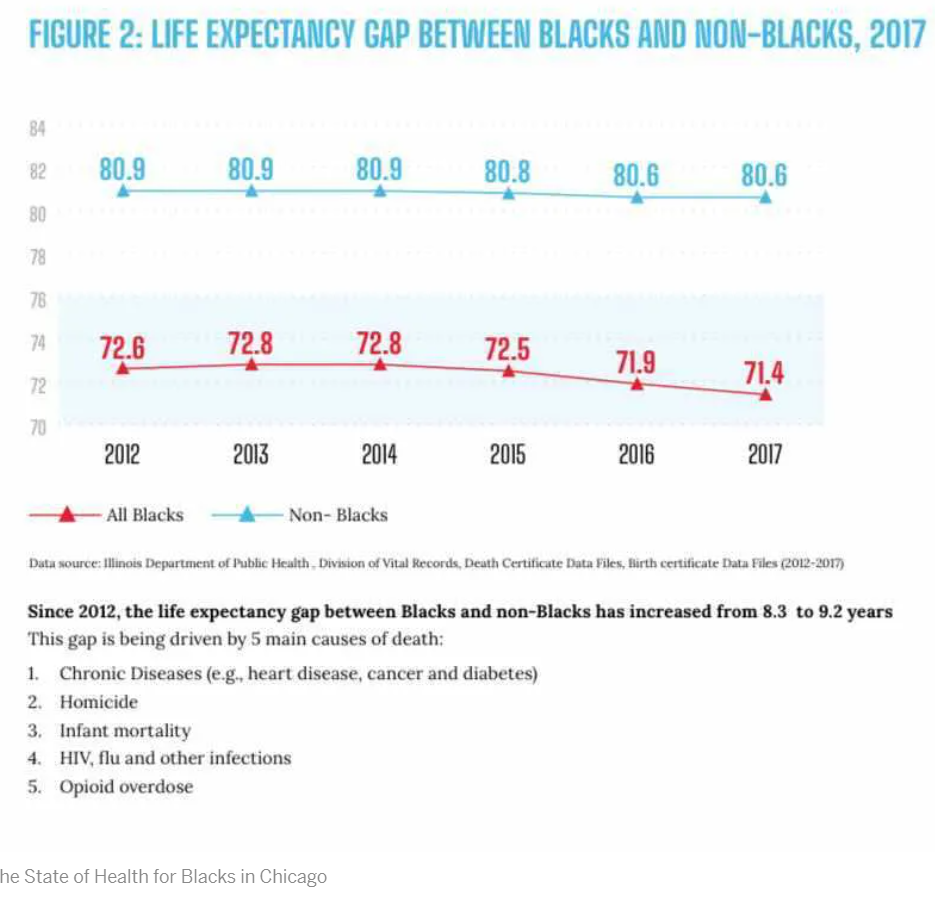
Black Chicagoans are expected to live more than nine years less than non-Black residents — and that gap in life expectancy is only growing, according to a report released Tuesday.
The report by the Chicago Department of Public Health presents a grim but unsurprising outlook on how inequities in housing, income, access to healthy food and trauma have contributed to the disparity in the city.
From 2012 to 2017, the life expectancy gap between Black residents and non-Black residents grew from 8.3 years to 9.2 years, the report found.
Black Chicagoans on average live 71.4 years while non-Black residents live 80.6 years. While non-Blacks saw their life expectancy drop by more than three months in those five years, life expectancy dropped for Blacks by more than 14 months. The report cites five main factors: chronic diseases, homicide, infant mortality, opioid overdoses and HIV, flu or other infections.
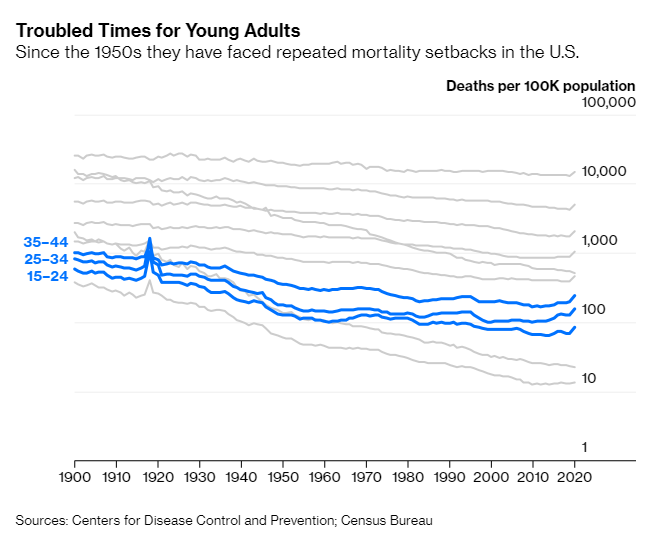
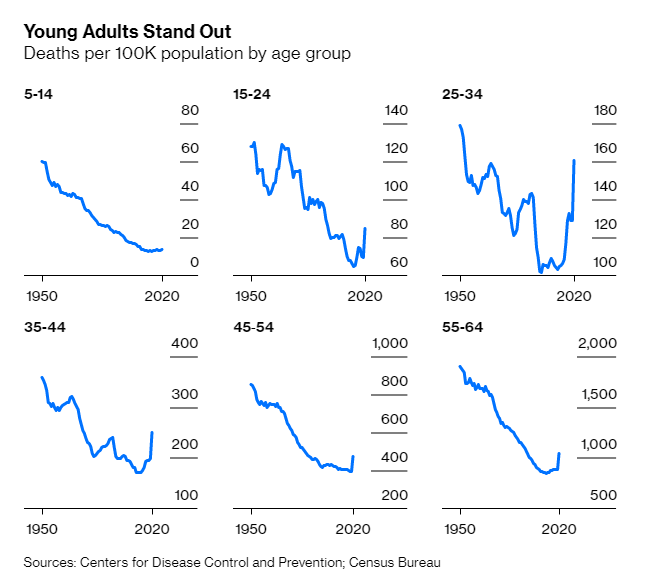
The observation that downward mortality trends have reversed in recent years for some groups of Americans is not new. Economists Ann Case and Angus Deaton helped start the discussion with their 2015 paper on rising mortality among middle-aged, non-Hispanic White Americans, and subsequently gave the phenomenon a resonant name: “deaths of despair.” Research has also identified those without college degrees and rural Americans as especially troubled.
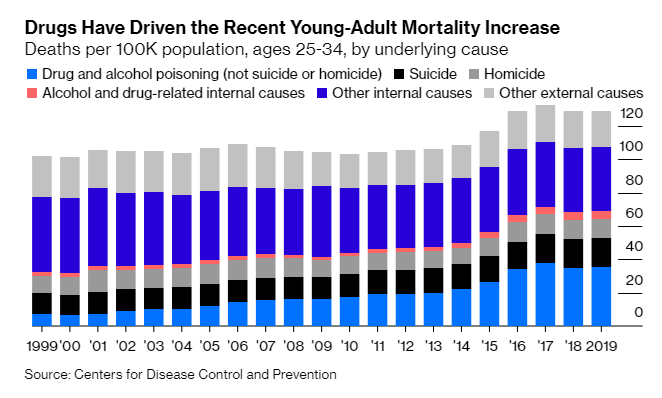
In March, a National Academies of Sciences, Engineering, and Medicine committee summed up the current state of knowledge in a 475-page report on “High and Rising Mortality Rates Among Working-Age Adults.” Advances in overall life expectancy stalled in the U.S. after 2010 even while continuing in other wealthy countries, the committee summed up, attributing this mainly to (1) rising mortality due to external causes such as drugs, alcohol and suicide among those aged 25 through 64 and (2) a slowing in declines in deaths from internal causes, chiefly cardiovascular diseases.