Sources of Fluctuations in Short-Term Yields and Recession Probabilities

Link: https://www.chicagofed.org/publications/chicago-fed-letter/2022/469

Graphic:
Excerpt:

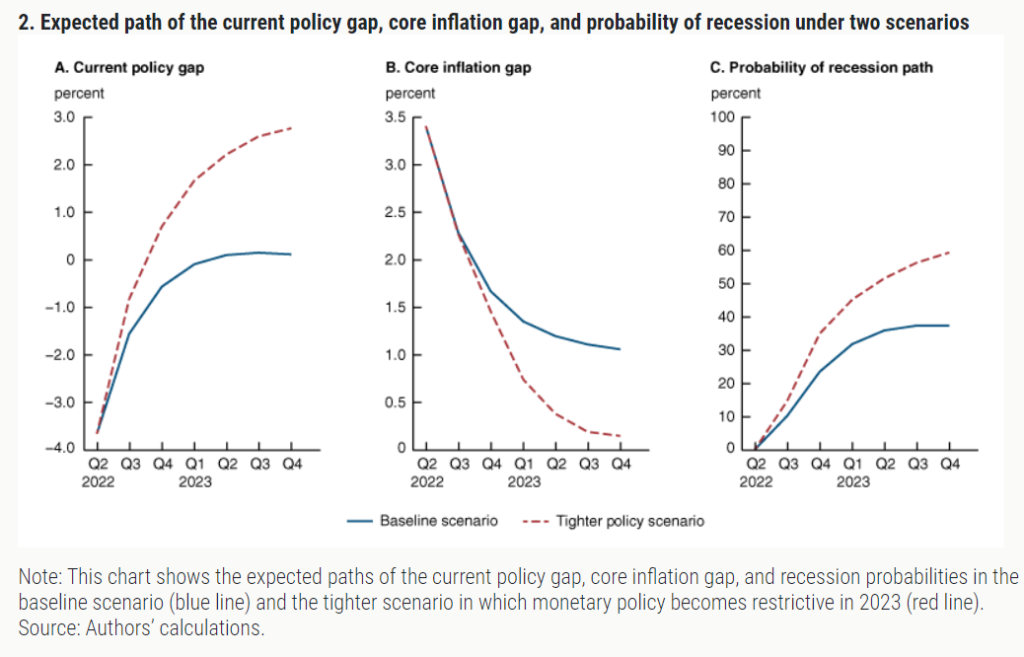
We simulate future realizations of the policy gap and the slope of inflation forecasts from the 2022:Q2 initial conditions through 2023:Q4 using the ABC model. We then evaluate the recession probability predicted by our preferred probit model for each of these simulated paths. Through this analysis, we show that future inflation outcomes and the odds of a recession depend critically on both the pace of removal of monetary policy accommodation and on how restrictive the monetary policy stance will become over the medium term. In particular, we highlight two scenarios: The first one, which we refer to as the “baseline case,” reflects the ABC model forecasts or, equivalently, the average of all simulated paths. The second one, which we label the “tighter-policy scenario,” is characterized by a faster removal of monetary policy accommodation; it is identified by the average of the simulated paths in which policy becomes restrictive by the end of 2022.11

1. Baseline case: As of early June 2022, the ABC model predicts that nominal and real yields will rise over the next six quarters, the current policy gap will narrow and become mildly restrictive in mid-2023, while core inflation will fall and remain around one percentage point above its model-implied longer-run expectations through 2023 (figure 2, blue lines in panels A and B). The expected tightening of the policy gap and a downward-sloping expected inflation path combine to increase the one-year-ahead recession probability to about 35% by 2023 (figure 2, blue line panel C). Such a level is comparable to the one estimated ahead of the 1994 monetary policy tightening cycle that was followed by a soft-landing scenario.

2. Tighter-policy scenario: In this alternative scenario, monetary policy becomes more restrictive than in the baseline case, in that the policy gap is markedly restrictive over 2023. In this case we find that core inflation declines more rapidly than under the baseline, closing the gap with its model-implied longer-run expectations almost completely by the end of 2023. By that date, in this scenario the likelihood of a recession approaches 60%, a level that, based on our historical estimates, is generally followed by a recession in our sample (figure 2, red lines).

Author(s): Andrea Ajello , Luca Benzoni , Makena Schwinn , Yannick Timmer , Francisco Vazquez-Grande

Publication Date: August 2022

Publication Site: Federal Reserve Bank of Chicago
Business Cycle Dating Procedure: Frequently Asked Questions

Link: https://www.nber.org/business-cycle-dating-procedure-frequently-asked-questions

Excerpt:

Q: The financial press often states the definition of a recession as two consecutive quarters of decline in real GDP. How does that relate to the NBER’s recession dates?

A: Most of the recessions identified by our procedures do consist of two or more consecutive quarters of declining real GDP, but not all of them. In 2001, for example, the recession did not include two consecutive quarters of decline in real GDP. In the recession from the peak in December 2007 to the trough in June 2009, real GDP declined in the first, third, and fourth quarters of 2008 and in the first and second quarters of 2009. Real GDI declined for the final three quarters of 2001 and for five of the six quarters in the 2007–2009 recession.

Q: Why doesn’t the committee accept the two-quarter definition?

A: There are several reasons. First, we do not identify economic activity solely with real GDP, but consider a range of indicators. Second, we consider the depth of the decline in economic activity. The NBER definition includes the phrase, “a significant decline in economic activity.” Thus real GDP could decline by relatively small amounts in two consecutive quarters without warranting the determination that a peak had occurred. Third, our main focus is on the monthly chronology, which requires consideration of monthly indicators. Fourth, in examining the behavior of production on a quarterly basis, where real GDP data are available, we give equal weight to real GDI. The difference between GDP and GDI—called the “statistical discrepancy”—was particularly important in the recessions of 2001 and 2007–2009.

Author(s):

Publication Date: 19 July 2021 last updated, accessed 3 August 2022

Publication Site: NBER

Coordinating VM-31 With ASOP No. 56 Modeling

Link: https://www.soa.org/sections/financial-reporting/financial-reporting-newsletter/2022/july/fr-2022-07-rudolph/

Excerpt:

In the PBRAR, VM-31 3.D.2.e.(iv) requires the actuary to discuss “which risks, if any, are not included in the model” and 3.D.2.e.(v) requires a discussion of “any limitations of the model that could materially impact the NPR [net premium reserve], DR [deterministic reserve] or SR [stochastic reserve].” ASOP No. 56 Section 3.2 states that, when expressing an opinion on or communicating results of the model, the actuary should understand: (a) important aspects of the model being used, including its basic operations, dependencies, and sensitivities; (b) known weaknesses in assumptions used as input and known weaknesses in methods or other known limitations of the model that have material implications; and (c) limitations of data or information, time constraints, or other practical considerations that could materially impact the model’s ability to meet its intended purpose.

Together, both VM-31 and ASOP No. 56 require the actuary (i.e., any actuary working with or responsible for the model and its output) to not only know and understand but communicate these limitations to stakeholders. An example of this may be reinsurance modeling. A common technique in modeling the many treaties of yearly renewable term (YRT) reinsurance of a given cohort of policies is to use a simplification, where YRT premium rates are blended according to a weighted average of net amounts at risk. That is to say, the treaties are not modeled seriatim but as an aggregate or blended treaty applicable to amounts in excess of retention. This approach assumes each third-party reinsurer is as solvent as the next. The actuary must ask, “Is there a risk that is ignored by the model because of the approach to modeling YRT reinsurance?” and “Does this simplification present a limitation that could materially impact the net premium reserve, deterministic reserve or stochastic reserve?”

Understanding limitations of a model requires understanding the end-to-end process that moves from data and assumptions to results and analysis. The extract-transform-load (ETL) process actually fits well with the ASOP No. 56 definition of a model, which is: “A model consists of three components: an information input component, which delivers data and assumptions to the model; a processing component, which transforms input into output; and a results component, which translates the output into useful business information.” Many actuaries work with models on a daily basis, yet it helps to revisit this important definition. Many would not recognize the routine step of accessing the policy level data necessary to create an in-force file as part of the model itself. The actuary should ask, “Are there risks introduced by the frontend or backend processing in the ETL routine?” and “What mitigations has the company established over time to address these risks?”

Author(s): Karen K. Rudolph

Publication Date: July 2022

Publication Site: SOA Financial Reporter

Biden’s ESG Tax on Your Retirement Fund

Link: https://www.wsj.com/articles/bidens-esg-tax-on-your-retirement-fund-pension-planning-regulation-climate-change-investment-returns-portfolios-11658245467?st=4e8f8bvbqr4vurf&reflink=desktopwebshare_permalink

Excerpt:

BlackRock CEO Larry Fink wrote in 2020 that “sustainable investing is the strongest foundation for client portfolios.” Al Gore said in 2021 that “you don’t have to trade values for value. Green can enhance returns.” These claims haven’t aged well: ESG (environmental, social and governance) funds have trailed the market since the beginning of the year and are badly underperforming the sectors they shun, including oil, gas and coal.

That may spur retirement fund managers to reconsider their commitments to ESG funds. But new ESG-favoring regulations may come to the rescue. Last year the U.S. Labor Department proposed a regulation that would tell retirement-fund managers to consider ESG factors such as “climate change” and “collateral benefits other than investment returns” when investing employees’ money.

This would encourage America’s perpetually underfunded pension plans to invest in politically correct but unproven ESG strategies. It would also violate retirees’ basic right to have their money invested solely to advance their financial interests.

….

The new regulation may also expose fiduciaries who don’t consider ESG factors to lawsuits. Already, activist shareholders are pursuing litigation against public companies that don’t take ESG-approved steps. NortonLifeLock was sued for allegedly breaching its fiduciary duties by telling investors it was committed to “diversity” when it had no racial minorities on its board. Exxon was sued for allegedly misleading investors by failing to disclose the likely effect of climate change on its bottom line. To date, courts have generally found that no reasonable investor would make investment decisions based on board diversity or, as one judge put it, “speculative assumptions of costs that may be incurred 20+ or 30+ years in the future.”

Author(s): Vivek Ramaswamy and Alex Acosta

Publication Date: 19 Jul 2022

Publication Site: WSJ

Fed Rate Hike Odds Jump to Full Point After the Hot CPI Report

Link: https://mishtalk.com/economics/fed-rate-hike-odds-jump-to-full-point-after-the-hot-cpi-report

Graphic:

Excerpt:

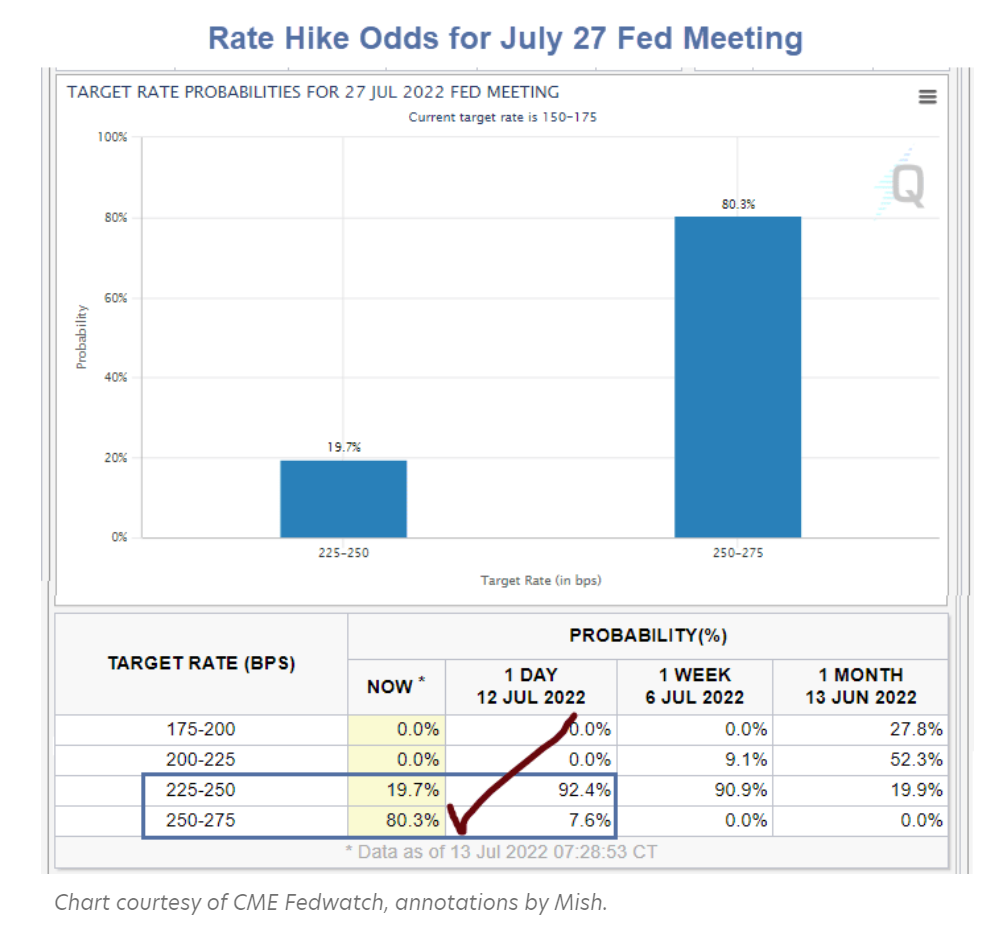
Yesterday, the market penciled in a three-quarter point hike. Today, the market expectation is for a full point hike.

The WSJ notes that would be the largest hike since the Fed started directly using overnight interest rates to conduct monetary policy in the early 1990s.

Author(s): Mike Shedlock

Publication Date: 13 July 2022

Publication Site: Mish Talk

A Framework for Defining a Role for Insurers in “Uninsurable” Risks: Insights from COVID-19

Link: https://content.naic.org/sites/default/files/JIR-ZA-40-10-EL.pdf

Graphic:

Excerpt:

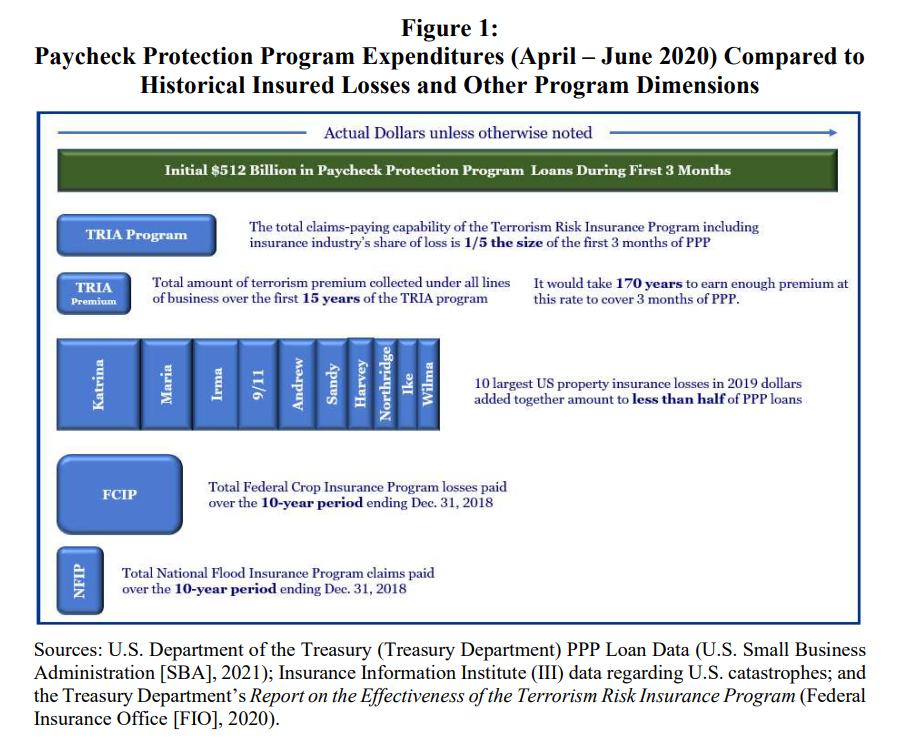
RETHINKING UNINSURABILITY While many have viewed insurability as a binary choice with respect to a risk (i.e., insurable or uninsurable), insurability is more appropriately considered on a continuum, ranging from easy-to-insure, such as automobile or life insurance, to difficult-to-insure, such as pandemic, loss of the electrical grid, and other extreme catastrophic risks.

FRAMEWORK The role of private and public sectors in dealing with risks that are difficult-to-insure should be to develop strategies that enable a greater degree of insurability. To do so, the framework suggests that policymakers consider three fundamental options in dealing with the insurance industry:

Status Quo (SQ) –This option (SQ) contemplates a similar dynamic to that experienced with COVID-19, wherein businesses, nonprofits, and local governments found limited (if any) insurance coverage for their losses and ex post relief programs funded by the government.

Service Provider (SP) – This option (SP) contemplates an administrative, non-risk-bearing role for the insurance industry while the entire cost of claims would be publicly financed.

Service and Risk (SR) –In addition to its role as a service provider as characterized by SP, this option (SR) would expect insurers to commit capital – in an amount that does not threaten their financial viability – to cover a specified layer or other defined element of losses.

Author(s): Howard Kunreuther, Jason Schupp

Publication Date: 2021

Publication Site: NAIC

SEC Adopts Amendments to Proxy Voting Advice Rules

Link: https://www.ai-cio.com/news/sec-adopts-amendments-to-proxy-voting-advice-rules/

Excerpt:

The U.S. Securities and Exchange Commission Wednesday adopted amendments to its rules governing proxy voting advice, representing another step forward in what has been a fraught regulatory process.

SEC Chair Gary Gensler, in a statement said, the final amendments aim to avoid burdens on proxy voting advice businesses that may impair the timeliness and independence of their advice. The amendments also address misperceptions about liability standards applicable to proxy voting advice, Gensler says, while preserving investors’ confidence in the integrity of such advice.

“I am pleased to support these amendments because they address issues concerning the timeliness and independence of proxy voting advice, which would help to protect investors and facilitate shareholder democracy,” Gensler says. “It is critical that investors who are the clients of these proxy advisory firms are able to receive independent and timely advice.”

As outlined in a press release distributed after the vote by the SEC, Wednesday’s final amendments rescind two rules applicable to proxy voting advice businesses that the Commission adopted in 2020. Specifically, the final amendments rescind conditions to the availability of two exemptions from the proxy rules’ information and filing requirements on which proxy voting advice businesses often rely.

Author(s): John Manganaro

Publication Date: 14 July 2022

Publication Site: ai-CIO

PBGC Finalizes Rescue of Ailing Multiemployer Pension Plans

Link: https://www.ai-cio.com/news/pbgc-finalizes-rescue-of-ailing-multiemployer-pension-plans/

Excerpt:

The Pension Benefit Guaranty Corporation, under the direction of the Biden administration, has published the final rule implementing the American Rescue Plan Act of 2021’s Special Financial Assistance program.

According to supporters of the program, the Special Financial Assistance program, which is already operating on an interim basis, will protect millions of workers in stressed multiemployer union pension plans who previously faced the possibility of significant cuts to their benefits.

….

Initially, the interim final rule applied a single rate of return included in the statute that is higher than could be expected for SFA funds given that they were required to be invested exclusively in safe, but low-return, investment-grade fixed-income products. The final rule uses two different rates of return for SFA and non-SFA assets, so that the interest rate for SFA assets is more realistic given the investment limitations on these funds.

Another change in the final rule allows up to 33% of SFA to be invested in return-seeking assets that are projected to allow plans to receive a higher rate of return on their investments than under the interim final rule, subject to certain protections. Namely, this portion of plans’ SFA funds generally must be invested in publicly traded assets on liquid markets to ensure responsible stewardship of federal funds. These return-seeking investments include equities, equity funds and bonds. The other 67% of SFA funds must be invested in investment-grade fixed-income products.

The third major change is meant to ensure plans can confidently restore both past and future benefits and enter 2051 with rising assets. PBGC designed the final rule to ensure that no “MPRA plan”—a group of fewer than 20 multiemployer plans that remained solvent by cutting benefits pursuant to the Multiemployer Pension Reform Act of 2014—was forced to choose between restoring its benefit payments to previous levels and remaining indefinitely solvent. Instead, the final rule ensures that all MPRA plans avoid this dilemma, supporting them with enough assistance so that these plans can both restore benefits and be projected to remain indefinitely solvent going into 2051.

According to PBGC leadership, these changes collectively ensure that all plans that receive SFA are projected to be solvent and pay full benefits through at least 2051.

Author(s): John Manganaro

Publication Date: 7 July 2022

Publication Site: ai-CIO

Hospitals Are Flouting — And Fighting — Price Transparency Rules

Link: https://www.levernews.com/hospitals-are-flouting-and-fighting-price-transparency-rules/

Excerpt:

The vast majority of U.S. hospitals are ignoring a new bipartisan federal law that requires the facilities to make their service prices available to the public, new research shows, and the Biden administration is facing growing criticism for not doing enough to enforce compliance with the landmark rule.

Now one state, Colorado, has taken matters into its own hands, passing an innovative law to bring its hospitals into compliance with the federal price transparency requirements — despite health care lobbyists’ efforts to sink the legislative effort.

….

Against the backdrop of limited federal enforcement, Colorado is leading the charge on creatively bringing hospitals into compliance, thanks to a new state law: House Bill 1285.

The law, recently signed by Gov. Jared Polis (D) and effective starting this August, has dual goals of accelerating the timeline on which hospital systems must meet the federal mandate, and curbing the crippling medical debt that plagues more than 100 million Americans.

The measure adds a state-level enforcement mechanism by requiring that hospitals be in compliance with the federal pricing transparency act in order to send Coloradans to collections for medical bills.

David Silverstein, founder and chairman of patient advocacy organization Broken Healthcare, wrote the bill and spearheaded the effort to get it across the finish line.

Author(s): Aditi Ramaswami

Publication Date: 27 Jun 2022

Publication Site: The Lever

The Asininity of Inflation Expectations, Once Again By Powell and the Fed

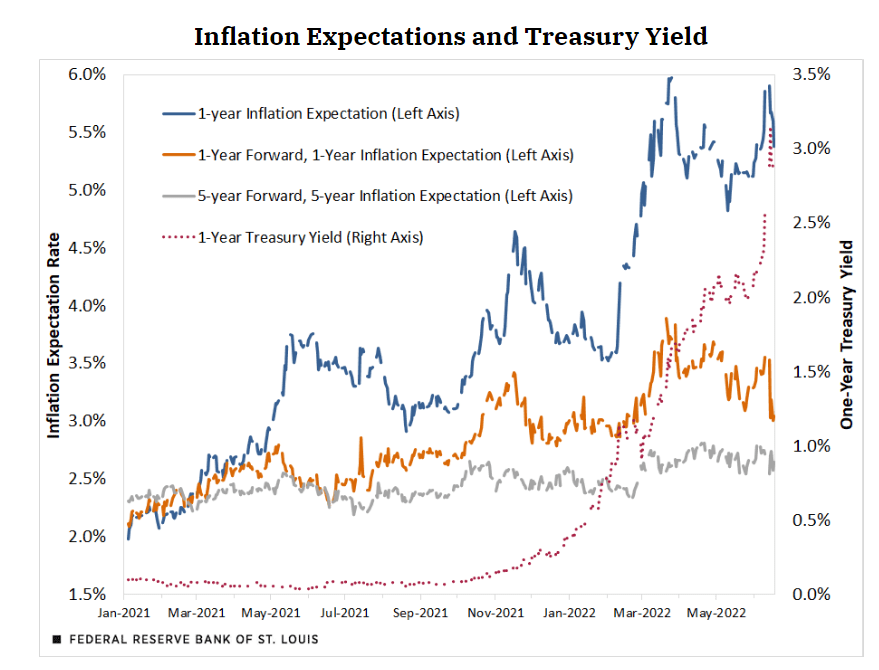
Link: https://mishtalk.com/economics/the-asininity-of-inflation-expectations-once-again-by-powell-and-the-fed

Graphic:

Excerpt:

Common sense and practical examples suggest that inflation expectations theory is ass backward.

So much of the CPI is nondiscretionary that it’s difficult to impossible for CPI expectations to matter. 

Yet, economists focus on expectations that don’t matter and ignore the expectations that do matter, namely asset prices!

I have written about this several times previously, two of them before I even found the Fed study supporting my view. 

…..

A BIS study concluded “Deflation may actually boost output. Lower prices increase real incomes and wealth. And they may also make export goods more competitive.

Indeed, that must be the case as more goods for less money by default improves standards of living.

The Fed was hell bent on reducing standards of living via inflation. Now they struggle to undo the inflation and asset bubble consequences they created. 

The Fed is the problem, not the solution.

Author(s): Mike Shedlock

Publication Date: 25 Jun 2022

Publication Site: Mish Talk

Essential Terms of the Authority Crisis

Link: https://polimath.substack.com/p/essential-terms-of-the-authority

Graphic:

Excerpt:

This last week, the CDC held their ACIP meeting to discuss whether or not they should recommend the COVID vaccines for children 6 months to 5 years old. While presenting on the danger of the virus for children, a slide was shown claiming that COVID presented as one of the leading causes of death for children.

Kelley, who runs covid-georgia.com, saw this slide and immediately knew it was false. She has been tracking COVID data in excruciating detail in Georgia since the beginning of the pandemic and has recently become an expert on the CDC’s pediatric death data simply because it was such a disaster and she wanted to get down to the truth of the matter.

This slide above is no small error. Not only did it count the wrong number for pediatric COVID deaths, it compared all pediatric COVID deaths in a 26-month period to annualized deaths from other causes. This is a massive data error, and yet it persisted through a supposedly rigorous data check from 11 authors and was selected by top-tier scientists for their landmark presentation to the most knowledgeable experts in the field.

Author(s): Matt Shapiro

Publication Date: 21 Jun 2022

Publication Site: Marginally Compelling at substack

AMENDMENT 1 WOULD GUARANTEE $2,100 PROPERTY TAX HIKE FOR TYPICAL ILLINOIS FAMILY

Link: https://www.illinoispolicy.org/amendment-1-would-guarantee-2100-property-tax-hike-for-typical-illinois-family/

Graphic:

Excerpt:

Amendment 1 would grant government unions unprecedented bargaining powers as a “fundamental right,” including the power to override voters and state lawmakers. Proponents are selling it as a constitutional ban on passing right-to-work laws – laws that protect employees’ rights to keep their jobs without having to pay fees to a union. Illinois is not among the 28 states that currently have right-to-work laws, so that aspect has little meaning.

The amendment does include three other provisions that together would severely weaken taxpayers’ voices in state government and make it easier for government union bosses to make unaffordable demands in collective bargaining contracts. First, virtually anyone would have a fundamental right to collective bargaining if they could be considered an employee in any context, including even prisoners. Second, bargaining would be expanded beyond just wages, hours and working conditions to include broad new subjects covering public policy decisions or how to run a businesses. Third, the amendment prevents lawmakers from ever limiting or scaling back on these rights in any way.

Even without these provisions, powerful government unions helped public sector wages grow 60% faster than the private sector in Illinois from 1998 to 2019.

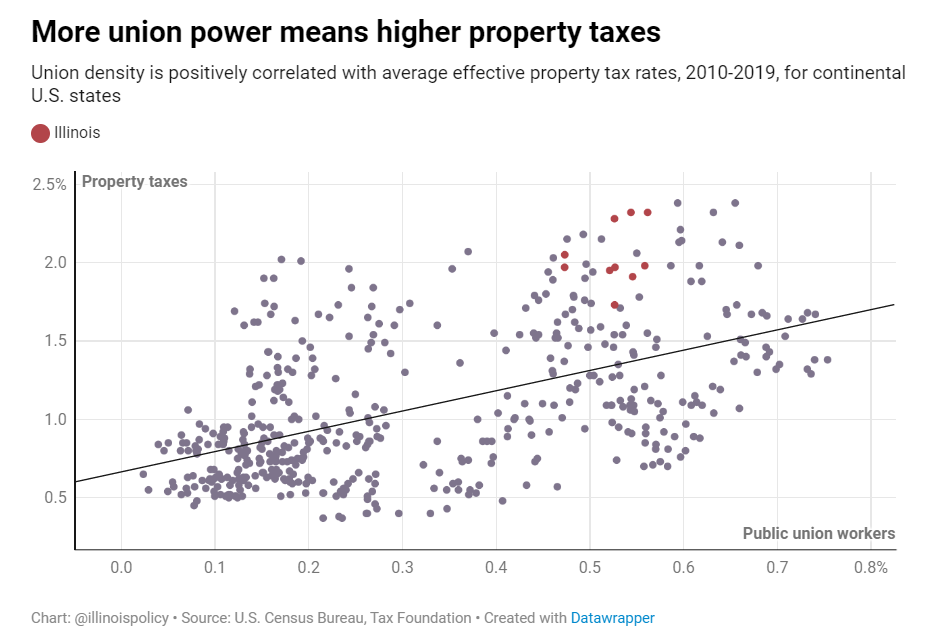
Peer-reviewed research shows stronger government worker unions cause the cost of government to increase, with powerful unions putting even more upward pressure on benefits than on wages. Government worker retirement benefits, which flow mostly to government union workers, have left Illinois local governments with $75 billion in pension debt and are already the primary cause of rising property taxes. Government unions helped Illinois politicians build the state and local pension crisis by supporting both unaffordable benefits as well as irresponsible funding games that pushed costs into the future.

Nationwide data from 2010 to 2019 show a significant statistical association between the percentage of government workers who are members of a government worker union and each state’s average effective property tax rate.

Author(s): Adam Schuster

Publication Date: 15 Jun 2022

Publication Site: Illinois Policy Institute