U.S. Seizes Share of Ransom From Hackers in Colonial Pipeline Attack

Link: https://www.nytimes.com/2021/06/07/us/politics/pipeline-attack.html

Excerpt:

The Justice Department said on Monday that it had seized much of the ransom that a major U.S. pipeline operator had paid last month to a Russian hacking collective, turning the tables on the hackers by reaching into a digital wallet to snatch back millions of dollars in cryptocurrency.

Investigators in recent weeks traced 75 Bitcoins worth more than $4 million that Colonial Pipeline had paid to the hackers as the attack shut down its computer systems, prompting fuel shortages, a spike in gasoline prices and chaos at airlines.

Federal investigators tracked the ransom as it moved through a maze of at least 23 different electronic accounts belonging to DarkSide, the hacking group, before landing in one that a federal judge allowed them to break into, according to law enforcement officials and court documents.

The Justice Department said it seized 63.7 Bitcoins, valued at about $2.3 million. (The value of a Bitcoin has dropped over the past month.)

Author(s): Katie Benner, Nicole Perlroth

Publication Date: 7 June 2021

Publication Site: New York Times
Reforming Health Insurance: Competition Across State Lines

Link: https://www.manhattan-institute.org/reforming-health-insurance-across-states?utm_source=mailchimp&utm_medium=email

Graphic:

Excerpt:

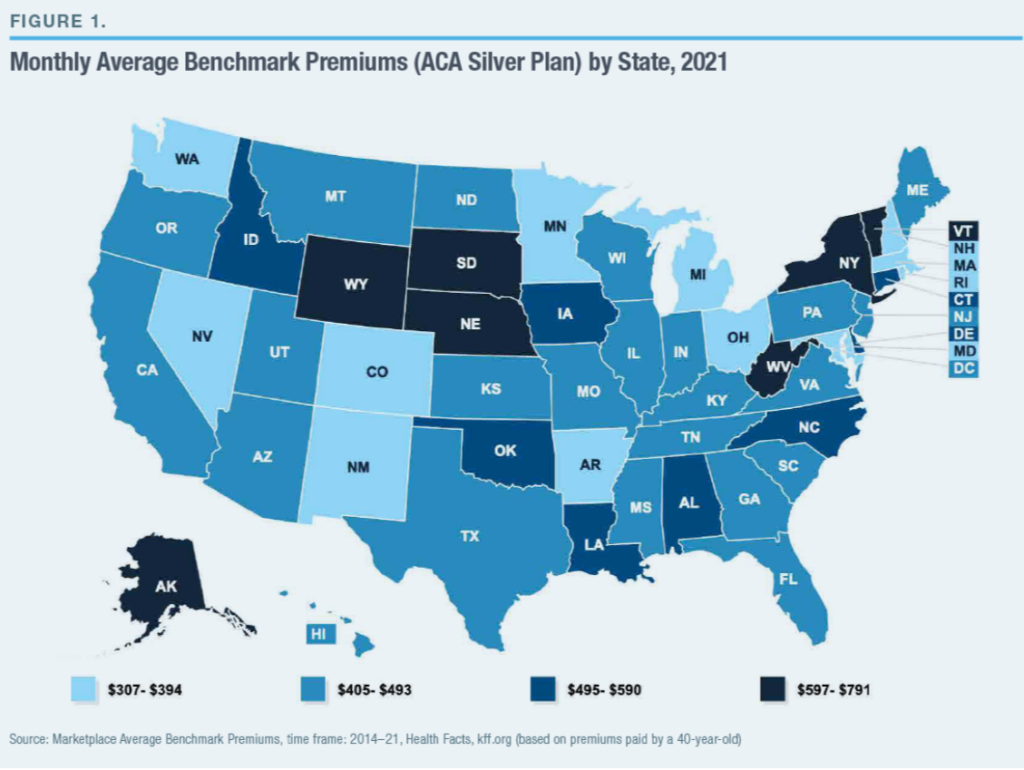
State governments often operate with limited administrative and technical resources and are highly vulnerable to lobbying by interest groups. Medical providers—physicians and hospitals—are well represented in state capitols, and they frequently push legislatures to mandate that insurers pay for services that they provide, as a way to increase the sales (and prices) of these services.

The typical state had fewer than one benefit mandate in 1970; by 2017, the average was 37. James Bailey of Temple University has estimated that each benefit mandate enacted by states tends to increase health-insurance premiums by 0.4%–1.1% and that new mandates were responsible for 9%–23% of premium increases during 1996–2011. Benefit mandates may have added value to insurance coverage by preventing insurers from leaving gaps in coverage, in order to deter sicker individuals from enrolling.[9] Still, in a study of the period 1989–94, Frank Sloan and Christopher Conover of Duke University estimated that 20%–25% of Americans without health insurance were deterred from purchasing coverage because of the added costs resulting from benefit mandates.[10]

Lobbyists for hospitals and physicians have similarly pushed states to enact laws that increase their pricing power, by making it hard for insurers to exclude them from networks of covered providers. When HMOs began to squeeze hospital costs in the late 1990s, more than 1,000 bills were introduced in state legislatures. Most states enacted laws requiring insurers to reimburse “any willing provider” for treatment according to their standard payment arrangements. A study by Maxim Pinkovskiy of the Federal Reserve Bank of New York found that anti-HMO state laws drove up the incomes of medical providers, increased service use, slowed reduction in hospital lengths of stay, and caused U.S. health-care spending to increase by 2% of GDP—accounting for much of the growth in health-insurance costs in the early 2000s.[11]

Author(s): Chris Pope

Publication Date: 8 June 2021

Publication Site: Manhattan Institute

The Federal Insurance Office: Looking Back, Looking Forward

Link: https://www.rstreet.org/2021/05/19/the-federal-insurance-office-looking-back-looking-forward/

Full pdf: https://www.rstreet.org/wp-content/uploads/2021/05/Final-No-231-FIO.pdf

Graphic:

Excerpt:

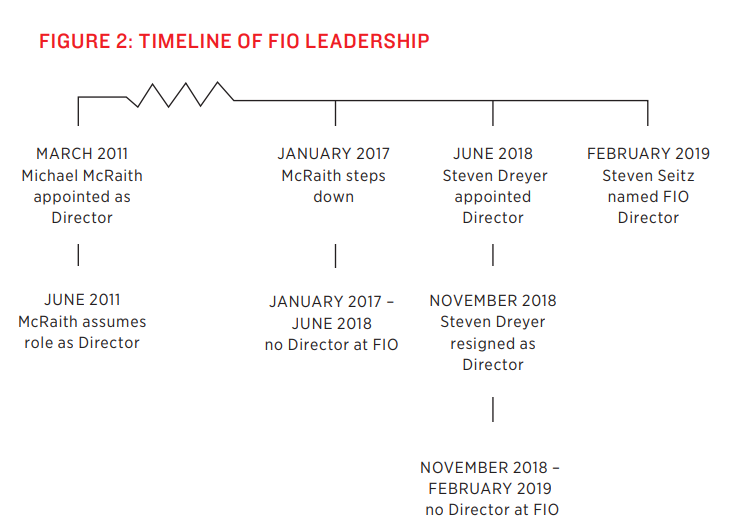
1) The FIO was created in the wake of the financial crisis, as part of the Dodd-Frank Act. It has since been active on two fronts: as a source of information about the insurance industry for the U.S. Department of the Treasury and other branches of government, and as a representative of the insurance industry in international negotiations.

2) The FIO has had a challenging first decade. Since its launch, insurers have been concerned that the introduction of a new federal body, like all bureaucracies, is the camel’s nose in the tent, which would eventually lead to attempted expansion of its scope. Today, even though many have come to accept the FIO—provided it does not attempt to exceed its authority—there are still efforts to abolish it.

3) In the past, government restrictions of the free market with involvement in insurance have proven inefficient and anticompetitive. Should the FIO advance legislative attempts to address “affordability and accessibility” of insurance, it will likely contribute to the disruption of an efficient private market closely regulated at the state level.

Author(s): Jerry Theodorou

Publication Date: 19 May 2021

Publication Site: R Street Institute

CalPERS Desperate Response to Suit Over Illegal Secret Board Discussions and Other Abuses Seeks to Drag Case Out as Long As Possible

Excerpt:

Jelincic is challenging CalPERS’ dubious denials of two different Public Records Act requests he made. One focuses on impermissible secret board discussions shortly after Chief Investment Officer Ben Meng’s sudden resignation last August. The filing not only calls for these records to be made public but also demands that board members be released to discuss all the matters that CalPERS impermissibly covered in the August “closed session”. The second involves CalPERS’ continuing efforts to hide records showing how it overvalued real estate investments by $583 million. Yet CalPERS not only has said nary a peep about bogus valuations are larger than the total amount it was slotted to invest in a mothballed solo development project, 301 Capitol Mall, but it continues to publish balance sheets that include the inflated results.

We predicted that CalPERS would be be even more inclined than usual to fight these Public Records Act requests because the filing seeks remedies beyond release of the records. First, it requests that CalPERS be found to have violated the Bagley-Keene Open Meeting Act. Second, to the extent that the judge rules that the board discussed items in closed session that should have been agendized for and deliberated in open session, the suit asks that board members be permitted to disclose the contents of those particular discussions in public. Third, the filing calls on the court to require that CalPERS make video and audio recordings of all closed sessions and keep them for five years (this is something that CalPERS currently does but this obligation is meant to shut the door to “the dog ate my disk” pretenses down the road.)

Author(s): Yves Smith

Publication Date: 3 June 2021

Publication Site: naked capitalism

The SEC’s job is bigger than just protecting the investors, Mr. Gensler

Link: https://www.truthinaccounting.org/news/detail/the-secs-job-is-bigger-than-just-protecting-the-investors-mr-gensler

Excerpt:

Unlike FASB, the SEC has no control over GASB. But the Commission is obligated “to protect investors in the municipal markets from fraud, including misleading disclosures [emphasis added].” Taken together, the SEC’s own statements make a strong case that it is obligated to prevent fraud in state and local governments’ financial reports, which are confusing and obfuscate the truth. 

The state and local governments’ annual financial reports are based on shoddy accounting practices. If confusing and misleading disclosures are considered fraud, then annual reports produce fraudulent disclosures.

It is confusing and misleading that the GASB requires state and local governments to keep two sets of books. Annual financial reports include governmental fund statements that are prepared using an accounting basis called the “modified accrual basis,” which in essence uses short-sighted cash accounting, while the consolidated financial statements are prepared using accrual accounting standards similar to those used by corporations. 

Author(s): Sheila Weinberg

Publication Date: 20 May 2021

Publication Site: Truth in Accounting

Teachers union demands leadership changes at embattled PSERS pension fund

Link: https://www.post-gazette.com/news/state/2021/05/21/Teachers-union-demands-leadership-changes-at-embattled-PSERS-pension-fund/stories/202105210131

Excerpt:

A union that represents 61,000 schoolteachers statewide called on most of the board of the Pennsylvania State Employees’ Retirement System to resign amid an ongoing FBI investigation.

“Through alleged errors and omissions, and under a shroud of secrecy, this PSERS Board appears to have jeopardized the present and future financial security of our Commonwealth’s most dedicated public servants,” Arthur Steinberg, president of the Pennsylvania chapter of the American Federation of Teachers, wrote in a letter to PSERS board members.

In the letter, Mr. Steinberg called for every board member appointed prior to January 2021 to immediately resign. That would reduce the 15-member board to two: the newly elected State Treasurer Stacy Garrity, a Republican, and state Sen. Katie Muth, D-Montgomery County.

Author(s): WALLACE MCKELVEY, pennlive.com

Publication Date: 21 May 2021

Publication Site: Pittsburgh Post-Gazette

Con of the Week: Greensill Capital

Link: https://taibbi.substack.com/p/con-of-the-week-greensill-capital

Excerpt:

In finance there regularly appears a character who stands on a soapbox and claims to have re-discovered the natural laws of the universe. Go ahead, jump: with 10 shares of Invest-O, you won’t come down! Alan Greenspan’s declaration in the middle of the first tech bubble that we might be in the middle of a “once-or twice-in-a-century phenomenon that will carry productivity trends to a new higher track” helped birth the “new paradigm” theory, which denounced caution before investing in companies without revenues or plans as anachronistic timidity.

Greensill prophesied a revolution in his erstwhile dull trade. He hammered the theme that “AI” and “Big Data” were bringing about a “tectonic shift,” described by one writer as “the biggest revolution in history.” 

Author(s): Matt Taibbi

Publication Date: 19 May 2021

Publication Site: TK News

TK Newsletter: Introducing “Racket of the Week”

Link: https://taibbi.substack.com/p/tk-newsletter-introducing-racket

Graphic:

Excerpt:

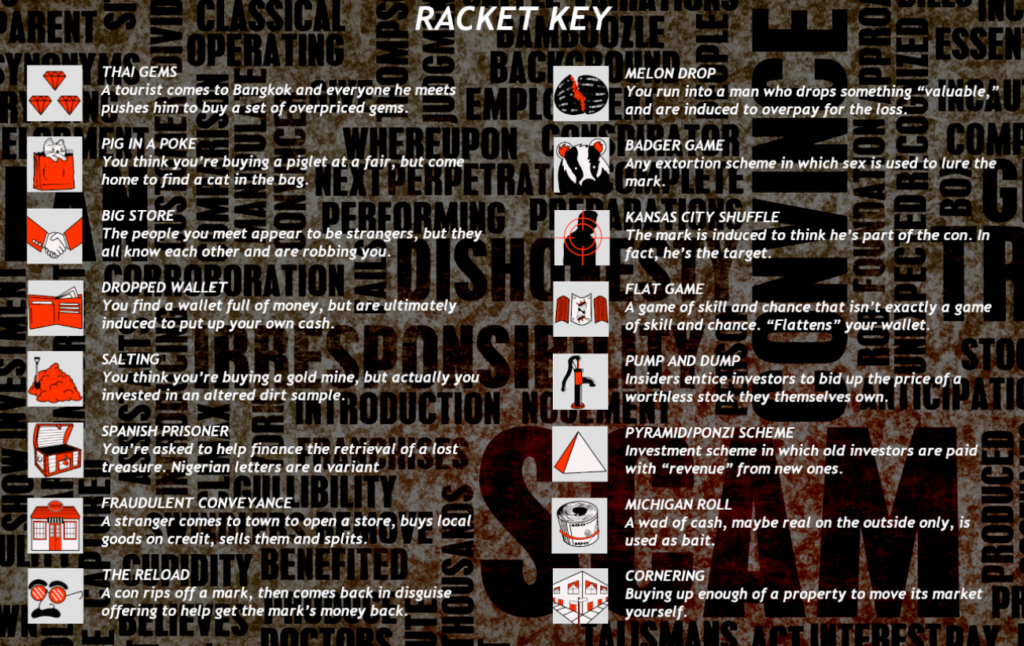
In 2007, before the crash, Goldman, Sachs CEO Lloyd Blankfein even inadvertently paid tribute to one of the most ancient scams — the pig in the poke — when he ordered subordinates to start selling off the mortgage-backed “cats and dogs” on his company’s books. This detail, which came out in a Senate investigation of Goldman’s “Big Short,” let the “cat out of the bag” about the real value of mortgage-backed securities.

In 2021, we’re seeing a surge in con-like corruption cases once again, many involving old-school ripoffs. An economy puffed up by the steroid enhancement of Fed support has led to a great flowering of such creative grifts. Some are not terribly accessible to non-financial audiences at first glance, so to make it a bit easier to keep track of new cases coming in, I’m creating a new feature, “Racket of the Week.”

We had a cartoonist draw up icons for a key system, which will help explain how and if the story covered contains elements of common street rackets.

Author(s): Matt Taibbi

Publication Date: 7 May 2021

Publication Site: TK News

How To Stop Ransomware Attacks? 1 Proposal Would Prohibit Victims From Paying Up

Link: https://www.npr.org/2021/05/13/996299367/how-to-stop-ransomware-attacks-1-proposal-would-prohibit-victims-from-paying-up

Excerpt:

Colonial has acknowledged that its computer networks were hit by a ransomware attack — in essence, an attack in which a hacker or criminal group breaks in and encrypts the contents of a victim’s computers until a ransom is paid. And while the company has declined to say whether it has offered a ransom, the attack is focusing new attention on a potentially radical proposal to stem the growing threat posed by ransomware: making it illegal for targets to pay their attackers.

….

Callow says a ban is just part of the answer, and in its report, the ransomware task force said governments would need to ease the transition before moving to a world where ransom payments are prohibited. Changes would need to be phased in, it said, and allow time for governments to set up protection and support programs for victims. A bipartisan bill introduced last year in the Senate, for example, called for study into the creation of a federal fund to help support the recovery and response to significant cyber-incidents.

The clock may already be ticking — at least for some. In what is likely a first, the global insurance company Axa announced last week that it would stop offering policies in France that reimburse customers for extortion payments made to cybercriminals.

Author(s): Jason Breslow

Publication Date: 13 May 2021

Publication Site: NPR

Investigate the origins of COVID-19

Link: https://science.sciencemag.org/content/372/6543/694.1

Excerpt:

As scientists with relevant expertise, we agree with the WHO director-general (5), the United States and 13 other countries (6), and the European Union (7) that greater clarity about the origins of this pandemic is necessary and feasible to achieve. We must take hypotheses about both natural and laboratory spillovers seriously until we have sufficient data. A proper investigation should be transparent, objective, data-driven, inclusive of broad expertise, subject to independent oversight, and responsibly managed to minimize the impact of conflicts of interest. Public health agencies and research laboratories alike need to open their records to the public. Investigators should document the veracity and provenance of data from which analyses are conducted and conclusions drawn, so that analyses are reproducible by independent experts.

Author(s): Jesse D. Bloom, Yujia Alina Chan, Ralph S. Baric, Pamela J. Bjorkman, Sarah Cobey, Benjamin E. Deverman, David N. Fisman, Ravindra Gupta, Akiko Iwasaki, Marc Lipsitch, Ruslan Medzhitov, Richard A. Neher, Rasmus Nielsen, Nick Patterson, Tim Stearns, Erik van Nimwegen, Michael Worobey, David A. Relman

Publication Date: 14 May 2021

Publication Site: Science

Top researchers are calling for a real investigation into the origin of covid-19

Link: https://www.technologyreview.com/2021/05/13/1024866/investigation-covid-origin-wuhan-china-lab-biologists-letter/

Excerpt:

Now, in a letter in the journal Science, 18 prominent biologists—including the world’s foremost coronavirus researcher—are lending their weight to calls for a new investigation of all possible origins of the virus, and calling on China’s laboratories and agencies to “open their records” to independent analysis.

“We must take hypotheses about both natural and laboratory spillovers seriously until we have sufficient data,” the scientists write.

The letter, which was organized by the Stanford University microbiologist David Relman and the University of Washington virologist Jesse Bloom, takes aim at a recent joint study of covid origins undertaken by the World Health Organization and China, which concluded that a bat virus likely reached humans via an intermediate animal and that a lab accident was “extremely unlikely.”

Author(s): Rowan Jacobsen

Publication Date: 13 May 2021

Publication Site: MIT Tech Review

Who Really Pays for ESG Investing?

Link: https://www.wsj.com/articles/who-really-pays-for-esg-investing-11620858462

Excerpt:

A recent analysis by Scientific Beta disputes “claims that ESG funds have tended to outperform the wider market.” Sony Kapoor, managing director of the Nordic Institute for Finance, Technology and Sustainability, a think tank, told the Financial Times that the research “puts in black and white what is only whispered in the corridors of finance — most ESG investing is a ruse to launder reputations, maximize fees and assuage guilt.”

BlackRock’s former chief investment officer for sustainable investing, Tariq Fancy, appears to understand this. He recently wrote in USA Today that he was concerned about portfolio managers exploiting the “E” of ESG investing because “claiming to be environmentally responsible is profitable” but advancing “real change in the environment simply doesn’t yield the same return.” Mr. Fancy criticized “stalling and greenwashing” in “the name of profits.”

This is a tacit admission that ESG investing upends the fiduciary duties portfolio managers owe their clients. As Mr. Fancy acknowledged, “no matter what they tout as green investing, portfolio managers are legally bound” to “do nothing that compromises profits.” As former Labor Secretary Eugene Scalia wrote on these pages last year, under the federal law that protects retirement assets, known as Erisa, “one ‘social’ goal trumps all others — retirement security for American workers.”

Author(s): Andy Puzder, Diane Black

Publication Date: 12 May 2021

Publication Site: Wall Street Journal