Certain occupational sectors have been associated with high excess mortality during the pandemic, particularly among racial and ethnic groups also disproportionately affected by COVID-19. In-person essential work is a likely venue of transmission of coronavirus infection and must be addressed through strict enforcement of health orders in workplace settings and protection of in-person workers. Vaccine distribution prioritizing in-person essential workers will be important for reducing excess COVID mortality.
Author(s): Yea-Hung Chen, Maria Glymour, Alicia Riley, John Balmes, Kate Duchowny, Robert Harrison, Ellicott Matthay, Kirsten Bibbins-Domingo
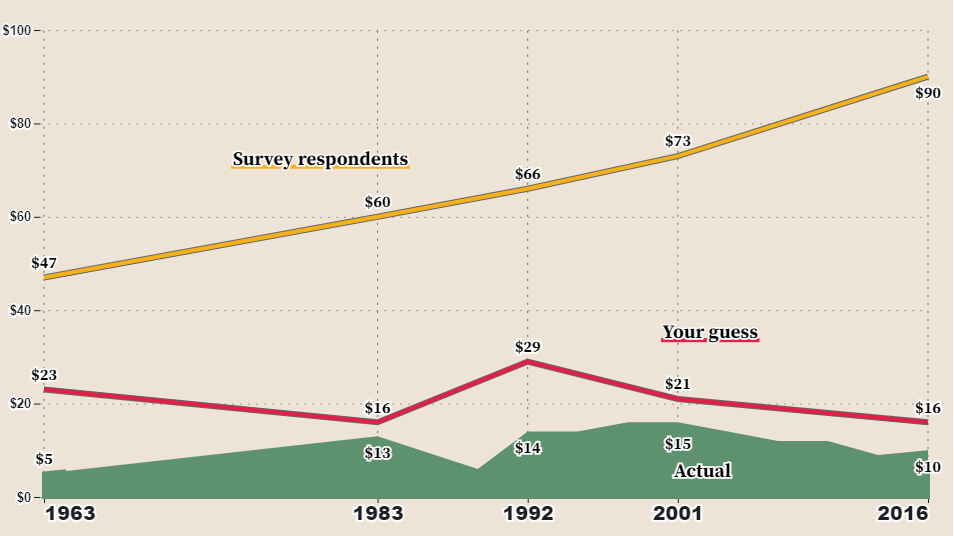
This is the racial wealth gap: the stark wealth difference between white and Black families in the United States. There are several ways to measure this gap, but in 2016 the median wealth for white households was $149,903, while Black households had $13,024.
There’s a myth in the United States that the racial wealth gap has somehow improved over time. This study shows that: many Americans falsely believe that the gap has improved linearly over time, when in reality, it has barely changed and has even gotten worse in some places in the United States.
Granted, other forms of racial injustive have improved since the 60’s. Black representation in politics, media, and academics have improved. Discrimination based on race in the workplace, schools, and in social life have improved. But the racial wealth gap has not improved.
In announcing a surprising new vaccine distribution plan Monday, Gov. Ned Lamont said Connecticut’s approach was designed with two factors in mind: speed and equity.
“Broadly speaking, these are our goals for vaccination,” Lamont said. “Get as many people vaccinated as we possibly can … and complement that with equity, knowing full that our Black and brown population here in this state and around the country are twice as likely to suffer complications from an infection and half as likely to get vaccinated.”
But experts are divided on whether the new strategy will truly accomplish those goals — and particularly whether it will truly maximize equity. While state and hospital officials say this plan, which establishes priority groups almost strictly by age, will create a smoother, faster rollout, skeptics worry the new eligibility guidelines are not as inclusive as those the Lamont administration jettisoned.
The New York State Common Retirement Fund, the third-largest U.S. public plan, said it’s pressing companies to boost their ethnic and gender diversity, and will vote against directors who fail to act.
“Companies must root out racial inequality, just as they would root any other systemic problem that puts their long-term success at risk,” New York State Comptroller Thomas P. DiNapoli said in a statement Thursday. “Corporate America must join in the national reckoning over racial injustice and confront institutionalized racism.”
The New York pension, which has $248 billion of assets, plans to file shareholder proposals supporting increased diversity on corporate boards. It also will seek better disclosures about the gender and ethnic breakdown of companies’ employees. The fund said it will vote against board members who ignore these requests.
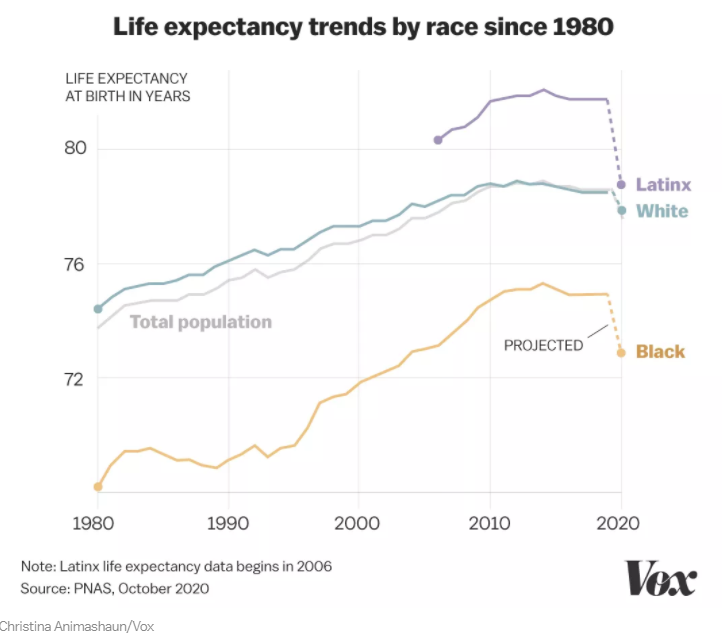
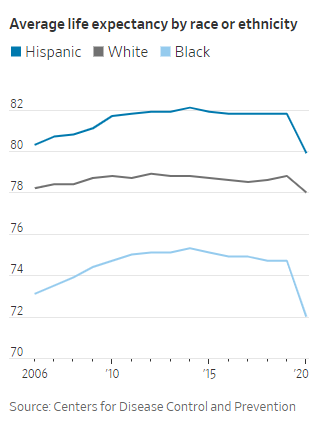
That’s not to say every single white American has it great — that’s obviously not true. But, on average, Black people tend to face much bigger challenges for living the healthiest life possible. That shows up in the life expectancy gap: White people were expected to live nearly 79 years on average before Covid-19 and almost 78 years after, while Black people were expected to live nearly 75 years before Covid-19 and almost 73 after, according to the PNAS study. The Black life expectancy even before Covid-19 was equivalent to what the white life expectancy was in the 1970s — as though decades of progress in well-being and health care were suddenly erased.
Eight states have seen the biggest drops in nursing home use: Florida, Georgia, Louisiana, New Jersey, New Mexico, North Carolina, South Carolina, and Tennessee. Many of these states have experienced fast growth in their minority populations or have more generous state allocations of Medicaid funds for long-term care services delivered in the home.
Growing diversity is actually the second-biggest reason for lower nursing home residence, accounting for one-fifth of the decline, according to the study, which was funded by the U.S. Social Security Administration and is based on U.S. Census data.
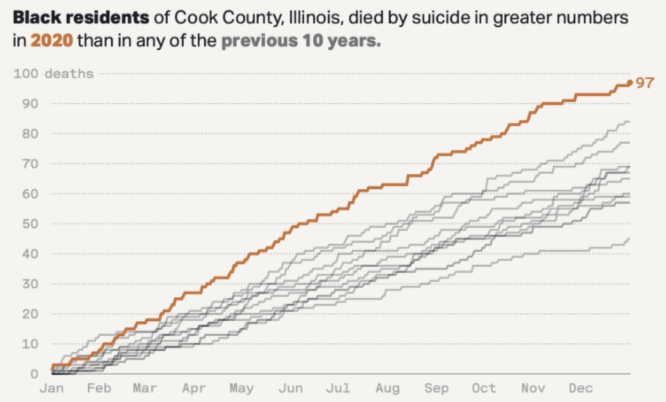
In July, a city official told The Trace andthe Sun-Times that the city would be releasing additional funds to address mental health, including several million for the expansion of existing mental health services and $1 million for suicide prevention. The official also said the city would seek proposals for a suicide-prevention plan in late 2020 or early 2021.
In October, the city announced that more than 30 community-based mental health organizations would receive $8 million in annual grants to expand existing services. However, the grants do not fund suicide prevention specifically. Asked about the status of the city’s suicide-prevention efforts, a spokesperson with the Chicago Department of Public Health declined an interview request and said the agency was “finalizing our planning in regards to what we will be funding.”
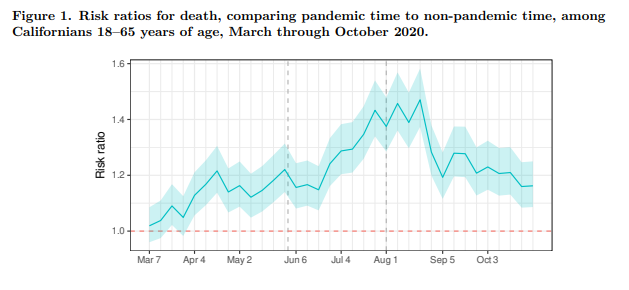
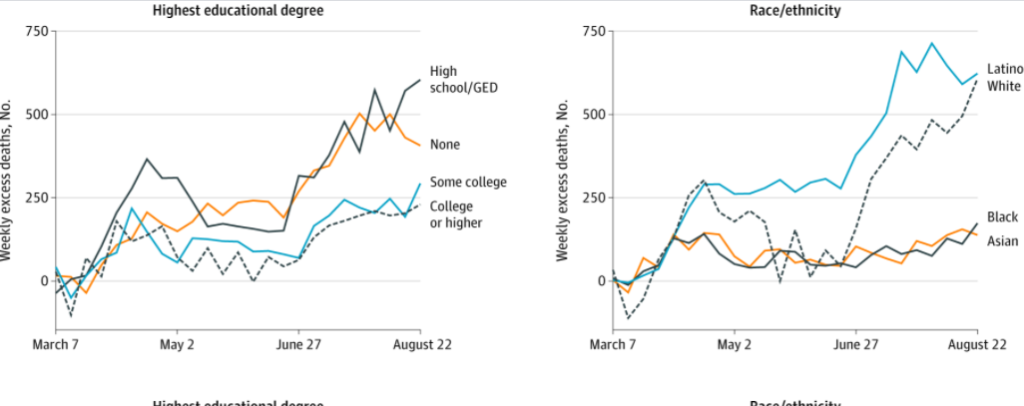
From March 1 through August 22, 2020, 146 557 deaths were recorded in California, with an estimated 19 806 (95% prediction interval, 16 364-23 210) deaths in excess of those predicted by historical trends (Table). Per capita excess mortality was highest among people aged 65 years and older, men, Black and Latino residents, and those without a college degree. Comparing deaths in March through April vs May through August, Latino residents and those without a high school degree or general education development (GED) certificate had the greatest increase in excess deaths, with Latino deaths tripling (from 16 to 51 excess deaths per million) and deaths in those without a high school degree/GED increasing by a factor of 3.4 (from 21 to 72 excess deaths per million). Across age groups, younger adults had the greatest increases in excess death, with rates more than doubling between shutdown and reopening (age, 25-54 years: from 4 to 11 excess deaths per million, 55-64 years: from 12 to 30 excess deaths per million).
In most weeks of the pandemic, Black residents had higher per capita excess mortality than other racial/ethnic group (Figure). Late in the shelter-in-place period, White, Asian, and Black residents had a decline in excess per capita mortality. In contrast, Latino residents and those without a high school degree/GED saw a substantial and sustained increase in per capita mortality.
Author(s): Yea-Hung Chen, PhD, MS1; M. Maria Glymour, ScD, MS2; Ralph Catalano, PhD, MRP3; et al
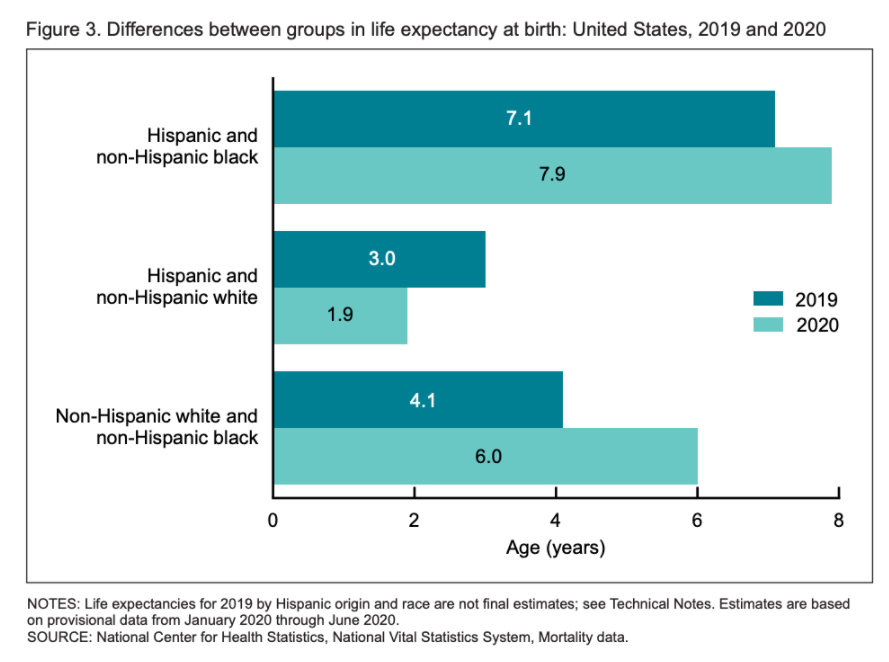
Looking further at racial disparities in the data, the gap in life expectancy between non-Hispanic white and Black people widened from 4.1 years in 2019 to six years in the first half of 2020 — the largest gap since 1998.
“The disparities between those populations have been declining consistently, since we began estimating life expectancy, which goes back to 1900,” she said.
The gap between Hispanic and white non-Hispanic individuals narrowed, however, from three years in 2019 to 1.9 in 2020.
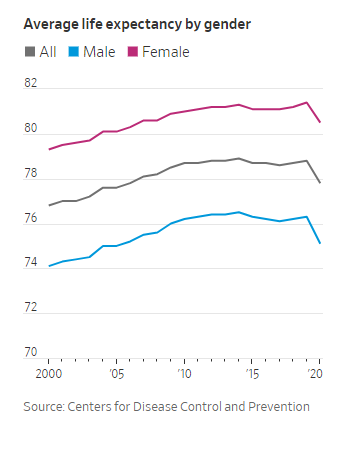
U.S. life expectancy declined by a year during the first half of 2020, according to federal figures released Thursday that show the deadly impact of the coronavirus pandemic’s early months.
The Centers for Disease Control and Prevention’s National Center for Health Statistics said life expectancy at birth was 77.8 years as of the end of June based on provisional estimates. The one-year decline from the previous year was the largest drop since World War II, when life expectancy fell 2.9 years between 1942 and 1943. It put life expectancy at its lowest level in the U.S. since 2006.
“It’s very concerning when we see mortality increase to such a degree,” said Elizabeth Arias, a health scientist at the center and a co-author of the report. “It gives you a clear picture of the magnitude of the effect of the Covid pandemic.”
Officials in New York City released new data by ZIP codes on Tuesday that they said underscored troubling disparities in the city’s vaccination effort, with the share of residents who are fully vaccinated in some wealthier Upper West and East Side ZIP codes, which have high proportions of white residents, reaching up to eight times the rate in parts of predominantly Black neighborhoods like East New York.
The figures for individual ZIP codes provided one of the most granular pictures of the city’s vaccination effort to date. And it added more evidence suggesting that across the country, the vaccine appears to be flowing disproportionately toward areas with wealthy and white residents, even though low-income communities of color remain the hardest hit by the coronavirus.
Still, questions remained. The new city data does not break down vaccine recipients by race in each ZIP code, nor does it account for how many people in each ZIP code are eligible to be vaccinated.