Matching adjustment becomes a battleground in UK’s Solvency II consultation

Link: https://www.insuranceerm.com/analysis/matching-adjustment-becomes-a-battleground-in-uks-solvency-ii-consultation.html

Excerpt:

Solvency II sets strict requirements over what kinds of liabilities and assets are eligible for the MA [matching adjustment], and the governance of them. In the UK’s Solvency II consultation, respondents have argued a looser regime would be good for insurers – and good for the country.

…..

Many of these suggestions have been previously floated in industry circles, some since even before Solvency II came into effect in 2016. But there are a growing number of experts calling for a much more dramatic rethink of the MA – and whether it should even exist.

Dean Buckner, a former regulator at the Bank of England who worked on the MA, and Kevin Dowd, professor of finance and economics at Durham University, have been at the forefront of arguing the MA creates “fake capital” and puts annuity payments at risk.

In their submission to the consultation, they write: “The MA allows firms to recognise some anticipated risky future profits as if they were certain, thereby allowing them to be distributed before being realised. If the risky future profits are not realised – bear in mind that they are called ‘risky’ for a reason – then the capital created by MA will vanish, and policyholders will be at risk.”

Author(s): Christopher Cundy

Publication Date: 23 February 2021

Publication Site: Insurance ERM
Despite Starkly Different COVID-19 Policies, the U.S. and the U.K. Saw Similar Drops in Cases Around the Same Time

Excerpt:

Despite the stark difference in policy, both countries saw remarkably similar COVID-19 trends this winter. According to Worldometer’s numbers, the seven-day average of new cases peaked in the U.K. on January 9; it peaked in the U.S. two days later. That number then fell sharply in both countries. As of yesterday, it was down 81 percent in the U.K. and 73 percent in the U.S.

Daily deaths are also falling in both countries. As of yesterday, the seven-day average in the U.K. was down 61 percent from the peak on January 23. In the U.S., it was down 43 percent from the peak on January 26. Given the dramatic drop in daily new cases that began more than a month ago, daily deaths should continue to fall.

…..

The same story of starkly different policies and similar outcomes emerges from a comparison of Texas and California, the two most populous states. While California Gov. Gavin Newsom ordered a new lockdown on December 3, Texas Gov. Greg Abbott did not impose new restrictions, and the state remained largely open. Yet since mid-January, the two states have seen almost the same drop in the seven-day average of newly reported cases, which has fallen by 85 percent in California and 81 percent in Texas.

Author(s): JACOB SULLUM

Publication Date: 22 February 2021

Publication Site: Reason

Covid vaccines: Boris Johnson pledges surplus to poorer countries at G7

Link: https://www.bbc.com/news/uk-politics-56117120

Excerpt:

Boris Johnson is pledging to donate most of the UK’s surplus vaccine supply to poorer countries in a speech to a virtual G7 meeting on Friday.

He urged rich countries to back a 100-day target for the developing new vaccines for future emerging diseases.

The UK has ordered more than 400 million doses of various vaccines, so many will be left over once all adults are vaccinated.

Publication Date: 20 February 2021

Publication Site: BBC News

Fury at ‘do not resuscitate’ notices given to Covid patients with learning disabilities

Link: https://www.theguardian.com/world/2021/feb/13/new-do-not-resuscitate-orders-imposed-on-covid-19-patients-with-learning-difficulties

Excerpt:

People with learning disabilities have been given do not resuscitate orders during the second wave of the pandemic, in spite of widespread condemnation of the practice last year and an urgent investigation by the care watchdog.

Mencap said it had received reports in January from people with learning disabilities that they had been told they would not be resuscitated if they were taken ill with Covid-19.

The Care Quality Commission said in December that inappropriate Do Not Attempt Cardiopulmonary Resuscitation (DNACPR) notices had caused potentially avoidable deaths last year.

DNACPRs are usually made for people who are too frail to benefit from CPR, but Mencap said some seem to have been issued for people simply because they had a learning disability. The CQC is due to publish a report on the practice within weeks.

Author(s): James Tapper

Publication Date: 13 February 2021

Publication Site: The Guardian

‘Do not resuscitate’ orders caused potentially avoidable deaths, regulator finds

Link: https://www.theguardian.com/society/2020/dec/03/do-not-resuscitate-orders-caused-potentially-avoidable-deaths-regulator-finds

Excerpt:

Do-not-resuscitate orders were wrongly allocated to some care home residents during the Covid-19 pandemic, causing potentially avoidable deaths, the first phase of a review by England’s Care Quality Commission has found.

The regulator warned that some of the “inappropriate” do not attempt cardiopulmonary resuscitation (DNACPR) notices applied in the spring may still be in place and called on all care providers to check with the person concerned that they consent.

The review was prompted by concerns about the blanket application of the orders in care homes in the early part of the pandemic, amid then prevalent fears that NHS hospitals would be overwhelmed.

Author(s): Robert Booth

Publication Date: 2 December 2020

Publication Site: The Guardian

Everybody Says Higher Interest Rates Are Coming … But When and By How Much?

Link: https://www.ai-cio.com/in-focus/market-drilldown/everybody-says-higher-interest-rates-coming-much/

Graphic:

Excerpt:

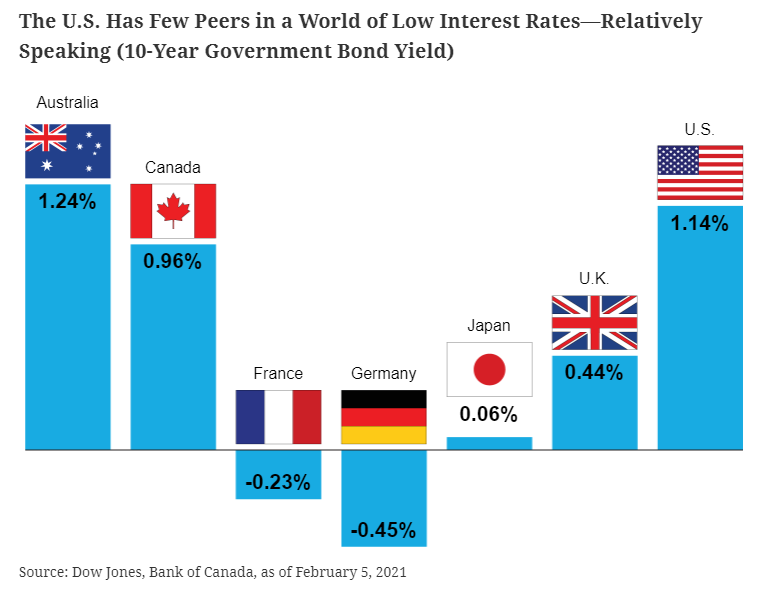
Absent that nightmare scenario—and most prognosticators believe science can vanquish any of COVID-19’s shape-shifting—the conventional Wall Street wisdom is for better days ahead on both the health and the economics fronts. And since escalating rates are co-dependent on an improving economy, a sunny thesis appears pretty solid.

Historically speaking, low rates like today’s are an aberration. Thus, at some point, it’s reasonable to assume they will return to normal. Or at least to higher than now, to a degree. A new normal that’s hardly towering.

Author(s): Larry Light

Publication Date: 9 February 2021

Publication Site: ai-CIO

As Pandemic Continues, More in U.S. and Europe Feel Major Impact on Their Lives

Graphic:

Excerpt:

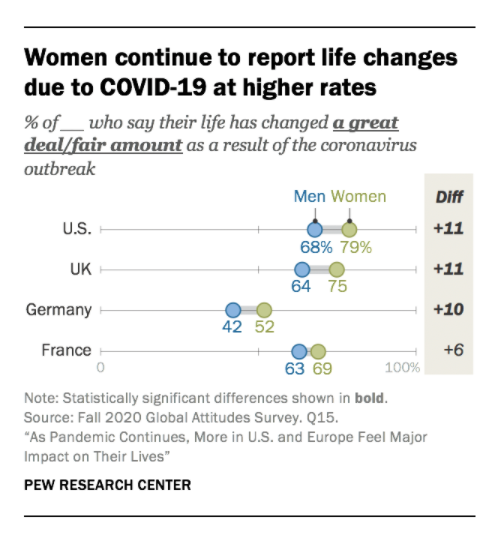
The novel coronavirus continues to pose weighty challenges for people around the world. Significant shares of the public in the United States, France, Germany and the United Kingdom say their lives have changed because of the outbreak, according to a new Pew Research Center survey conducted as vaccines were first being approved for conditional use in the UK and U.S. and  restrictions tightened in parts of Europe. And the shares who feel this way have grown notably since summer, when the Center reported already-high levels of impact in people’s lives. 

At the same time, as coronavirus case counts soar in each of these four nations, publics are largely split on whether their country has done a good job handling the outbreak. Ideology plays a role in people’s assessments of their national coronavirus response, but this rings especially true in the U.S. and UK, where those on the political left are more critical. Those who feel better about their nation’s economic situation are more likely to give positive reviews of how the virus has been handled thus far. 

Author(s): KAT DEVLIN AND NICHOLAS KENT

Publication Date: 3 February 2021

Publication Site: Pew Research Center

Who the UK vaccinates next is a question of economics, not health

Link: https://www.wired.co.uk/article/coronavirus-vaccine-priority?mc_cid=7fe047fe3e&mc_eid=983bcf5922

Excerpt:

Almost 9.3 million people in the UK have now received the first dose of a Covid-19 vaccine. The country’s plan to vaccinate the most vulnerable is, remarkably, on track to meet its spring deadline. With a limited supply, the government has had to make tough decisions about who should be first in line to receive the jab. As the first phase of the vaccination programme continues at pace, one question keeps cropping up: who’s next on the list?

The UK’s current vaccination priority list was drawn up with a single goal in mind: preventing as many deaths as possible. That meant vaccinating those carrying the highest risk of mortality from Covid-19, as well as protecting the health and social care staff and systems. The government is aiming to offer a first dose to everybody in the top four priority groups by the middle of February. The rest of the list goes down incrementally in age to those aged 50 and over, and younger people with underlying conditions. All together, these groups are estimated to make up 99 per cent of preventable deaths from Covid-19.

Author: Grace Browne

Publication Date: 2 February 2021

Publication Site: Wired UK