Looking Beyond Sex

Link: https://theactuarymagazine.org/looking-beyond-sex/

Graphic:
Excerpt:

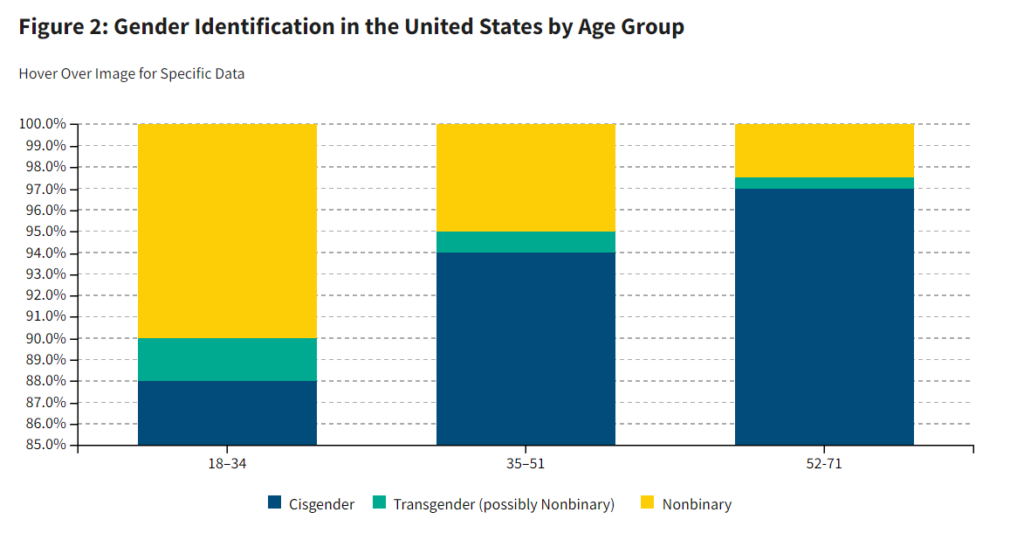
With nonbinary genders recognized on legal documents, customers are beginning to ask for forms and applications to include nonbinary options as well—so they’re not forced into a false selection. Even so, a person still could make an inaccurate selection. A customer falsely selecting a nonbinary gender is slightly less risky for the insurance company than selecting a false binary gender, as nonbinary rates are likely to fall somewhere between male and female to ensure they’re not discriminatory.

In the end, providing false information on an insurance application is fraudulent activity regardless of the question. Many of the states that include nonbinary gender markers on birth certificates and/or driver’s licenses already require the individual to sign an affidavit stating that they are not changing their gender marker for a fraudulent purpose. The benefits of including options for nonbinary customers and the potential for more accurate risk evaluations hopefully will outweigh a possible increase in fraudulent activity.

Author(s): Erin Sheriff

Publication Date: July 2020

Publication Site: The Actuary, SOA
A Guide To The Public Pension Funds Divesting From Russia

Link: https://www.forbes.com/sites/lizfarmer/2022/03/11/the-pension-plans-divesting-from-russia/

Excerpt:

As economic sanctions against Russia for its invasion of Ukraine spread, state and local public pension plans are looking at selling off their Russian-related assets and some are already doing so.

Lawmakers in at least a dozen states are pressuring their pension funds to divest from Russian-related investments. Divestment isn’t likely to have much impact on the funds themselves as Russian-domiciled investments make up less than 1% of most (if not all) state portfolios. But collectively, it sends a message. For example, California’s CalPERS is the largest pension fund in the world and it alone holds nearly $1 billion in Russian assets.

However, it’s likely that at least some (if not all of) these funds will be selling at a loss. Here is a snapshot of what’s happening across the U.S.

Author(s): Liz Farmer

Publication Date: 11 March 2022

Publication Site: Forbes

US overdose deaths hit record 107,000 last year, CDC says

Link: https://www.fox10tv.com/2022/05/11/us-overdose-deaths-hit-record-107000-last-year-cdc-says/

Excerpt:

More than 107,000 Americans died of drug overdoses last year, setting another tragic record in the nation’s escalating overdose epidemic, the Centers for Disease Control and Prevention estimated Wednesday.

The provisional 2021 total translates to roughly one U.S. overdose death every 5 minutes. It marked a 15% increase from the previous record, set the year before. The CDC reviews death certificates and then makes an estimate to account for delayed and incomplete reporting.

Dr. Nora Volkow, director of the National Institute on Drug Abuse, called the latest numbers “truly staggering.”

The White House issued a statement calling the accelerating pace of overdose deaths “unacceptable” and promoting its recently announced national drug control strategy. It calls for measures like connecting more people to treatment, disrupting drug trafficking and expanding access to the overdose-reversing medication naloxone.

U.S. overdose deaths have risen most years for more than two decades. The increase began in the 1990s with overdoses involving opioid painkillers, followed by waves of deaths led by other opioids like heroin and — most recently — illicit fentanyl.

Author(s): Mike Stobbe, Associated Press

Publication Date: 11 May 2022

Publication Site: Fox 10 TV

What We’ve Learned — and Failed to Learn — from a Million COVID Deaths

Link: https://www.governing.com/now/what-weve-learned-and-failed-to-learn-from-a-million-covid-deaths

Excerpt:

The pandemic is not done. The number of new infections — surely an undercount due to unreported home tests — again tops 75,000 per day. The number of hospitalizations has climbed 20 percent over the past two weeks. The Biden administration has warned there could be 100 million more Americans infected by early next year. Yet Congress seems unwilling to provide more money for basic responses such as tests and vaccines, even as it becomes increasingly clear that even mild cases can lead to dangerous long-term damage.

Yet there are positive developments to consider as well. Vaccinations and certainly boosters are not where they should be, but three out of four Americans have received at least a single dose and two-thirds are fully vaccinated. The Commonwealth Fund has estimated that, absent vaccines, an additional 2.3 million Americans would have died, and 17 million more would have been hospitalized. Public health measures such as masking have largely fallen out of favor, but they helped prevent a death toll that could have been even more terrible.

“A million is way too many people, but as a result of the work that has been done, through public health and vaccination, it’s a number that’s a lot lower than it might have been,” says David Fleming, a distinguished visiting fellow at the Trust for America’s Health. “If we did not do those things, we would not be looking at the 1 million death threshold, we’d be looking at the 3 million death threshold.”

Author(s): Alan Greenblatt

Publication Date: 12 May 2022

Publication Site: Governing

U.S. Mortality Trends Through the Pandemic

Link: https://marypatcampbell.substack.com/p/us-mortality-trends-through-the-pandemic?s=w

Video:

Graphic:

Excerpt:

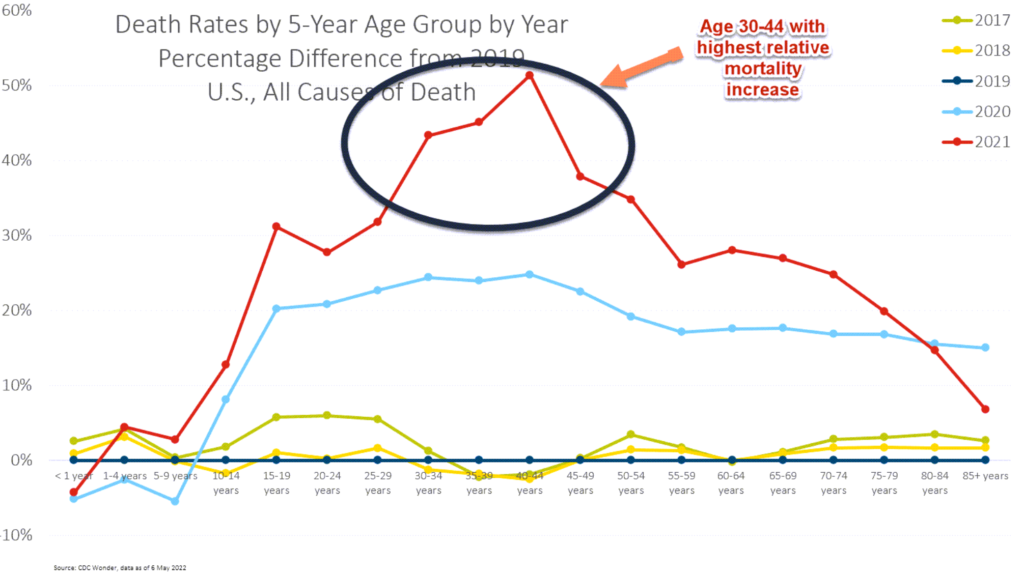
I discuss this in the portion of the talk about death rates by age group.

For 2021, the worst relative increase in mortality, compared to 2019, was for ages 30-44.

[I have called it the Millennial Massacre, but it obviously overlaps with Gen X…. and Middle Age Massacre doesn’t exactly work, either. Dang the allure of alliteration].

We will see in a moment that most of that mortality increase didn’t come from COVID.

If you look at overall mortality, obviously total mortality for this age group is much lower than for those much older.

A 5% increase in mortality for those aged 85+ will translate to a much larger number of deaths, but a 50% increase in mortality for those aged 40-44 is extremely worrisome to actuaries and insurers even if the absolute number of deaths is lower in impact. We’re setting reserves and expectations based on certain assumptions, and we’re generally not assuming fluctuations of 50% — that’s just nuts compared to our historical experience…..

…..until now.

Author(s): Mary Pat Campbell

Publication Date: 20 May 2022

Publication Site: STUMP on substack

Fundamentals of Data Visualization

Link: https://clauswilke.com/dataviz/

Graphic:

Excerpt:

This is the website for the book “Fundamentals of Data Visualization,” published by O’Reilly Media, Inc. The website contains the complete author manuscript before final copy-editing and other quality control. If you would like to order an official hardcopy or ebook, you can do so at various resellers, including Amazon, Barnes and Noble, Google Play, or Powells.

The book is meant as a guide to making visualizations that accurately reflect the data, tell a story, and look professional. It has grown out of my experience of working with students and postdocs in my laboratory on thousands of data visualizations. Over the years, I have noticed that the same issues arise over and over. I have attempted to collect my accumulated knowledge from these interactions in the form of this book.

Author(s): Claus O. Wilke

Publication Date: accessed 20 May 2022

Publication Site: Claus Wilke’s site

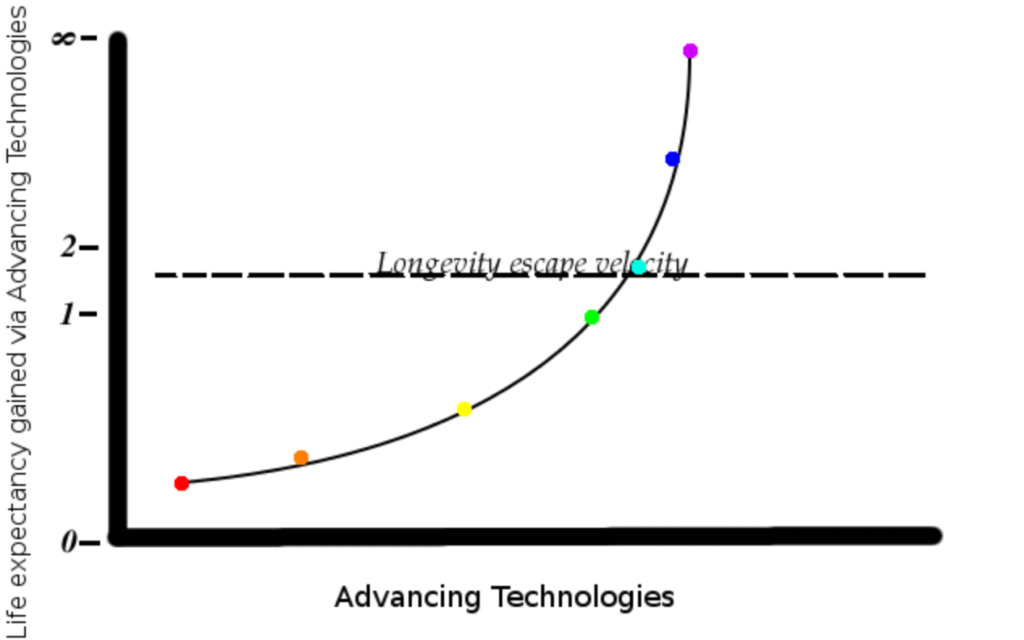
Is Longevity Escape Velocity Science Fiction?

Link: https://insights.longevityassistant.com/2022/05/is-longevity-escape-velocity-science.html?m=1

Graphic:

Excerpt:

A new series called “Let’s Talk Longevity” kicked of with a conversation (sort of debate) between Drs. Aubrey De Grey and Charles Brenner, centering around the possibility of achieving “Longevity Escape Velocity” (LEV).

De Grey’s position imagines the possibility (50% chance in next few decades) of a “Methusalarity” a moment in which we begin to reverse some aspects of “aging” , primarily via “damage repair” at such a rate that we are able to repair damage in the body as fast as or faster than that damage is occurring. More concretely defined, it can be thought of as 20-30 years more of expected healthy life at age 60 when anti aging therapies begin.

Author(s): Nate Worrell

Publication Date: May 2022, accessed 20 May 2022

Publication Site: Longevity Assistant

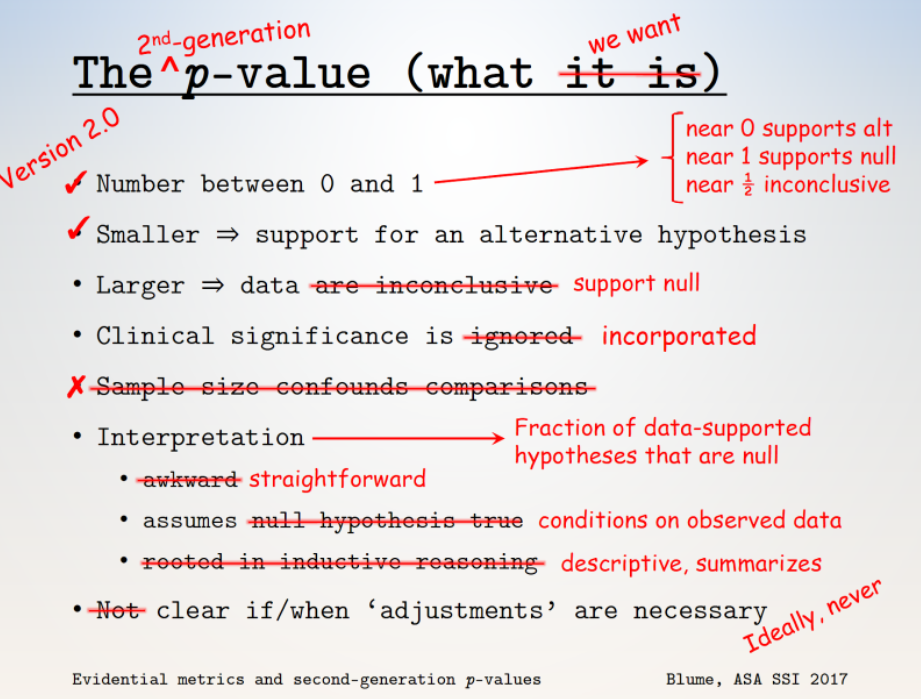
What is the value of the p-value?

Link: https://www.lucymcgowan.com/talk/north_carolina_translational_and_clinical_sciences_institute/

Slides: https://docs.google.com/presentation/d/1W51xBJOG7C37vHLJuBR4WT6NCJXQN0Iah-NKk9VCLxg/edit#slide=id.g12240d9f43a_0_0

Graphic:

Abstract:

The debate over the value and interpretation of p-value has endured since the time of its inception nearly 100 years ago. The use and interpretation of p-values vary by a host of factors, especially by discipline. These differences have proven to be a barrier when developing and implementing boundary-crossing clinical and translational science. The purpose of this panel discussion is to discuss misconceptions, debates, and alternatives to the p-value.

Author(s): Lucy D’Agostino McGowan

Publication Date: 26 April 2022

Publication Site: LucymcGowan.com

CalSTRS Plans to Redefine ‘Diverse Managers’ and ‘Emerging Managers,’ in Accordance With New California Law

Link: https://www.ai-cio.com/news/calstrs-plans-to-redefine-diverse-managers-and-emerging-managers-in-accordance-with-new-california-law/

Excerpt:

The California State Teachers’ Retirement System is now planning to formally define the term “diverse manager” and adjust their definition of “emerging manager.” Though the two categories overlap, they are not identical.

The term “emerging manager” is based on the following criteria, according to CalSTRS: “the amount of assets under management; fund lifecycle of funds; firm legal structure; non-employee ownership percentage; and other various factors including track record, private placement memorandum.”

The term “diverse manager” will refer exclusively to the diversity of the firm’s ownership. The term will be defined in a tiered way such that if a firm is 25% to 49% owned by women, ethnic minorities, and/or LGBTQ individuals, it will be labeled as “substantially diverse.” A firm would be labeled as “majority diverse” if it is more than 50% owned by women, ethnic minorities, and/or LGBTQ people. Ethnic minorities include all non-white groups listed on the census.

Author(s): Anna Gordon

Publication Date: 4 May 2022

Publication Site: ai-CIO

US CMBS Loan Defaults Leveled Off in 2021 with Pandemic Recovery

Link: https://www.fitchratings.com/research/structured-finance/us-cmbs-loan-defaults-leveled-off-in-2021-with-pandemic-recovery-17-05-2022

Graphic:

Excerpt:

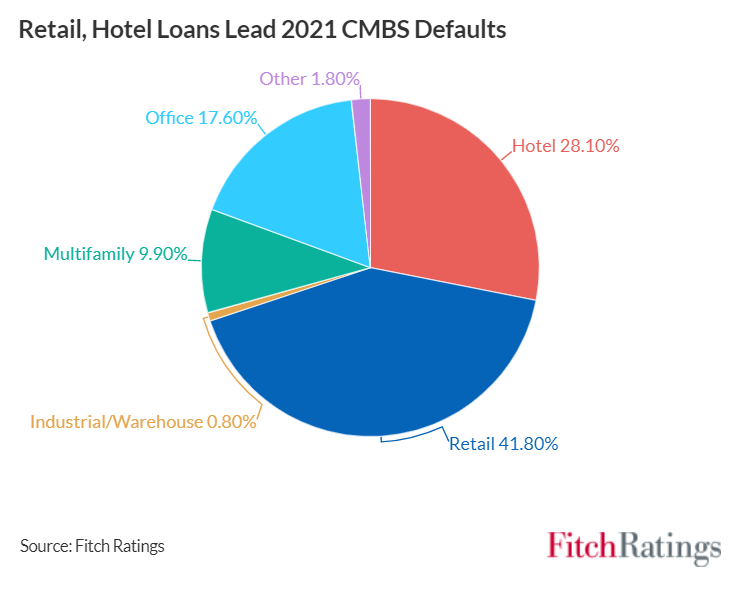
US CMBS loan defaults declined significantly in 2021 compared with 2020, as the resumption of economic activity supported a recovery in asset performance and property cash flows from their pandemic lows, says Fitch Ratings in its US CMBS 2021 Loan Default Study. The total annual default rate for Fitch-rated CMBS transactions declined to 0.4% in 2021, down from 3.3% in 2020.

Author(s): Stephanie Duski, Melissa Che, Everett Bruer, Sarah Repucci

Publication Date: 17 May 2022

Publication Site: Fitch Ratings

How Much Private Equity Is Too Much for a Public Pension?

Link: https://www.ai-cio.com/in-focus/shop-talk/how-much-private-equity-is-too-much-for-a-public-pension/

Excerpt:

Pension funds around the U.S. are upping their allocations to private equity after a year of record-breaking returns. According to data obtained from Preqin, the average public pension’s allotment to private equity increased to 8.9% in 2021. In contrast, the average allocation was just 6.5% in 2012.

New York City’s pensions are among those that may see an increased allocation to the asset class in their portfolios should a new law pass. Currently, New York State implements a “basket clause,” which prevents public pensions from investing above 25% of their total portfolios in investments considered higher risk, including real estate, infrastructure, hedge funds, international equities, and private equity. The proposed law would increase that allocation to 35% for all pension funds in the state. If the law passed, the boards of New York City’s five public pensions would vote on whether to increase the “basket” for their own pension funds.

New York City Interim CIO Michael Haddad, who is responsible for overseeing investments in the five pension plans across the city, says that while the change in the law isn’t targeted at private equity exclusively, it’s likely that the asset class would increase.

Author(s): Anna Gordon

Publication Date: 10 May 2022

Publication Site: ai-CIO

New York pension money ‘held hostage’ by Vladimir Putin, Russia

Link: https://nypost.com/2022/05/14/ny-pension-money-held-hostage-by-vladimir-putin-russia/

Excerpt:

New York employees and taxpayers are unwittingly financing Russian companies and the oligarch pals of Vladimir Putin with at least $519 million invested in assets now frozen by the war-mongering dictator, The Post has learned.

City and state pension systems have pledged to sell off the holdings in protest of Russia’s assault on Ukraine, but Moscow has prohibited foreign investors from dumping the stocks.

“Putin is a thug and he’s holding our money hostage,” said Gregory Floyd, a Teamsters union leader and trustee of the New York City Employee Retirement System, NYCERS.

New York City’s five pension systems – covering teachers, cops, firefighters and other city employees – have invested a total $284.5 million in 33 publicly traded Russian stocks, according to records released to The Post by city Comptroller Brad Lander’s office. 

On Feb. 25, the market value of the Russian assets was $185.9 million, nearly $100 million less than the purchase price, the latest available records show.

Author(s): Susan Edelman, Thomas Barrabi

Publication Date: 14 May 2022

Publication Site: NY Post