Towards Explainability of Machine Learning Models in Insurance Pricing

Link: https://arxiv.org/abs/2003.10674

Paper: https://arxiv.org/pdf/2003.10674.pdf

Citation:


arXiv:2003.10674
 [q-fin.RM]

Graphic:

Abstract:

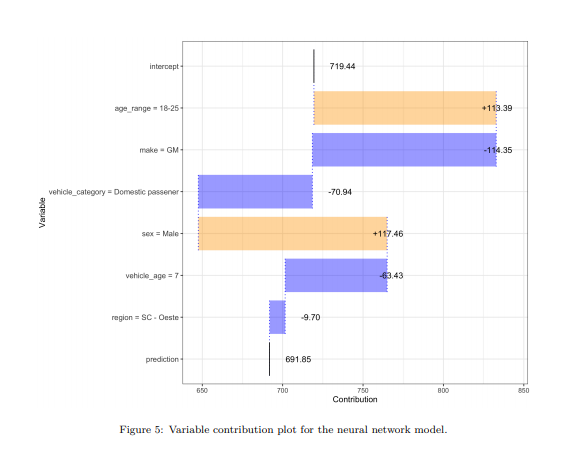
Machine learning methods have garnered increasing interest among actuaries in recent years. However, their adoption by practitioners has been limited, partly due to the lack of transparency of these methods, as compared to generalized linear models. In this paper, we discuss the need for model interpretability in property & casualty insurance ratemaking, propose a framework for explaining models, and present a case study to illustrate the framework.

Author(s): Kevin Kuo, Daniel Lupton

Publication Date: 24 March 2020

Publication Site: arXiv

The Challenge of Covid-19 Vaccines for the Immunosuppressed

Link: https://www.wired.com/story/the-challenge-of-covid-19-vaccines-for-the-immunosuppressed/?

Excerpt:

Millions of Americans are immunosuppressed or immune-compromised. That is, they take drugs to make sure that a transplanted organ is not rejected or to tamp down the overactive immunity that produces rheumatoid arthritis and lupus; or, alternatively, they have illnesses that undermine their ability to defend against pathogens. A handful of research papers published over the past few months all find the same result: When these patients receive Covid vaccines, their bodies don’t create as many defensive antibodies as those of healthy people. Some have contracted the disease despite being fully vaccinated—meaning that, to protect themselves, they must continue to behave as though their vaccinations never occurred.

As a result, some are seeking extra vaccinations, arranging for third doses that they hope will act like booster shots. A study published Monday in the Annals of Internal Medicine by a team at Johns Hopkins University School of Medicine documents the experience of 30 people living with organ transplants who sought out a third shot in hopes of boosting their immune responses. After their second shots, none of the 30 had high antibody levels; in fact, only six showed any antibody response at all. After the third shot, 14 out of 30 saw some improvement, and 12 of 30 had antibody levels that the researchers considered protective.

Author(s): Maryn McKenna

Publication Date: 16 June 2021

Publication Site: Wired

A More Hawkish Federal Reserve — and Federal Trade Commission

Link: https://www.nationalreview.com/2021/06/a-more-hawkish-federal-reserve-and-federal-trade-commission/

Excerpt:

For the first time since the start of the COVID-19 pandemic, the Federal Reserve has bucked investor expectations and taken a more hawkish policy stance. After months of projecting near-zero interest rates through 2023, yesterday the Federal Open Market Committee forecast two rate hikes by the end of 2023. With consumer prices and spending rising in tandem of late, the revised projections are a tacit admission that recent inflation may not be as transitory as the Fed has maintained.

“Is there a risk that inflation will be higher than we think? Yes,” said chair Jay Powell. The ten-year Treasury yield increased roughly 80 basis points to 1.57 percent after the press conference.

But the Fed’s revised policy outlook was not matched by an increased medium-term inflation forecast. The central bank continues to expect an average inflation rate of 2.1 percent over the next three years. Goldman Sachs’s macro researchers interpret that to mean that “the FOMC sees the 2021 inflation overshoot, which will bring the average inflation rate since the recession began above 2 percent, as largely sufficient to accomplish its averaging goal.”

Ever since the Fed adopted an average inflation target last summer, markets have been left guessing as to the time horizon over which the Fed would target 2 percent. Yesterday’s projections suggest it will be two to three years.

Author(s):DANIEL TENREIRO

Publication Date: 17 June

Publication Site: National Review

How Stupid are Credit Rating Agencies?

Excerpt:

Yes, unfunded liabilities as of June 30, 2020 are “more than $60 billion”. Much more ($128 billion under GASB68 and and $94 billion using understated valuation liabilities). But, setting that aside , how is Sweeney planning on reducing that massive debt?

Simple: lower pension payments…..

Clearly, we need to do everything we can to cut the cost of our annual pension payments at both the state and local levels in order to continue to guarantee the retirement payments our retirees have earned and to reduce the unfunded liability that is such a burden to taxpayers.

That is why we have developed legislation to enable our state and local pension systems to add revenue-generating assets like water and sewage treatment systems, High Occupancy Toll (HOT) lanes, parking facilities and real estate to provide new, diversified sources of revenue for their investment portfolios.

Author(s): John Bury

Publication Date: 17 June 2021

Publication Site: Burypensions

ProPublica’s Plan for a Poorer America

Link: https://www.wsj.com/articles/propublicas-plan-for-a-poorer-america-11623881781?st=0g4wamiq5m5ces3&reflink=desktopwebshare_twitter

Excerpt:

ProPublica substitutes a magazine’s estimate of wealth appreciation, which never appears on the stolen tax returns, to falsify income. Using this deception the site calculates its “true tax rate.” ProPublica laments that taxpayers are acting “perfectly legally” in not paying a federal wealth tax, which doesn’t exist.

That wealth is taxed only when converted into income or on death may be an outrage to those in government who want to spend that wealth, but it is a purposeful, enlightened policy that lets wealth work as the nation’s seed corn, making America the richest nation in the history of the world. That wealth in turn makes it possible for the government today to provide $45,000 a year in transfer payments to the average household in the bottom 20% of American earners.

….

Taxing wealth accumulation will mean less wealth accumulation, lower productivity growth, lower wages and a less prosperous America. If you had to pay a federal property tax on the appreciation of your home and the growth in the value of your retirement assets, farm and business every year, how could you or America ever get ahead? Private investment has created $32 trillion of equity wealth in America. “Public investment” has created $21 trillion of public debt.

Author(s): Phil Gramm, Mike Solon

Publication Date: 16 June 2021

Publication Site: Wall Street Journal
Waking from Bankruptcy Shock, Stockton Comes Back to Life

Link: https://www.governing.com/now/waking-from-bankruptcy-shock-stockton-comes-back-to-life

Graphic:

Excerpt:

The metrics on the OGSP give a high-level view of how progress can be measured, but they are just part of the data that Regan’s office collects. Hundreds of other data points are in a performance scorecard that includes factors that contribute to attainment of large targets such as reduced crime rate.

High-level goals may take time to achieve. The StocktonStat portal, scheduled for launch on June 30, will include data on the number of potholes and streetlights repaired, or square feet of graffiti removed, says Regan. “The stat process, and this shared data, are part of a continuous conversation and relentless follow up toward our performance targets.”

Author(s): Carl Smith

Publication Date: 16 June 2021

Publication Site: Governing

How Costly is Noise? Data and Disparities in Consumer Credit

Link: https://arxiv.org/abs/2105.07554

Cite:


arXiv:2105.07554
 [econ.GN]

Graphic:

Abstract:

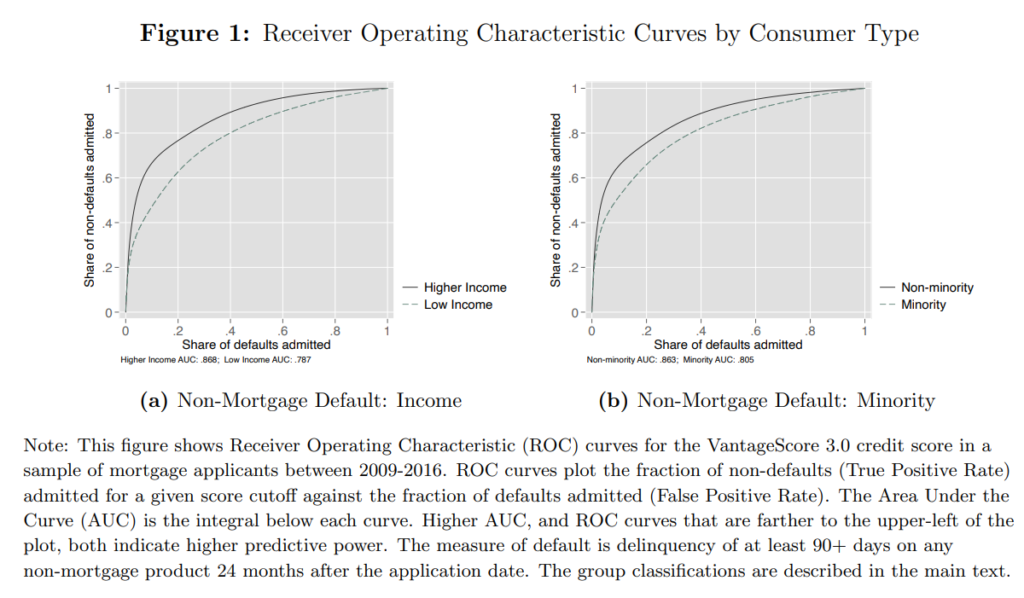
We show that lenders face more uncertainty when assessing default risk of historically under-served groups in US credit markets and that this information disparity is a quantitatively important driver of inefficient and unequal credit market outcomes. We first document that widely used credit scores are statistically noisier indicators of default risk for historically under-served groups. This noise emerges primarily through the explanatory power of the underlying credit report data (e.g., thin credit files), not through issues with model fit (e.g., the inability to include protected class in the scoring model). Estimating a structural model of lending with heterogeneity in information, we quantify the gains from addressing these information disparities for the US mortgage market. We find that equalizing the precision of credit scores can reduce disparities in approval rates and in credit misallocation for disadvantaged groups by approximately half.

Author(s): Laura Blattner, Scott Nelson

Publication Date: 17 May 2021

Publication Site: arXiv

Bias isn’t the only problem with credit scores—and no, AI can’t help

Link: https://www.technologyreview.com/2021/06/17/1026519/racial-bias-noisy-data-credit-scores-mortgage-loans-fairness-machine-learning/

Excerpt:

But in the biggest ever study of real-world mortgage data, economists Laura Blattner at Stanford University and Scott Nelson at the University of Chicago show that differences in mortgage approval between minority and majority groups is not just down to bias, but to the fact that minority and low-income groups have less data in their credit histories.

This means that when this data is used to calculate a credit score and this credit score used to make a prediction on loan default, then that prediction will be less precise. It is this lack of precision that leads to inequality, not just bias.

…..

But Blattner and Nelson show that adjusting for bias had no effect. They found that a minority applicant’s score of 620 was indeed a poor proxy for her creditworthiness but that this was because the error could go both ways: a 620 might be 625, or it might be 615.

Author(s): Will Douglas Heaven

Publication Date: 17 June 2021

Publication Site: MIT Tech Review

Python for Actuaries

Link: https://www.pathlms.com/cas/courses/15577/webinars/7402

Slides: https://cdn.fs.pathlms.com/p3Z78DJJRFWoqdziCQyf?_ga=2.2405433.801394078.1623949999-2118863750.1623949999#/

Graphic:

Description:

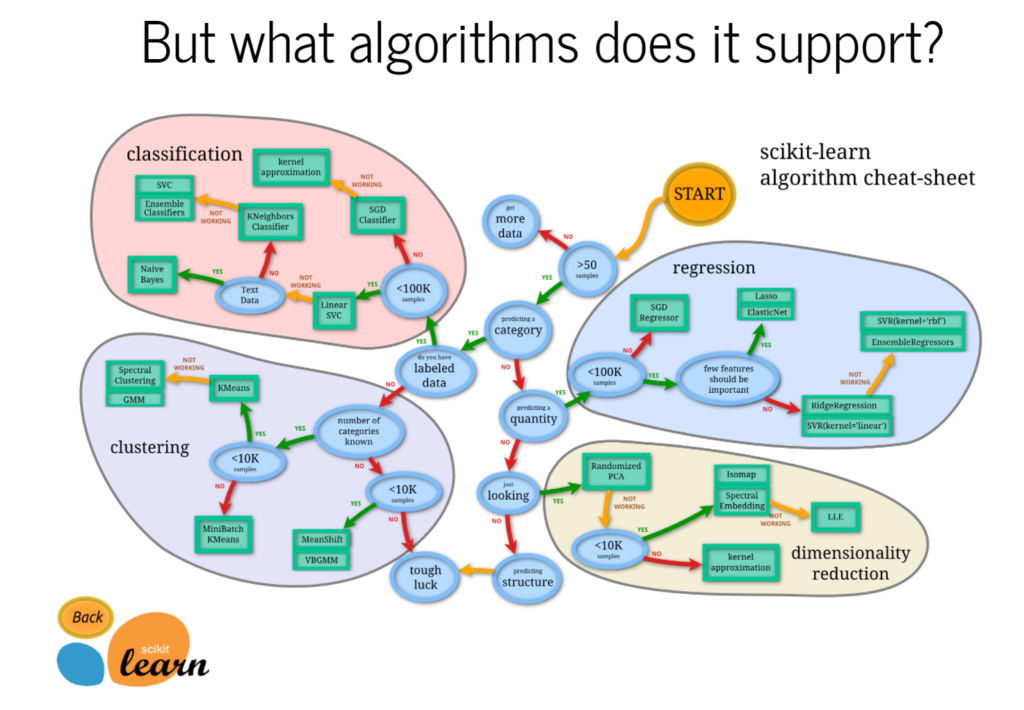
Explaining why actuaries may want to use the language python in their work, and providing a demo. Free recorded webcast, from the CAS.

Author(s): Brian Fannin, John Bogaardt

Publication Date: 6 February 2020

Publication Site: CAS Online Learning

CDC says vaccine link to heart inflammation is stronger than previously thought

Link: https://thehill.com/changing-america/well-being/prevention-cures/558321-cdc-says-vaccine-link-to-heart-inflammation-is

Excerpt:

Males under 30 may face heart problems after getting vaccinated.

Myocarditis and pericarditis share the same symptoms.

Treatment for myocarditis can be solved with over-the-counter medication or resolve itself.

Author(s): Christian Spencer

Publication Date: 14 June 2021

Publication Site: The Hill

Covid vaccine: How many people in the UK have been vaccinated so far?

Link: https://www.bbc.com/news/health-55274833

Graphic:

Excerpt:

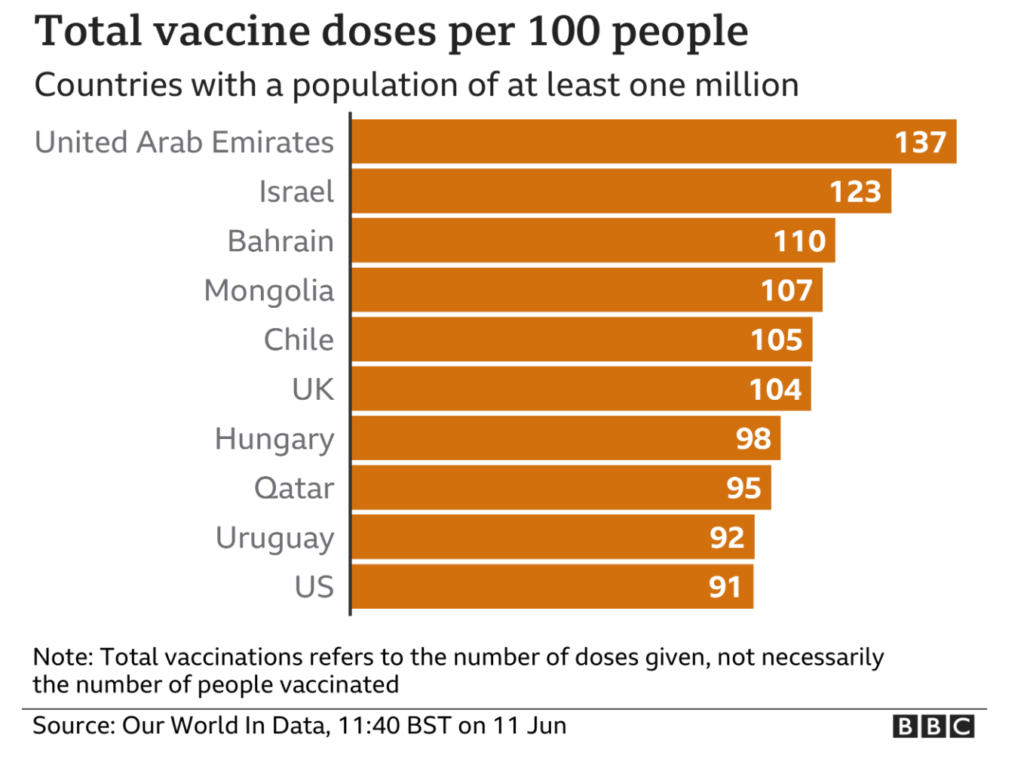
The UK has four vaccines approved for use: Pfizer-BioNTech, Oxford-AstraZeneca, Moderna and Janssen; three of which require two doses for maximum protection.

The campaign to reach as many people as quickly as possible was boosted by a shift in policy in early January – to prioritise the first dose of a vaccine, with a second dose up to 12 weeks later, a bigger gap than originally planned.

Progress made in the UK so far means the country continues to be among those with the highest vaccination rates globally.

Author(s): The Visual and Data Journalism Team

Publication Date: 15 June 2021

Publication Site: BBC

Looming fiscal cliff could reignite CT’s tax fairness debate

Excerpt:

Even though the state’s coffers, for now, are awash in money, a huge fiscal cliff looms two years from now, when billions of dollars in federal stimulus grants expire.

Despite a record-setting rainy day fund and a new biennial state budget free of major tax hikes, unprecedented unemployment and deep pockets of urban poverty could easily shift Connecticut’s tax fairness debate — which accelerated this past spring — into high gear in 2024.

“We came out of a year from hell, and I think it was really important we came together in terms of our budget,” Gov. Ned Lamont said last Thursday, one day after lawmakers had adjourned a session that adopted a $46.4 billion, two-year state budget that makes big investments in municipal aid, education, health care, social services and economic development — all without major tax hikes.

But about 4% of that plan, nearly $1.8 billion, was propped up by one-time federal coronavirus relief, most of which will have expired after the coming biennium, which starts July 1.

Author(s): Keith Phaneuf

Publication Date: 16 June 2021

Publication Site: CT Mirror