Red flags waved as Providence Mayor Jorge Elorza proposed issuing $704 million in pension obligation bonds to deal with a pestering unfunded liability problem in Rhode Island’s capital city.
The amount exceeds the city’s annual operating budget. Bond markets often frown on such borrowing and sentiment among state officials who must sign off is uncertain. Skeptics also call the city’s fiscal management track record shaky, while memories linger of a fiasco in Woonsocket, which tried a similar move nearly 20 years ago.
Forensic investigations in Rhode Island, North Carolina, Kentucky and Ohio reveal that gambling 30 percent or more on high-cost, high-risk, secretive alternative investments has exposed pensions to massively greater risks and reduced net returns. The time is ripe for legislators, regulators, and law enforcement to act to stop the looting.
A recent New York Times NYT-3% article revealed that putting more than half of the $62 billion Pennsylvania state teachers’ retirement fund’s assets into risky alternative investments hadn’t worked out well for the pension and had spurred an investigation by the FBI. The FBI is investigating reporting fraud—returns allegedly falsified to avoid increased worker contributions to the pension.
Law enforcement investigations into public pension funds that lie about their returns are long, long overdue.
The Canada Pension Plan Investment Board (CPPIB) is hunting for investments in the world’s transition to renewable energy as it aspires to be a global leader in sustainability, the head of the company told Reuters on Thursday.
…..
The pension manager last month announced it was creating a new investment group that would generate investment opportunities in renewables, conventional energy and new technology and service solutions.
CPPIB’s exposure to renewable energy producers rose to C$7.7 billion at March 31 2021, from C$6.6 billion at March 31, 2020, according to a spokesman for the firm.
A union that represents 61,000 schoolteachers statewide called on most of the board of the Pennsylvania State Employees’ Retirement System to resign amid an ongoing FBI investigation.
“Through alleged errors and omissions, and under a shroud of secrecy, this PSERS Board appears to have jeopardized the present and future financial security of our Commonwealth’s most dedicated public servants,” Arthur Steinberg, president of the Pennsylvania chapter of the American Federation of Teachers, wrote in a letter to PSERS board members.
In the letter, Mr. Steinberg called for every board member appointed prior to January 2021 to immediately resign. That would reduce the 15-member board to two: the newly elected State Treasurer Stacy Garrity, a Republican, and state Sen. Katie Muth, D-Montgomery County.
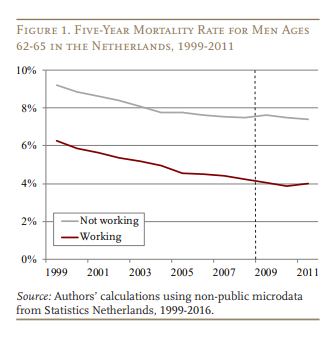
As expected, the raw data show that Dutch men who worked at ages 62-65 were less likely to die over the subsequent five years than men who were not working (see Figure 1). Importantly, Figure 1 shows that mortality decreased at nearly identical rates for working and non-working men between 1999 and 2008, before the policy became available. The fact that these trends are parallel provides more confidence in the policy experiment, indicating that whatever was happening to working men prior to the DWB was also happening to non-working men. In contrast, the mortality rate in 2009-2011 continued to improve somewhat for working men, who were benefiting from the DWB, while the mortality rate for non-working men plateaued.
Author(s): Alice Zulkarnain, Matthew S. Rutledge
Publication Date: May 2021
Publication Site: Center for Retirement Research at Boston College
More than two months later, the public health disaster predicted by Abbott’s critics has not materialized. A new analysis by three economists confirms that his decision had no discernible impact on COVID-19 cases or deaths in Texas.
“We find no evidence that the Texas reopening led to substantial changes in social mobility, including foot traffic at a wide set of business establishments in Texas,” Bentley University economist Dhaval Dave and his two co-authors report in a National Bureau of Economic Research working paper. “We find no evidence that the Texas reopening affected the rate of new COVID-19 cases during the five weeks following the reopening.” They say their findings “underscore the limits of late-pandemic era COVID-19 reopening policies to alter private behavior.”
Dave, San Diego State University economist Joseph Sabia, and SDSU graduate research fellow Samuel Safford looked at smartphone mobility data from SafeGraph and COVID-19 data collected by The New York Times. They compared trends in Texas before and after Abbott’s order took effect on March 10 to trends in a composite of data from other states that retained their COVID-19 restrictions but were otherwise similar.
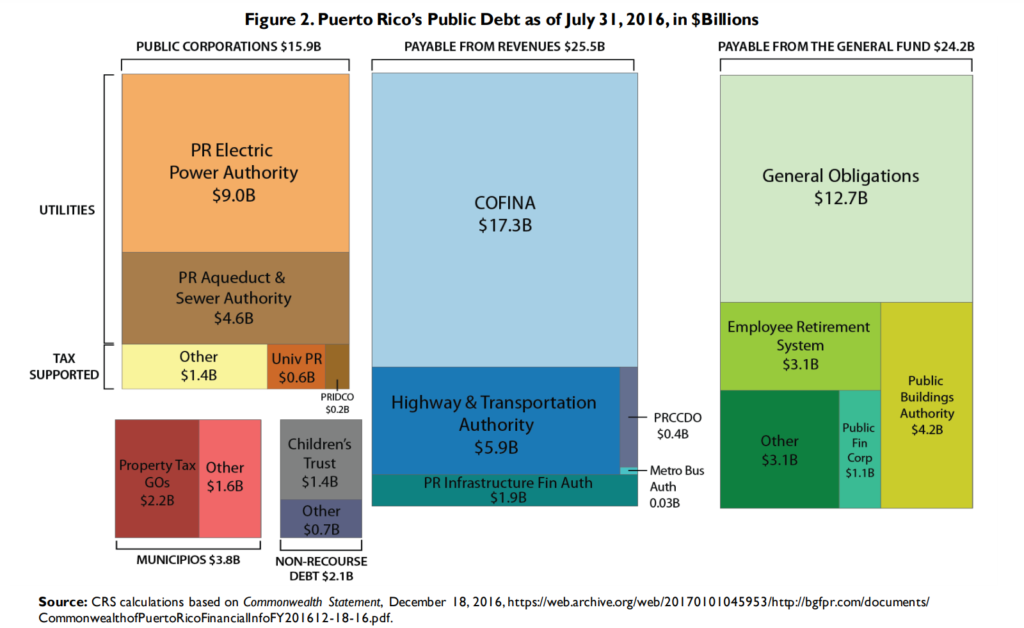
Restructuring Puerto Rico’s finances has involved complex disputes among bondholders invested in different types of Puerto Rico’s public debt. This section outlines the structure of the island’s public debts. Since Puerto Rico lost access to credit markets in late 2014, its current debt structure has been largely unchanged, aside from the runoff of short-term notes, the 2018 wind-down of the GDB, and the 2019 restructuring of sales-tax-backed COFINA bonds (COFINA—an acronym for the Corporación del Fondo de Interés Apremiante—is also known as the Puerto Rico Sales Tax Financing Corporation). Figure 2 and Table A-1 show debt levels as of the end of July 2016.
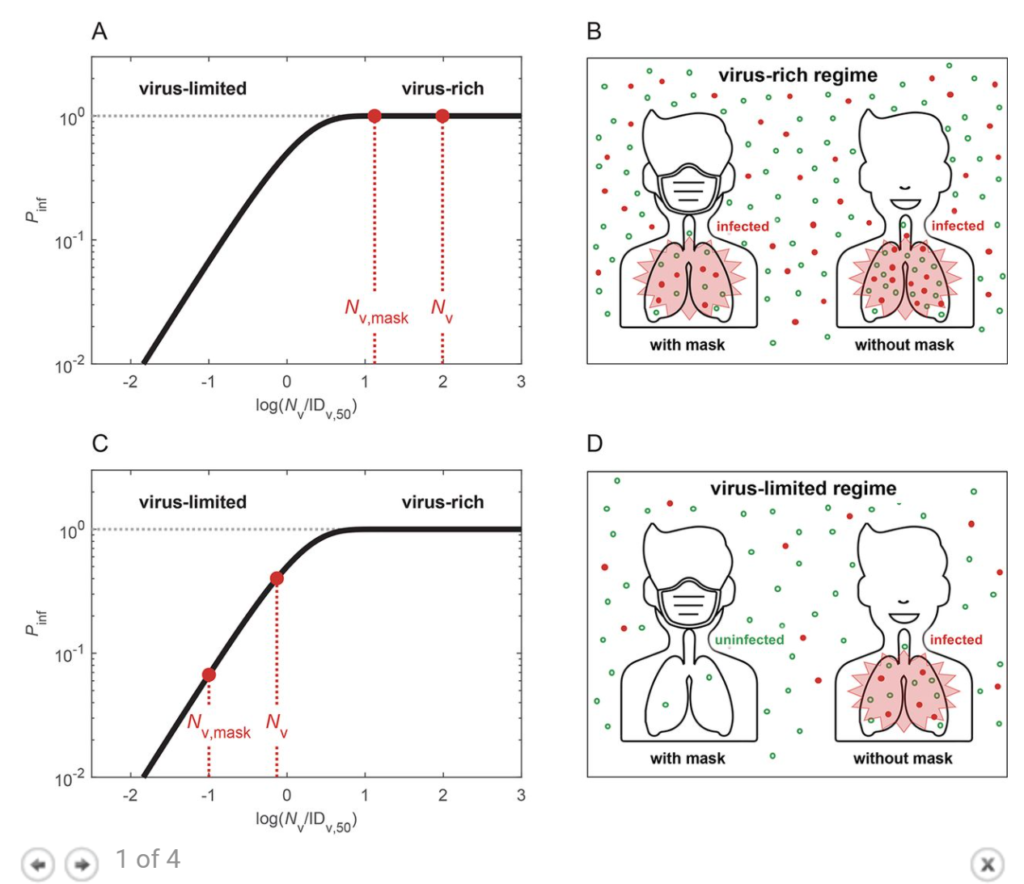
Airborne transmission by droplets and aerosols is important for the spread of viruses. Face masks are a well-established preventive measure, but their effectiveness for mitigating SARS-CoV-2 transmission is still under debate. We show that variations in mask efficacy can be explained by different regimes of virus abundance and related to population-average infection probability and reproduction number. For SARS-CoV-2, the viral load of infectious individuals can vary by orders of magnitude. We find that most environments and contacts are under conditions of low virus abundance (virus-limited) where surgical masks are effective at preventing virus spread. More advanced masks and other protective equipment are required in potentially virus-rich indoor environments including medical centers and hospitals. Masks are particularly effective in combination with other preventive measures like ventilation and distancing.
Author(s): Yafang Cheng, Nan Ma, Christian Witt, Steffen Rapp, Philipp S. Wild, Meinrat O. Andreae, Ulrich Pöschl, Hang Su
Reviewing the recent Society of Actuaries report on preliminary mortality results in U.S. population, with a focus on increased mortality from non-COVID causes. U.S. Population Mortality
Observations, Preview of 2020 Experience Society of Actuaries research:
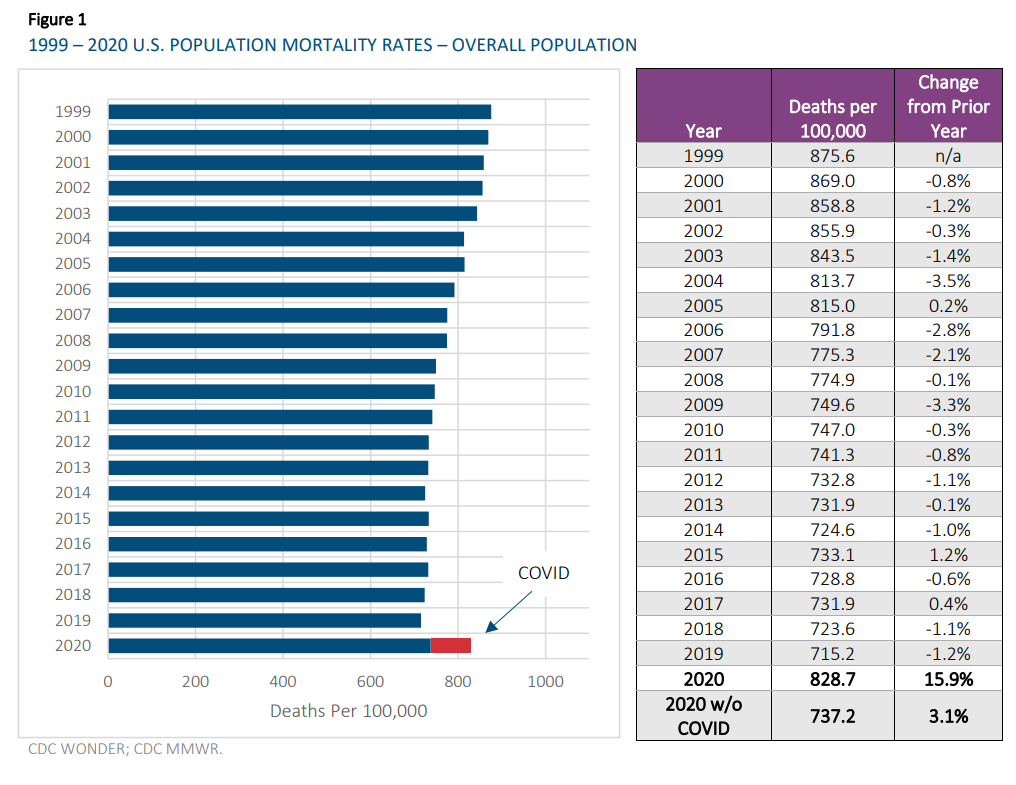
The overall age-adjusted mortality rate for 2020 was 828.7 deaths per 100,000 of population. This rate was 15.9% greater than the 2019 overall age-adjusted mortality rate. This high level of mortality has not been experienced in the U.S. since 2003.
If deaths coded as COVID (COVID deaths)3 were excluded, the overall age-adjusted 2020 mortality rate would have been 737.2 per 100,000 or 3.1% higher than the 2019 rate. This increase excluding COVID deaths is also noteworthy because it reverses the two previous calendar years of decreasing mortality; however, some or all of this may be due to the misclassification of CODs as discussed in Section 6.
2020 mortality rates increased in both sexes, with the male rates increasing more than the female rates. The differences in the increases between males and females were about 3% when all causes of death (CODs) are included and about 1% when COVID deaths are excluded.
The slope of the 2020 COVID mortality curve by age group is not as steep as the slope of the non-COVID deaths, indicating that COVID impacts younger ages more evenly across age groups that all other non-COVID CODs combined.
In the review of the 2020 mortality rates by age group, it is interesting to see that the highest percentage increases were in the younger adult ages, not at the very old ages. When COVID deaths were removed, ages 15-44 saw the largest increases in mortality rates.
It seems that not a week goes by without an announcement of another merger/acquisition transaction in the life insurance industry. With an overlay of persistent capital market volatility and a sharply increased focus on ESG risk factors, life insurance executives will have their plates full of challenges for the balance of 2021. Whether large national carriers or smaller regional players, virtually every life company will experience changes in their operating environment. Our panelists will share their perspectives on how these trends will shape the insurance markets and discuss the implications for credit and risk management.
Author(s): Peter Giacone, KBRA; Celeste Guth, Erinn King, David Marcinek