Chile’s Pinera counters opposition pensions withdrawal bill with own initiative

Link: https://www.nasdaq.com/articles/chiles-pinera-counters-opposition-pensions-withdrawal-bill-with-own-initiative-2021-04-25

Excerpt:

Chilean President Sebastian Pinera on Sunday announced the government will launch its own bill to allow citizens to draw more from their private pensions in a last-ditch attempt to kill off a similar move led by the opposition.

Pinera said his proposed rival bill would be subject to means-tested taxation and would allow for the withdrawn funds to be gradually repaid through state and employer contributions.

The president said his initiative was a better option than the opposition’s bill, which the government says would leave millions of future pensioners with little to no savings.

Author(s): Aislinn Laing

Publication Date: 25 April 2021

Publication Site: NASDAQ

A Preliminary Analysis of U.S. and State-Level Results From the 2020 Census

Link: https://www.census.gov/library/working-papers/2021/demo/POP-twps0104.html

Graphic:

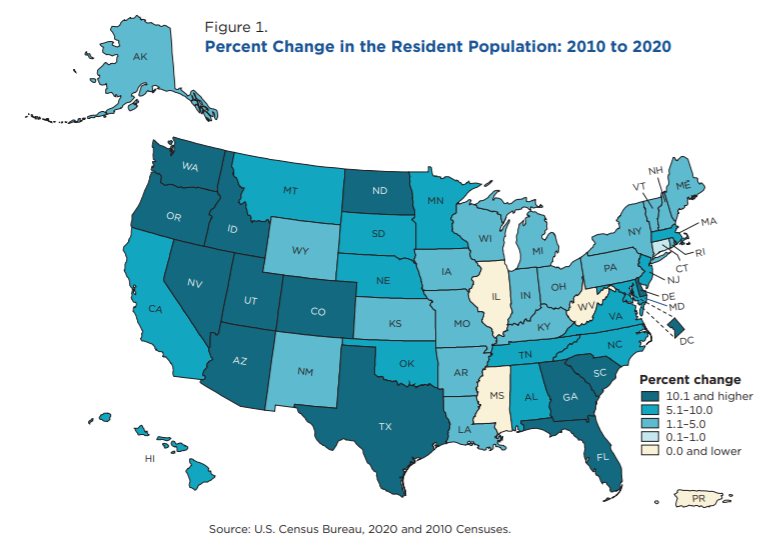
Choropleth of change in population by state (plus DC & Puerto Rico), 2010-2020

Description:

This paper considers the 2020 Census national and state-level resident population counts in historical and evaluative contexts. By comparing the first results of the 2020 Census against benchmark data sources, we examine how the nation has changed at the highest levels and set the stage for the comprehensive analyses still to come.

Link to paper: https://www.census.gov/content/dam/Census/library/working-papers/2021/demo/pop-twps0104.pdf

Publication Date: 26 April 2021

Publication Site: Census Bureau

Motor Vehicle Deaths in 2020 Estimated to be Highest in 13 Years, Despite Dramatic Drops in Miles Driven

Link: https://www.nsc.org/newsroom/motor-vehicle-deaths-2020-estimated-to-be-highest

Excerpt:

For the first time since 2007, preliminary data from the National Safety Council show that as many as 42,060 people are estimated to have died in motor vehicle crashes in 2020. That marks an 8% increase over 2019 in a year where people drove significantly less frequently because of the pandemic. The preliminary estimated rate of death on the roads last year spiked 24% over the previous 12-month period, despite miles driven dropping 13%. The increase in the rate of death is the highest estimated year-over-year jump that NSC has calculated since 1924 – 96 years. It underscores the nation’s persistent failure to prioritize safety on the roads, which became emptier but far more deadly.  

An estimated 4.8 million additional roadway users were seriously injured in crashes in 2020, and the estimated cost to society was $474 billion. With the alarming picture painted by these data, NSC is urging President Joe Biden and Transportation Secretary Pete Buttigieg to commit to zero roadway deaths by 2050 – a call NSC and more than 1,500 other organizations and individuals made in January in a letter to the new administration. 

Publication Date: 4 March 2021

Publication Site: National Safety Council

GameStop Frenzy, Archegos Meltdown May Prompt New SEC Rules, Chairman Says

Link: https://www.wsj.com/articles/sec-studying-whether-new-rules-are-needed-for-apps-that-gamify-trading-chairman-says-11620239971

Excerpt:

In testimony prepared for the House Financial Services Committee, Securities and Exchange Commission Chairman Gary Gensler says brokerages that “gamify” trading — by using appealing visual graphics to reward a user’s decision to trade, for instance — may encourage frequent trading that results in worse outcomes for investors. Some Democratic lawmakers have blamed gamification for the boom in individual trading that helped drive the rise in GameStop shares.

Mr. Gensler, who will appear before lawmakers on Thursday, also said the SEC would study regulatory changes in response to the March blowup of Archegos Capital Management, an unregulated family-investment vehicle of hedge-fund veteran Bill Hwang whose leverage-fueled bets led to more than $10 billion in losses at major global banks.

Author(s): Dave Michaels, Alexander Osipovich

Publication Date: 5 May 2021

Publication Site: Wall Street Journal

The Few Sentences That Explain Much of What Went Wrong With Our Pandemic Response

Link: https://www.theinsight.org/p/the-few-sentences-that-explain-much

Excerpt:

Why did it take so long to accept that SARS-CoV-2 was being transmitted through aerosols, respiratory particles that are small enough to remain suspended in the air, rather than through short-range respiratory droplets that could not travel more than a few feet because of their (bigger) size?

The reasons for this delay go back more than a century, to the fight against (incorrect but prevalent) theories that blame miasma—noxious odors, especially from rotting organic material—for diseases. While trying to counter erroneous but millenia-long folk-beliefs, some of the founders of public health and the field of infectious control of diseases around the world made key errors and conflations around the turn of the 20th century. These errors essentially froze into tradition and dogma that went unchanged and uncorrected for more than a century, until a pandemic forced our hand.

Author(s): Zeynep Tufekci

Publication Date: 7 May 2021

Publication Site: Insight at substack

Why Did It Take So Long to Accept the Facts About Covid?

Link: https://www.nytimes.com/2021/05/07/opinion/coronavirus-airborne-transmission.html

Excerpt:

But clear evidence doesn’t easily overturn tradition or overcome entrenched feelings and egos. John Snow, often credited as the first scientific epidemiologist, showed that a contaminated well was responsible for a 1854 London cholera epidemic by removing the suspected pump’s handle and documenting how the cases plummeted afterward. Many other scientists and officials wouldn’t believe him for 12 years, when the link to a water source showed up again and became harder to deny. (He died years earlier.)

Similarly, when the Hungarian physician Ignaz Semmelweis realized the importance of washing hands to protect patients, he lost his job and was widely condemned by disbelieving colleagues. He wasn’t always the most tactful communicator, and his colleagues resented his brash implication that they were harming their patients (even though they were). These doctors continued to kill their patients through cross-contamination for decades, despite clear evidence showing how death rates had plummeted in the few wards where midwives and Dr. Semmelweis had succeeded in introducing routine hand hygiene. He ultimately died of an infected wound.

Author(s): Zeynep Tufekci

Publication Date: 7 May 2021

Publication Site: New York Times

Negative Interest Rates

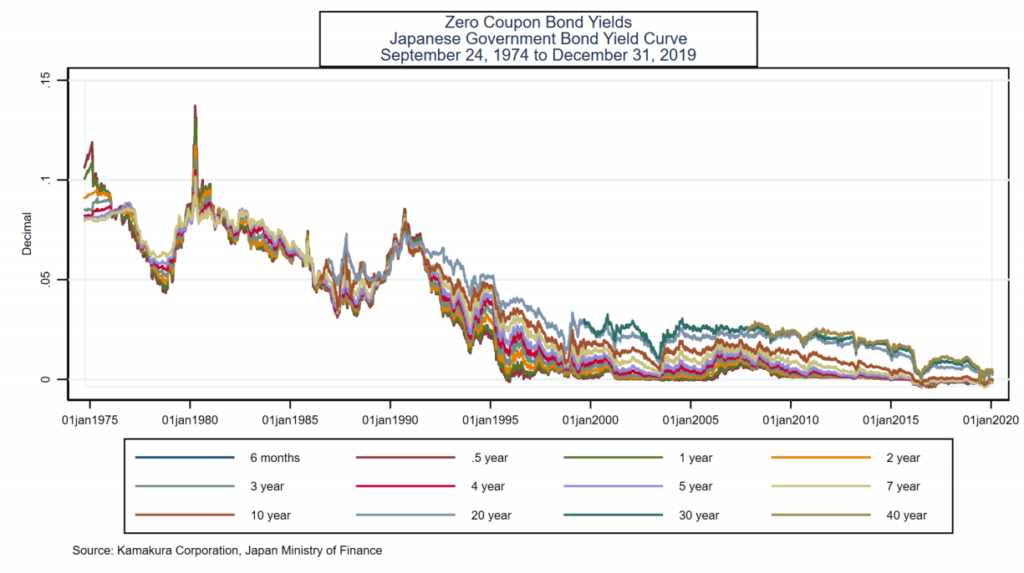
Link: https://www.kamakuraco.com/wp-content/uploads/2021/01/Kamakura-NegativeRatesIACPM20200722v2.1.pdf

Graphic:

Excerpt:

What Can Go Wrong?
• Rate and Default Interaction
• Impairment to the Banking System
• Massive challenges to the Insurance Industry and Pension Funds
• Central Banks cannot force institutions to lend or creditworthy borrowers to borrow
• Huge overhang for refi in next 5 years
• “Negative Rates Cannot Cure Problems that Caused Rates to go Negative”

Author(s): Prof. Robert Jarrow, Donald R. van Deventer, Martin Zorn

Publication Date: 22 July 2020

Publication Site: Kamakura Corporation

Pension crisis has local impact

Link: http://www.keweenawreport.com/featured/pension-crisis-has-local-impact/

Excerpt:

Keweenaw Report reached out to City of Houghton manager Eric Waara to see if there was a similar arrangement for DPW staff there. He said everyone’s plan was converted to MERS over a decade ago. Waara says Houghton’s fund is well over 80 percent covered, which is considered excellent. That means current assets can cover nearly all expected future liabilities related to retirement.

Publication Date: 6 May 2021

Publication Site: Keweenaw Report

What history tells you about post-pandemic booms

Link: https://www.economist.com/finance-and-economics/2021/04/29/what-history-tells-you-about-post-pandemic-booms

Graphic:

Excerpt:

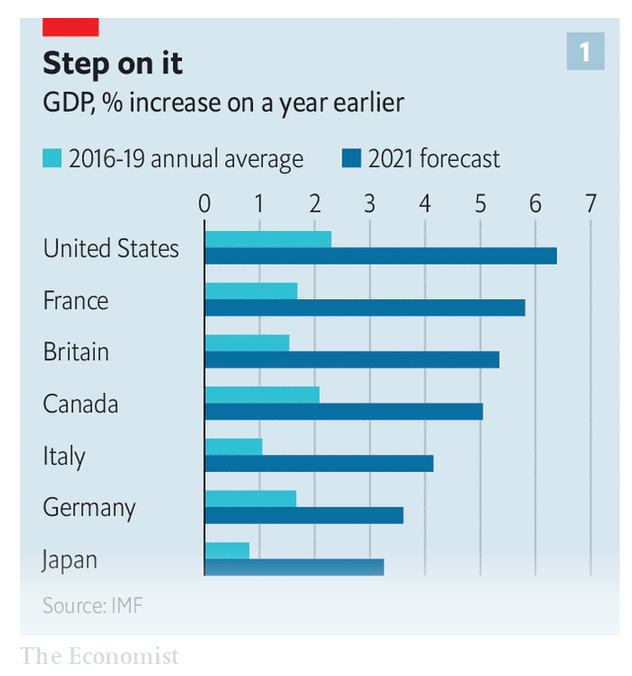
The record suggests that, after periods of massive non-financial disruption such as wars and pandemics, GDP does bounce back. It offers three further lessons. First, while people are keen to go out and spend, uncertainty lingers. Second, crises encourage people and businesses to try new ways of doing things, upending the structure of the economy. Third, as “Les Miserables” shows, political upheaval often follows, with unpredictable economic consequences.

Publication Date: 1 May 2021

Publication Site: The Economist

Is China’s population shrinking?

Link: https://www.economist.com/china/2021/04/29/is-chinas-population-shrinking

Graphic:

Excerpt:

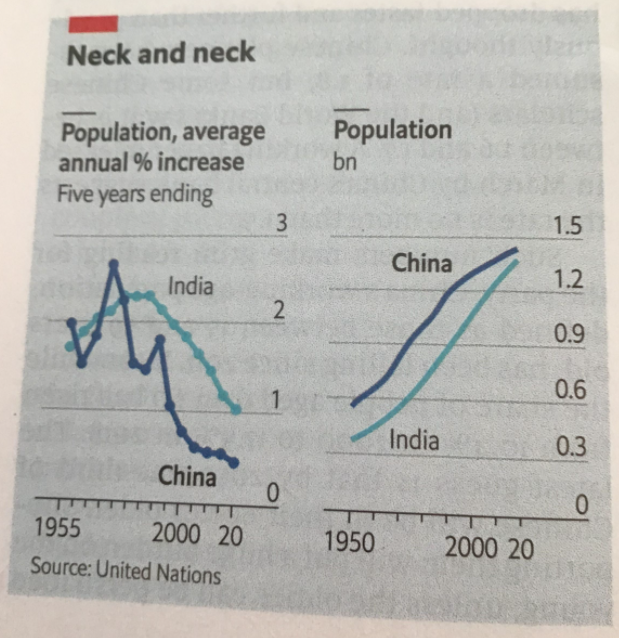
The Communist Party has long known that, partly as the result of its brutal birth-control policies, China’s population would soon peak and start to shrink. It has been startled, however, by how rapidly that moment has drawn near. Now, it looks as if it might have arrived.

….

There are also indications that China’s total fertility rate (the number of children a woman is expected to have in her lifetime) has dropped faster than previously thought. Chinese planners have assumed a rate of 1.8, but some Chinese scholars (and the World Bank) say it between 1.6 and 1.7. A working paper released in March by China’s central bank suggests the rate is no more than 1.5.

Publication Date: 1 May 2021

Publication Site: The Economist

How to tax capital without hurting investment

Link: https://www.economist.com/leaders/2021/04/29/how-to-tax-capital-without-hurting-investment

Graphic:

Excerpt:

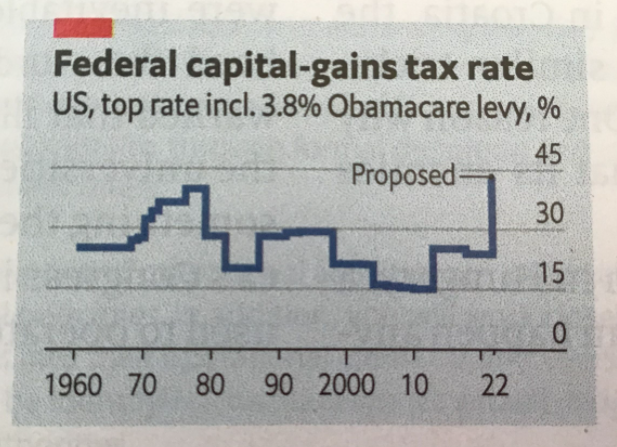
Governments raise most of their money by taxing wages, but President Joe Biden has his eyes fixed on the rich, big business and Wall Street. He proposes to fund his $2.7trn infrastructure plan in part by raising the corporate-tax rate from 21% to 28%. And to help pay for more spending on child care and support for parents, he wants to roughly double the top rate of federal tax on capital gains and dividends. For Americans earning more than $1m per year, he would bring levies on capital income into line with the top rate on wage income, which he wants to put up from 37% to 39.6%. That is about double the rate that is currently levied on rich investors, who are only a small fraction of the population but a large proportion of shareholders.

….

Tax capital lightly and it pays to disguise wages as capital income — a particularly lucrative pastime for the rich. One problem is the “carried interest” loophole. It lets private-equity and hedge-fund managers class their fees as capital gains rather than income. Another issue is the explosive growth in “pass through” firms, for example partnerships, which accounted for more than half of American business income by 2011, up from about a fifth in 1980.

Publication Date: 1 May 2021

Publication Site: The Economist

The origin of COVID: Did people or nature open Pandora’s box at Wuhan?

Link: https://thebulletin.org/2021/05/the-origin-of-covid-did-people-or-nature-open-pandoras-box-at-wuhan/

Excerpt:

A tale of two theories. After the pandemic first broke out in December 2019, Chinese authorities reported that many cases had occurred in the wet market — a place selling wild animals for meat — in Wuhan. This reminded experts of the SARS1 epidemic of 2002, in which a bat virus had spread first to civets, an animal sold in wet markets, and from civets to people. A similar bat virus caused a second epidemic, known as MERS, in 2012. This time the intermediary host animal was camels.

….

Contrary to the letter writers’ assertion, the idea that the virus might have escaped from a lab invoked accident, not conspiracy. It surely needed to be explored, not rejected out of hand. A defining mark of good scientists is that they go to great pains to distinguish between what they know and what they don’t know. By this criterion, the signatories of the Lancet letter were behaving as poor scientists: They were assuring the public of facts they could not know for sure were true.

….

One of the very few establishment scientists to have questioned the virologists’ absolute rejection of lab escape is Richard Ebright, who has long warned against the dangers of gain-of-function research. Another is David A. Relman of Stanford University. “Even though strong opinions abound, none of these scenarios can be confidently ruled in or ruled out with currently available facts,” he wrote. Kudos too to Robert Redfield, former director of the Centers for Disease Control and Prevention, who told CNN on March 26, 2021 that the “most likely” cause of the epidemic was “from a laboratory,” because he doubted that a bat virus could become an extreme human pathogen overnight, without taking time to evolve, as seemed to be the case with SARS2.

Author(s): Nicholas Wade

Publication Date: 5 May 2021

Publication Site: Bulletin of the Atomic Scientists