CPPIB Chief Mark Machin Exits Amid Vaccine Uproar

Link: https://www.ai-cio.com/news/cppib-chief-mark-machin-exits-amid-vaccine-uproar/

Excerpt:

The head the Canada Pension Plan Investment Board (CPPIB) has stepped down in the wake of his journey to the Middle East to receive a vaccination for COVID-19.

CEO Mark Machin, 54, traveled to the United Arab Emirates (UAE) to get the shot earlier this month, as Canada’s rollout of its vaccination program has lagged. Canada’s largest pension fund (US$379 billion) named John Graham, the fund’s head of credit investments, as Machin’s successor.

“After discussions last evening with the board, Mr. Machin tendered his resignation and it has been accepted,” the fund said in a statement. The statement said he had traveled personally to get the vaccine.

Author(s): Larry Light

Publication Date: 26 February 2021

Publication Site: ai-CIO
New York City Comptroller: Ax Rule Forcing Private Equity to Pay Legal Bills

Link: https://www.ai-cio.com/news/new-york-city-comptroller-ax-rule-forcing-private-equity-pay-legal-bills/

Excerpt:

Scott Stringer is worried. New York City pension funds are having a tough time enlisting private equity (PE) firms due to a requirement that PE outfits pay for litigation expenses out of their own pockets instead of shunting the cost onto investors.  

So, as the city official overseeing the funds, City Comptroller Stringer is urging fund trustees to scrap this rule, which would help the buyout firms if they run into trouble with regulators or other litigants, as first reported by the New York Post. The idea is to get more PE players managing city pension money.

The New York City Public Pension Funds, the collective of the city’s five pension funds, implemented the private equity rule, called the “GP Expenses Provision,” roughly five years ago after Carlyle Group was swept up in a collusion case and had to pay a $115 million settlement, the Post reported.

Author(s): Sarah Min

Publication Date: 26 February 2021

Publication Site: ai-CIO
Mortality with Meep: the Society of Actuaries Studies 2020 Excess Mortality, Life Expectancy Rebuttal, and More

Link: https://marypatcampbell.substack.com/p/mortality-with-meep-the-society-of

Graphic:

Excerpt:

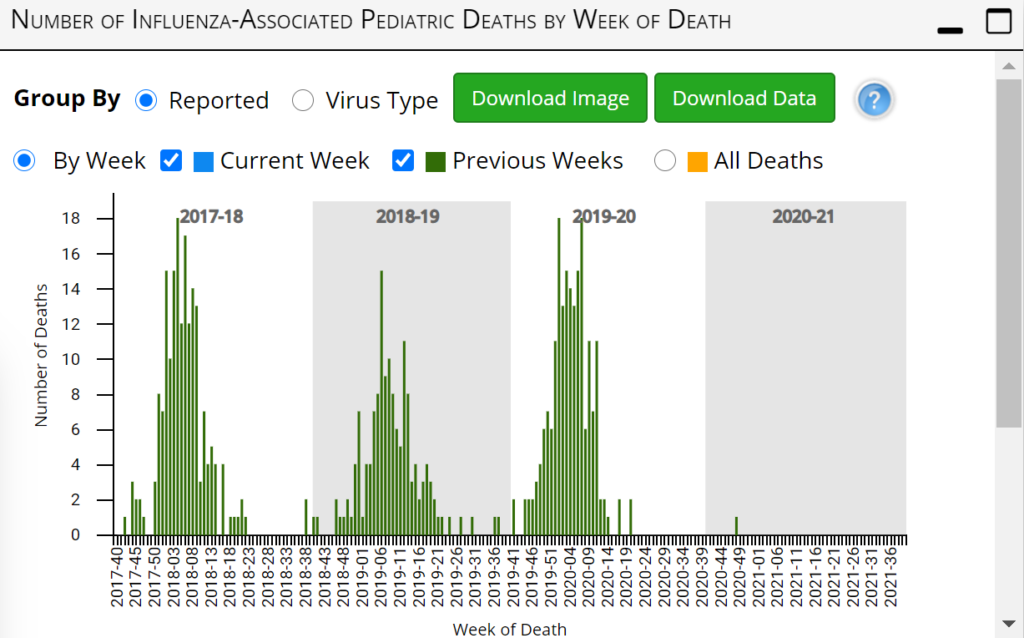
The first big improvement in the U.S. was in child mortality in the early 20th century — public health measures helped all ages, but the youngest the most. Then antibiotics and more and more vaccines improved mortality across the board, with children and young adults getting the most benefits. Improved auto safety and more stringent drunk driving laws helped all ages, but young adults the most (because they were the most idiotic drivers). We’ve seen improvements in middle age into old age due to reduced smoking and improved medical treatments — people who used to get their first heart attack in their 50s now see their first heart attack in their 70s… and it’s a lot less fatal now. And we’ve had amazing improvement in mortality at older ages.

It is very tempting to write a book about all the mortality trends we’ve got going on. The CDC has the data. They’ve issued reports on it. But few people really want to think about death. I’ll add it to my ever-expanding list of project ideas… (hey, Actuarial News was an idea for me for over a year… and now it’s here!)

Author(s): Mary Pat Campbell

Publication Date: 1 March 2021

Publication Site: STUMP on Substack

Flu activity is ‘unusually low’ in the US: Can we keep it going in future years?

Link: https://www.today.com/health/flu-season-2020-2021-flu-activity-historic-lows-mask-wearing-t207131

Excerpt:

Some 136 people were hospitalized for the flu between Oct. 1, 2020, and Jan. 16, 2021, and there were 292 deaths involving influenza during that period, the CDC reported. One child has died.

The flu season is far from over — it usually begins in the fall, and peaks between December and February.

But in comparison, 400,000 people were hospitalized for the flu and 22,000 died, including 434 children, during the entire 2019–2020 season, which the CDC described as “severe” for kids 4 years old and younger, and for adults 18-49 years old.

Author(s): A. Pawlowski

Publication Date: 27 January 2021

Publication Site: Today

Pension Relief Plan in COVID-19 Stimulus Bill

Excerpt:

How much of a single lump sum? Would this be a forgiven loan? Would it be a reward for the worst funders? Could NFL players share in the bailout if they rejigger some assumptions?

Only clues I could find were form the Congressional Research Service (with my emphasis):

Section 9704 would establish a fund within the PBGC and appropriate amounts as necessary to provide special financial assistance to certain multiemployer DB plans. The special financial assistance would not have to be repaid.

Author(s): John Bury

Publication Date: 1 March 2021

Publication Site: Burypensions

Banks Snub Chicago Aldermen On Equitable Mortgage Lending

Link: https://www.wbez.org/stories/banks-snub-chicago-aldermen-on-equitable-mortgage-lending/f470444a-42e1-478c-997e-db8dfe52229f

Excerpt:

Home ownership rates in Chicago’s Black and Latino communities have been falling, according to information presented by Anthony Simpkins, president and CEO of Neighborhood Housing Services of Chicago.

Citing research by the DePaul Institute for Housing, Simpkins said not only are banks lending less in Black and Latino neighborhoods, they are also filing more foreclosures.

And he said borrowers of color who are able to get a loan are often charged a higher interest rate; in 2019 he said Woodstock Institute found nearly 35% of African American mortgage borrowers in Chicago paid higher rates, 17% of Latino borrowers.

Author(s): Linda Lutton

Publication Date: 27 February 2021

Publication Site: WBEZ

Albany progressives are trying to drive away job-creators with a massive tax hike

Link: https://nypost.com/2021/02/28/albany-progressives-drive-away-job-creators-with-tax-hike/

Excerpt:

The Invest in Our New York Act is a package of six bills hiking state taxes by $50 billion a year. 

Numbers out of context are meaningless. Why not raise taxes by $200 billion, or heck, $90 trillion? But in the context of the New York state budget, $50 billion is an ­unprecedented hike. Without the pandemic and lockdowns, the state likely would have taken in $90 billion in taxes this coming fiscal year, meaning the bill’s proponents want to raise taxes by close to 60 percent. 

A sample of the new taxes: first, on high-income labor. A single filer with $1 million in income would see a 23 percent state tax hike, to 8.41 percent, up from 6.85. A filer making $10 million would see a 48 percent hike, to 12.14 percent, up from 8.82 percent. 

Author(s): Nicole Gelinas

Publication Date: 28 February 2021

Publication Site: NY Post

Data visualization guidelines and a case study

Link: http://lenkiefer.com/2021/02/26/data-visualization-guidelines-and-a-case-study/

Graphic:

Excerpt:

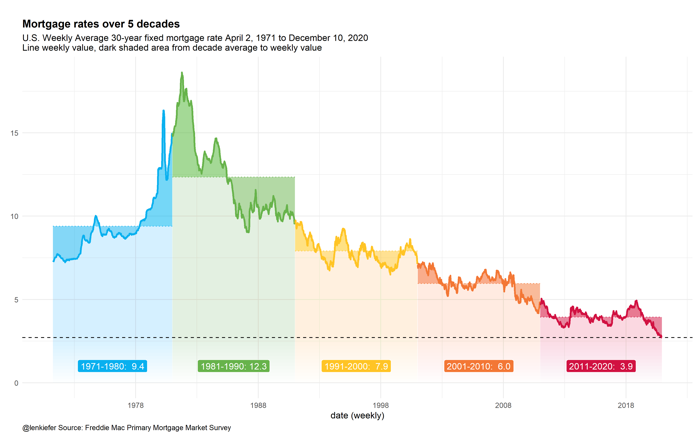
Yesterday I gave a virtual lecture on data visualization at GMU. Here I’m posting the slides I used for that talk and including my discussion notes for the portion of the talk where I discussed guidelines for data visualization.

At the beginning of the talk I spoke a bit about data visualization guidelines. I framed this part of my talk around Jon Schwabish’s five guidelines from his new book Better Data Visualizations see (on Amazon) and here for a blog summary.

I then went over some charts I’ve used recently in talks I’ve given and discussed how I used (or didn’t use) the guidelines in that chart.

Author(s): Len Kiefer

Publication Date: 26 February 2021

Publication Site: LenKiefer.com

The constraint on public debt when r < g but g < m

Link: https://personal.lse.ac.uk/reisr/papers/99-mpkrg.pdf

Graphic:

Excerpt:

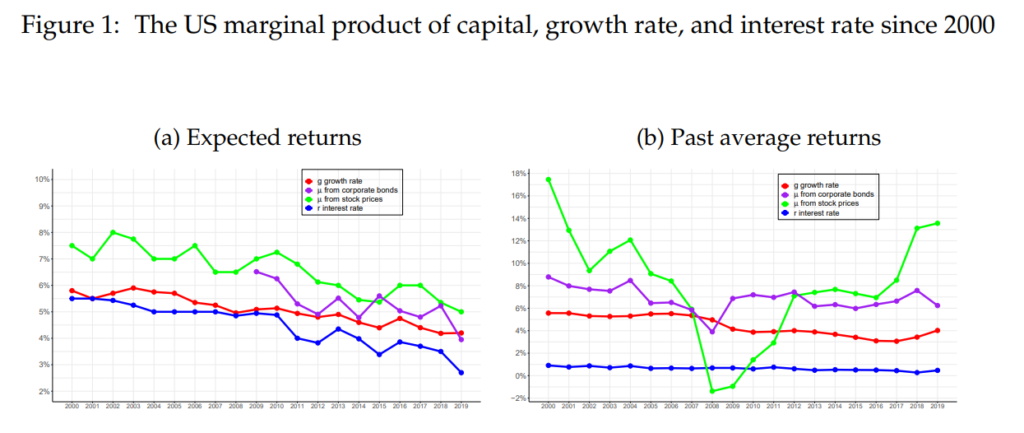
Since real interest rates have been well below the growth rate of the economy, but the marginal product of capital has remained above, modern economies are dynamically efficient, yet there is a bubble component in public debt. Thus, the present value of primary surpluses can be lower than the outstanding debt and governments can run perpetual deficits by collecting the bubble premia. Yet, there is an upper bound on the size of the deficits that depends on how safe and liquid government debt is and on financial development. Higher spending lowers the interest rate and increases inequality, while redistributive policies shrink the feasible amount of persistent public spending, income tax cuts pay for themselves, inflation volatility reduces fiscal space available for spending, and financial repression increases it.

Author(s): Ricardo Reis

Publication Date: December 2020

Publication Site: London School of Economics

Resiliency vs. efficiency

Link: https://tinyletter.com/acs171/letters/known-unknowns-43

Excerpt:

I expect some big institutional changes to be coming our way soon. One favorite debate, at least according to the editorial page of the Financial Times, is the trade-off between efficiency and resilience. Buying all your goods from China, including PPE, may be efficient—but if you have a global pandemic, then it means that you’re not so resilient. Or, if you live in Texas, cheap energy is great when you blast your air-conditioning every August when it’s 110 degrees outside, but if there’s a crazy cold snap and your power gets shut off, you see that your system is actually not that resilient at all.
 
We already see the Biden administration taking on resiliency, as he is trying to revive domestic manufacturing. And we can expect some soul searching in Texas as well. But I’m not convinced that we’ll get the big overhaul, because the problem with resiliency is that it can be extremely expensive, and once we forget about the shock, we don’t want to pay for it anymore. It’s expensive if you define resiliency as the ability to seamlessly handle a once-in-a-lifetime tail risk that you never saw coming. People like cheap power and goods, and those things help the economy grow.

Author(s): Allison Schrager

Publication Date: 1 March 2021

Publication Site: Known Unknowns

Protection from COVID-19 lawsuits in the works for Illinois businesses

Link: https://www.thecentersquare.com/illinois/protection-from-covid-19-lawsuits-in-the-works-for-illinois-businesses/article_436193cc-7877-11eb-96e9-bbda0809a9b2.html#new_tab

Excerpt:

Protection from COVID-19 related lawsuits may be on the way for Illinois businesses through House Bill 3003.

Known as the COVID-19 Liability Act, the legislation was filed in the House of Representatives on Feb. 18. If passed, the bill would offer protection to businesses from people claiming they were infected at a business and therefore the business is liable for medical costs, pain and suffering or more.

Clark Kaericher, vice president of Government Affairs at the Illinois Chamber of Commerce, says so far, there have been two crises proceeding from the coronavirus: a public health crisis and an economic crisis.

Author(s): Elyse Kelly

Publication Date: 27 February 2021

Publication Site: The Center Square

Covid-19 Vaccine ‘Passports’ Raise Ethics Concerns, Logistical Hurdles

Link: https://www.wsj.com/articles/covid-19-vaccine-passports-raise-ethics-concerns-logistical-hurdles-11614335403

Excerpt:

In Israel, a vaccine passport was launched last week allowing those who are inoculated to go to hotels and gyms. Saudi Arabia now issues an app-based health passport for those inoculated, while Iceland’s government is doling out vaccine passports to facilitate foreign travel. Last month, President Biden issued executive orders asking government agencies to assess the feasibility of creating digital Covid-19 vaccination certificates.

Proponents of the plans say they will enable battered economies to reopen, even as vaccines are still being rolled out, allowing people to enjoy leisure activities and go to work safe in the knowledge they aren’t harming others or at risk themselves. It could also act as an incentive for people to get the shot.

The concept is potentially fraught with pitfalls. It could discriminate against minority communities, who are less likely to accept the vaccines, according to national surveys, or young people, who are less likely to be given priority to receive them.There are questions about the ethics of granting businesses access to peoples’ health records.

Author(s): Max Colchester, Felicia Schwartz

Publication Date: 26 February 2021

Publication Site: Wall Street Journal