Graphic:
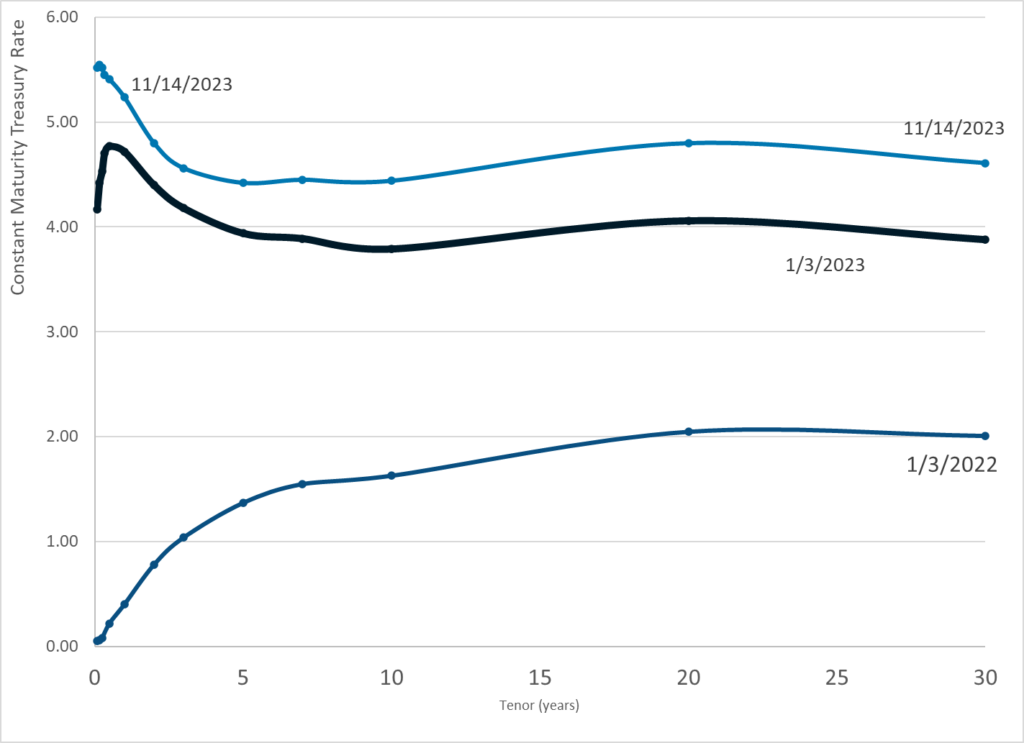
Publication Date: 14 Nov 2023
Publication Site: Treasury Department
All about risk
Graphic:
Publication Date: 14 Nov 2023
Publication Site: Treasury Department
Link: https://jacobin.com/2023/11/irs-direct-file-free-tax-filing-intuit
Excerpt:
The tax preparation industry claims that current efforts to create a government-run system that would allow eligible Americans to file their taxes for free could be prohibitively expensive. But a new report reveals that the potential cost of such a free-file program could be less than the total tax subsidies scored last year by the biggest player in an industry that reaps billions from people using services that could be free.
In effect, government tax credits are subsidizing Intuit’s fight against a direct-file system that would let Americans avoid paying for the company’s tax filing services. In October, the Internal Revenue Service (IRS) announced it would pilot its free Direct File platform for select taxpayers in thirteen states during the 2024 tax season — potentially delivering a final blow to a twenty-year agreement with the tax preparation industry that prohibited the IRS from effectively becoming a competitor. That’s assuming Congress doesn’t eliminate funding for the free tax filing program as part of its new military aid bill for Israel, as Republicans have proposed.
In return for the IRS not launching its own e-filing product, private tax prep companies like Intuit and H&R Block were required to provide access to free filing services for qualified taxpayers. But only 3 percent of eligible taxpayers utilized these free services, largely due to roadblocks set up by companies that forced people into paying for their products instead. Both companies ended up pulling out of the free IRS program in recent years.
These deceptive strategies and hurdles have proven to be lucrative for the industry. In 2019, at least fourteen million Americans paid for tax prep services that should have been free, according to a Treasury Department audit spurred by a ProPublica investigation. This earned the industry around $1 billion in revenue.
Author(s): LAUREN LIEBHABER
Publication Date: 10 Nov 2023
Publication Site: Jacobin Magazine
Link:https://jamanetwork.com/journals/jama/article-abstract/2808221
DOI: JAMA. 2023;330(8):693-694. doi:10.1001/jama.2023.11110
Excerpt:
Thirty-five years ago, geriatrics officially became a specialty of medicine. At that time, there were 76 million baby boomers who would begin turning 65 in 2011, a compelling demographic imperative for this new specialty that specifically focused on older adults.
Geriatrics is a field especially attractive to some physicians because of its differences from other specialties, including elements beyond single medical conditions such as multimorbidity, polypharmacy, function, and cognition. Geriatrics also places a special emphasis on interdisciplinary team care for complex older patients, and the needs of family caregivers.
Author(s):Jerry H. Gurwitz, MD1
Publication Date: 4 Aug 2023
Publication Site: JAMA
Excerpt:
Moody’s Investors Service (MCO) revised its rating outlook for the Aaa-rated District of Columbia to negative Monday, matching its Friday action on the United States government.
At the same time, the rating agency affirmed the Aaa issuer ratings and stable outlooks of Florida, Maryland and Virginia.
The actions follow Friday’s outlook revision on the United States to negative from stable by Moody’s while it affirmed the U.S. sovereign rating at Aaa.
Moody’s said the main reason for the negative outlook on the United States was its assessment that “the downside risks to the U.S.’ fiscal strength have increased and may no longer be fully offset by the sovereign’s unique credit strengths.
“In the context of higher interest rates, without effective fiscal policy measures to reduce government spending or increase revenues, Moody’s expects that the U.S.’ fiscal deficits will remain very large, significantly weakening debt affordability,” the rating agency said. “Continued political polarization within U.S. Congress raises the risk that successive governments will not be able to reach consensus on a fiscal plan to slow the decline in debt affordability.”
Author(s): Chip Barnett
Publication Date: 13 Nov 2023
Publication Site: Fidelity Fixed Income – Bond Buyer
Graphic:
Excerpt:
Despite the surging older population, there are fewer geriatricians now (just over 7,400) than in 2000 (10,270), he noted in a recent piece in JAMA. (In those two decades, the population 65 and older expanded by more than 60%.) Research suggests each geriatrician should care for no more than 700 patients; the current ratio of providers to older patients is 1 to 10,000.
What’s more, medical schools aren’t required to teach students about geriatrics, and fewer than half mandate any geriatrics-specific skills training or clinical experience. And the pipeline of doctors who complete a one-year fellowship required for specialization in geriatrics is narrow. Of 411 geriatric fellowship positions available in 2022-23, 30% went unfilled.
The implications are stark: Geriatricians will be unable to meet soaring demand for their services as the aged U.S. population swells for decades to come. There are just too few of them. “Sadly, our health system and its workforce are wholly unprepared to deal with an imminent surge of multimorbidity, functional impairment, dementia and frailty,” Gurwitz warned in his JAMA piece.
This is far from a new concern. Fifteen years ago, a report from the National Academies of Sciences, Engineering, and Medicine concluded: “Unless action is taken immediately, the health care workforce will lack the capacity (in both size and ability) to meet the needs of older patients in the future.” According to the American Geriatrics Society, 30,000 geriatricians will be needed by 2030 to care for frail, medically complex seniors.
Author(s): Judith Graham
Publication Date: 10 Nov 2023
Publication Site: Kaiser Health News
Excerpt:
As the timeline for implementing the Financial Data Transparency Act grows shorter, the Securities and Exchange Commission is teaming up with other federal regulators in an attempt to allay fears about implementation.
“There’s no new disclosure requirements, standards or timelines, it’s just about structured data,” said Dave Sanchez, director of the SEC’s Office of Municipal Securities.
The comments came during a panel discussion produced by XBRL US on Thursday. The FDTA was passed last year as a remedy for providing more transparency to the financial markets by introducing machine-readable formats into the Municipal Securities Rulemaking Board’s EMMA system, which tracks the muni market.
The SEC is in charge of developing the standards for how the data will be submitted to the MSRB. The upcoming deadlines include publishing proposed rules by June 2024, which will kick off the public comment period. Determining the standards is set for December 2024, with specific rulemaking to be in place by 2026.
Author(s): Scott Sowers
Publication Date: 10 Nov 2023
Publication Site: Bond Buyer at Fidelity Fixed Income
Graphic:
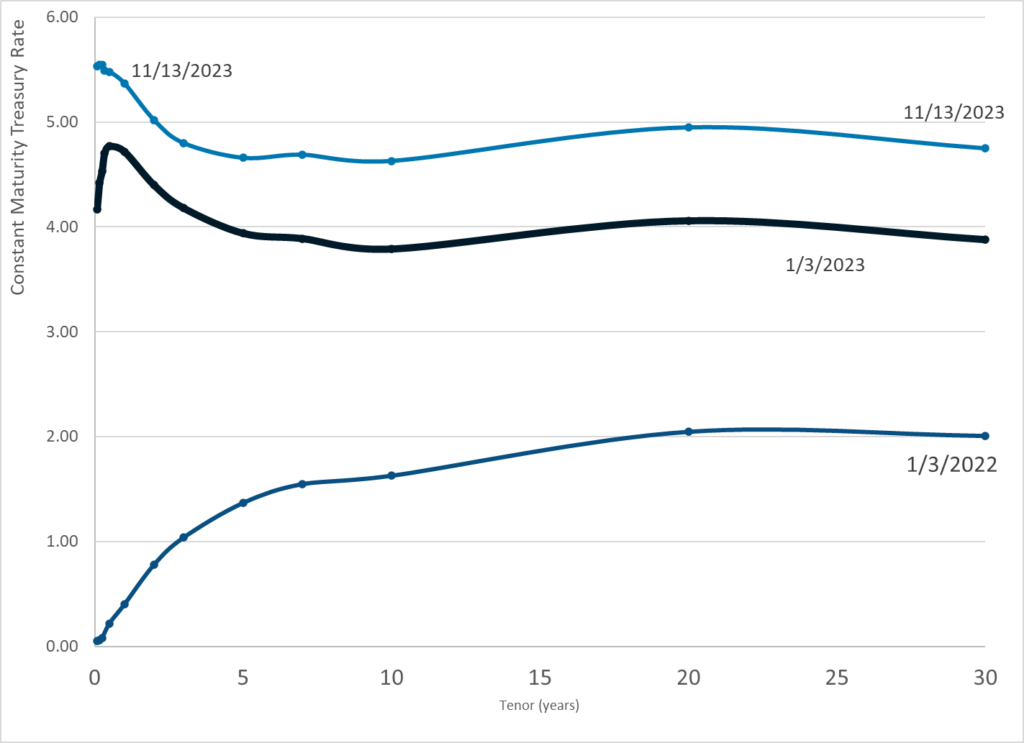
Publication Date: 13 Nov 2023
Publication Site: Treasury Dept
Graphic:
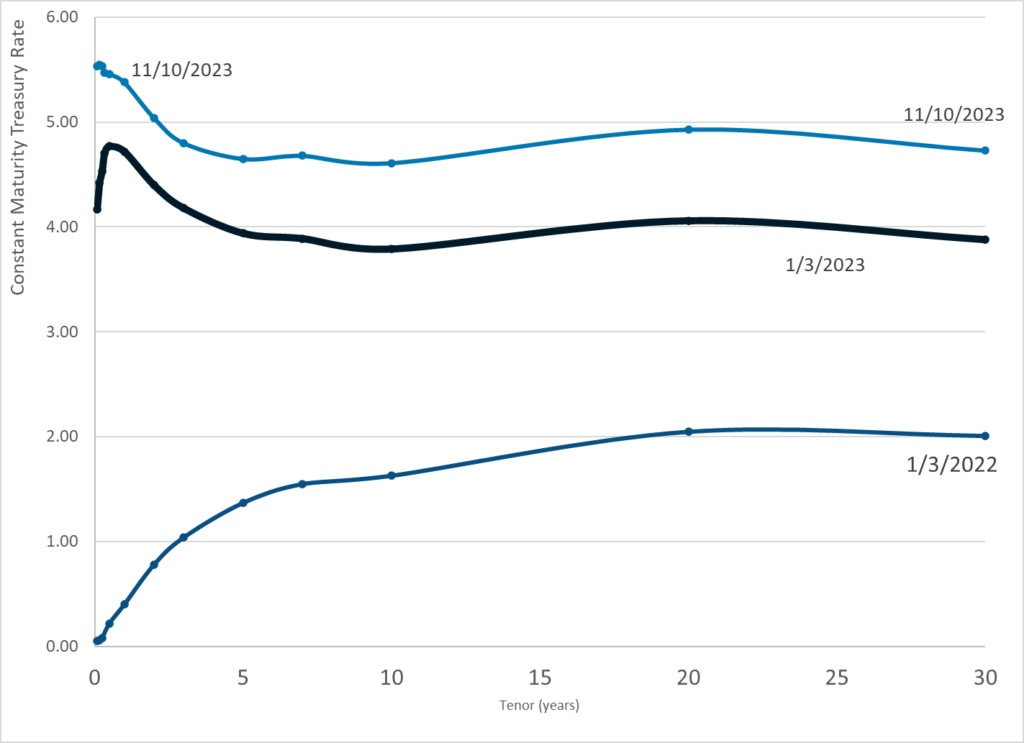
Publication Date: 10 Nov 2023
Publication Site: Treasury Dept
`
Link:https://www.statnews.com/2023/11/07/pulse-oximeters-attorneys-general-urge-fda-action/
Excerpt:
More than two dozen attorneys general are urging Food and Drug Administration officials to take urgent action to address disparities in how well pulse oximeters, the fingertip devices used to monitor a person’s oxygen levels, work on people with darker skin.
In a Nov. 1 letter, the AGs noted that it had been a year since the FDA convened a public meeting of experts, who called for clearer labeling and more rigorous testing of the devices, and that no action had been taken.
“We, the undersigned Attorneys General, write to encourage the FDA to act with urgency to address the inaccuracy of pulse oximetry when used on people with darker toned skin,” said the letter, written by California Attorney General Rob Bonta and signed by 24 other attorneys general.
Pulse oximeters’ overestimation of oxygen levels in patients with darker skin has, in a slew of recent research studies, been linked to poorer outcomes for many patients because of delayed diagnosis, delayed hospital admissions, and delayed access to treatment, including for severe Covid-19 infections. Higher amounts of pigments called melanin in darker skin interfere with the ability of light-based sensors in pulse oximeters to detect oxygen levels in blood.
….
The delay has frustrated health care workers who use pulse oximeters and have studied them and followed the progress toward creating new devices that work better. “I just get mad that these things are not on the market,” Theodore J. Iwashyna, an ICU physician at Johns Hopkins, told STAT. “Just last week in my ICU, I had a patient whose pulse oximeter was reading 100% at the same time that his arterial blood gas showed that his oxygen levels were dangerously low. I need these things to work, and work in all my patients.”
Author(s):Usha Lee McFarling
Publication Date: 7 Nov 2023
Publication Site: STAT News
Graphic:
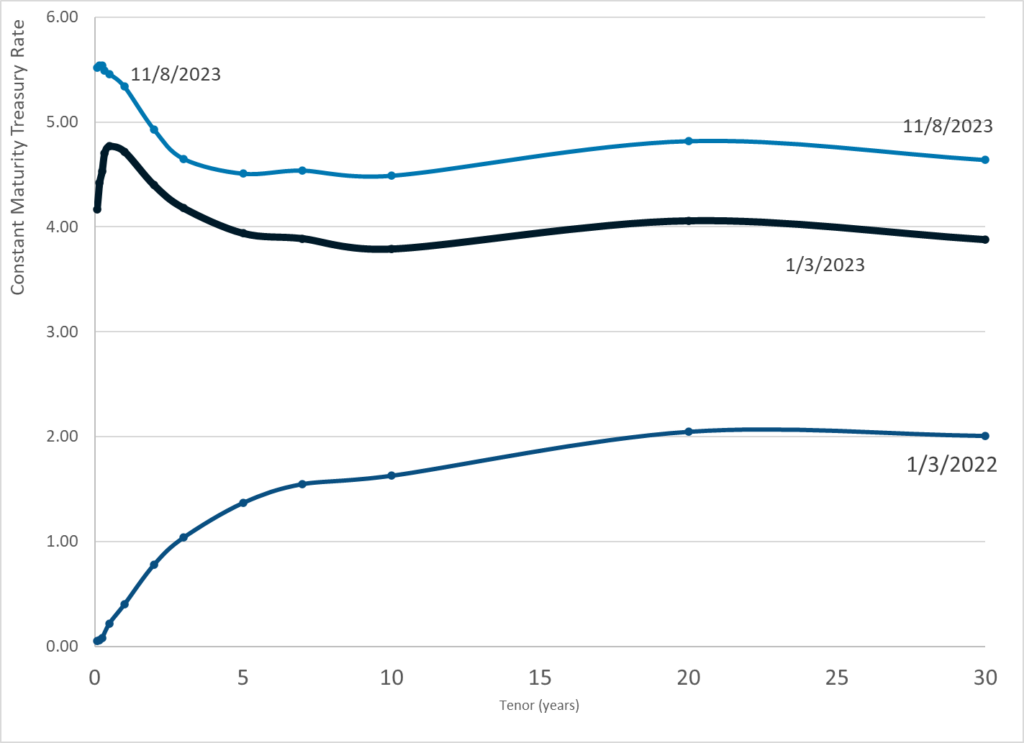
Publication Date: 8 Nov 2023
Publication Site: Treasury Dept
Link: https://www.lifehealth.com/a-conversation-with-benny-goodman/
Graphic:

Excerpt:
PEK: Your research reveals a conundrum when comparing a variable annuity with systematic withdrawals from investment accounts (assuming similar investment returns): the annuity will generally outperform. How do we convey this very basic equivalency to our clients?
BG: In my experience, I’ve seen that when some people get to retirement, they may have upwards of a half a million dollars in their accounts. Financial planners owe their clients more than just plans to help them accumulate assets and some well-wishes. Most people do not understand how to generate income from their savings that will last the rest of their lives.
Savings are exposed to market risk that can erode account balances before or in retirement, as we saw in The Great Recession of 2009 and the economic contraction during the coronavirus pandemic. And fifty percent of the population can expect to live beyond the average life expectancy in retirement, exposing them to longevity risk.
The practical reality is that most individuals cannot insulate themselves from risk on their own. Annuitizing a portion of a portfolio’s assets can help mitigate these issues.
PEK: You demonstrate that delaying the start of an annuity by five years may cost 5% in future income, which delaying ten years may cost 15%. Please talk about the time factor and the cost of delay.
BG: The concept is based on something called “mortality credits.” When buying an annuity, you join an annuity pool. Every time someone dies early (before he spent all the money he contributed) the leftover money stays in the pool and is shared by all those still in the pool. The money becomes a mortality ‘credit’ for those who did not die. These mortality credits allow the former to get lifetime income. They start adding value from the day someone enters the pool. Those who purchase the annuity at a later time were not in that pool and do not get that credit. Purchasers only receive mortality credits for those people who died after the purchasers joined the pool. Lower mortality credit means lower lifetime income. Mortality credits have value by adding to income.
….
PEK: Likewise, how real is the prospect of outliving one’s assets today?
BG: It’s very real. Data from EBRI indicates that about 40% of Americans face the risk of running out of money in retirement.
Now, not many people continuously spend and then one day look at their account and say, “Oh no! There is no money left!” But well before that day, they will start adjusting their spending downward so as to make sure they don’t outlive their money. And some have to make drastic and painful decisions, like choosing between paying for rent or healthcare; to pay for the electric bill or for medicine. Some retirees will even take half the dosage of their prescribed medicine to conserve it. It may even require that retirees move in with a child rather than live in poverty. In certain family dynamics, living with elderly parents is expected, but it may not be ideal for many.
Author(s): P.E. Kelley, Benjamin Goodman
Publication Date: 30 Oct 2023
Publication Site: Advisor Magazine
Graphic:
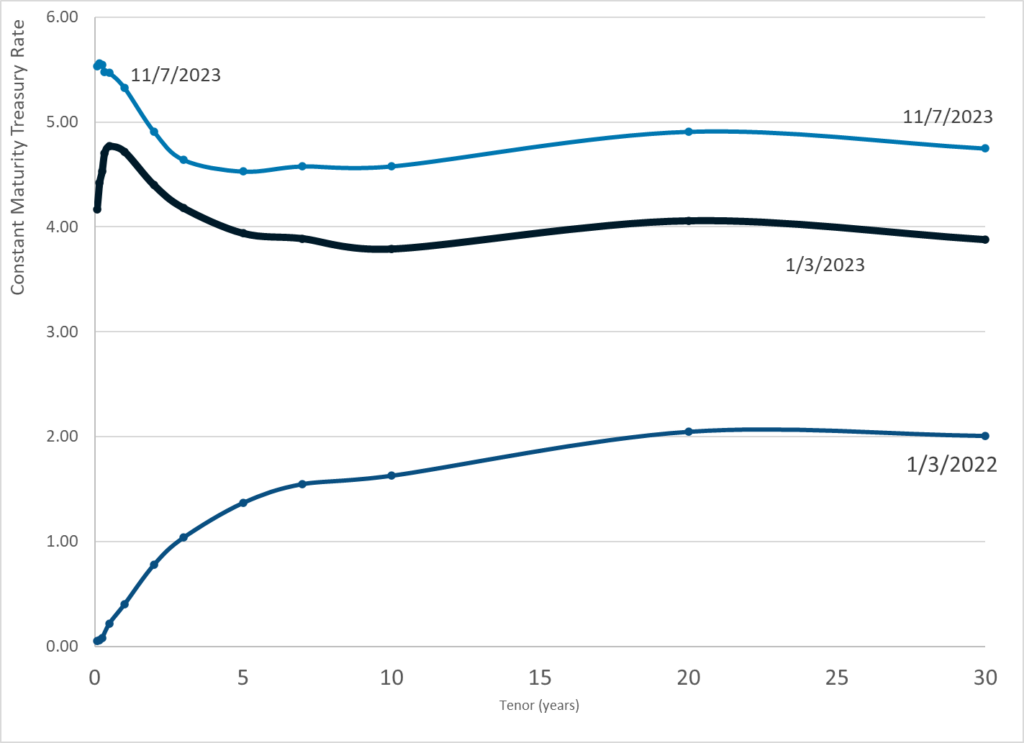
Publication Date: 7 Nov 2023
Publication Site: Treasury Dept