Israel’s vaccine programme gives hope to the world

Link: https://www.economist.com/graphic-detail/2021/02/03/israels-vaccine-programme-gives-hope-to-the-world

Graph:

Excerpt:

OVER ONE-THIRD of Israel’s population has received a vaccination against covid-19 since December 19th. Binyamin Netanyahu, the prime minister, has campaigned heavily for vaccinations, personally lobbying the boss of Pfizer, an American drugmaker, to secure early shipments of its vaccine. He was the first Israeli to be jabbed, live on television. He promised that “Israel will be the first country in the world” to emerge from the pandemic—by the end of March. (Conveniently, this is when Israel will be holding a parliamentary election and Mr Netanyahu believes success will boost his Likud party.) This was a bold claim considering nobody was sure that vaccines would successfully lower infection rates by enough to lift lockdown restrictions.

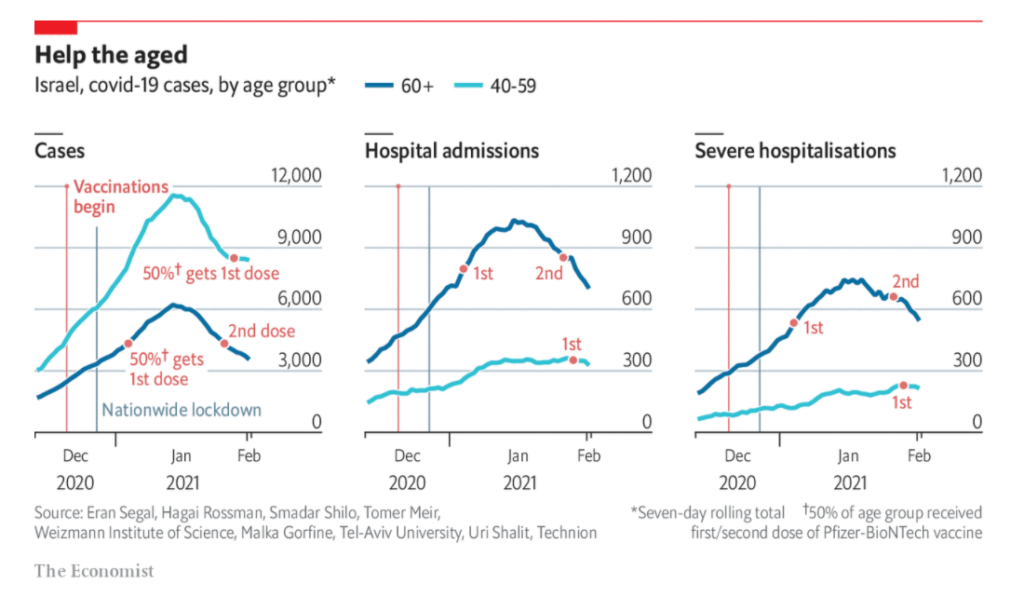
There is now evidence that the vaccination programme is having an impact. Analysis from Eran Segal, a computational biologist at the Weizmann Institute of Science in Rehovot, and his colleagues, has found that covid-19 cases are falling appreciably among old people in Israel. The effect is especially pronounced in hospital admissions: among people aged over 60 severe hospital cases have fallen by 26% since their peak on January 19th (see chart). In contrast, among those between 40 and 59—a group further back in the queue to be vaccinated—such severe cases have increased by 13%.

Publication Date: 3 February 2021

Publication Site: The Economist
World Mortality Data Set

Link: https://github.com/akarlinsky/world_mortality

Additional Link: https://github.com/dkobak/excess-mortality

Paper: https://www.medrxiv.org/content/10.1101/2021.01.27.21250604v1

Graph:

Abstract:

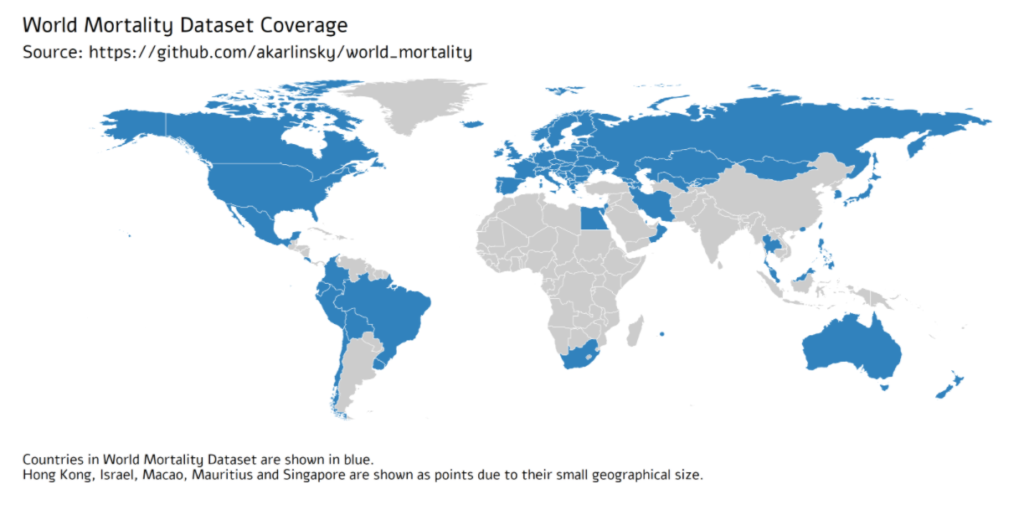
Comparing the impact of the COVID-19 pandemic between countries or across time is difficult because the reported numbers of cases and deaths can be strongly affected by testing capacity and reporting policy. Excess mortality, defined as the increase in all-cause mortality relative to the recent average, is widely considered as a more objective indicator of the COVID-19 death toll. However, there has been no central, frequently-updated repository of the all-cause mortality data across countries. To fill this gap, we have collected weekly, monthly, or quarterly all-cause mortality data from 77 countries, openly available as the regularly-updated World Mortality Dataset. We used this dataset to compute the excess mortality in each country during the COVID-19 pandemic. We found that in the worst-affected countries the annual mortality increased by over 50%, while in several other countries it decreased by over 5%, presumably due to lockdown measures decreasing the non-COVID mortality. Moreover, we found that while some countries have been reporting the COVID-19 deaths very accurately, many countries have been underreporting their COVID-19 deaths by an order of magnitude or more. Averaging across the entire dataset suggests that the world’s COVID-19 death toll may be at least 1.6 times higher than the reported number of confirmed deaths.

Authors: Ariel Karlinsky, Dmitry Kobak

Date Accessed: 3 February 2021

Publication Date: 29 January 2021

Publication Site: github

Public Pension Plans’ Funded Ratios Have Been Declining for Years

Excerpt:

Over time, changes in a pension plan’s funded ratio, also referred to as a pension’s funded status, can show the rate at which the plan’s debt is growing.

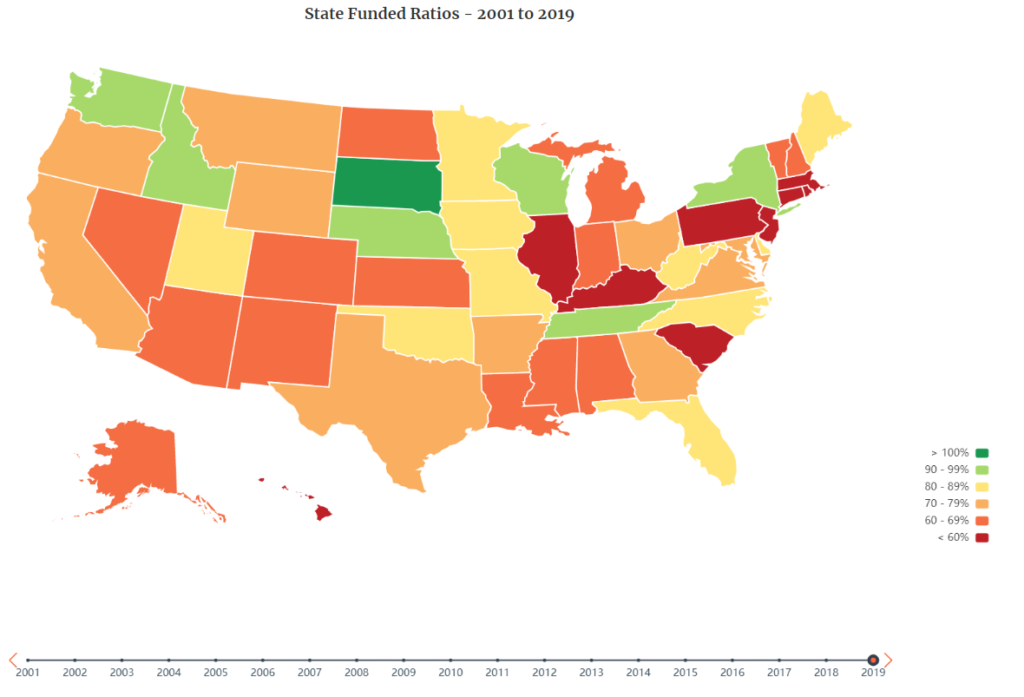
In 2001, West Virginia was the only state where public pension plans had an aggregate funded ratio of less than 60 percent. However, 18 years later, in 2019, nine states faced aggregate funded ratios below 60 percent.

In that same time period, the number of states with funded ratios below 70 percent (but above 60 percent) grew from three to 14. Together, these numbers show that, as of 2019, 23 states had less than 70 percent of the assets on hand that they need to be able to pay for promised future retirement benefits.

Graph:

Author: Jordan Campbell

Publication Date: 29 January 2021

Publication Site: Reason

Robinhood’s future is ‘toast,’ says ‘Wolf of Wall Street’ Jordan Belfort

Link: https://finance.yahoo.com/news/robinhoods-future-is-toast-says-wolf-of-wall-street-jordan-belfort-143933479.html

Excerpt:

The self proclaimed “Wolf of Wall Street,” Jordan Belfort, expects the Robinhood trading platform to go out of business over the GameStop (GME) trading controversy. “I really believe the lawsuits are going to be very problematic,” Belfort told Yahoo Finance Live.

Belfort was the founder of the defunct Stratton Oakmont brokerage. He plead guilty in 1999 to running an illegal “pump and dump” stock scheme that cost his clients more than $100 million. Belfort served 22 months in federal prison and later authored a memoir, “The Wolf of Wall Street,” which became a film starring Leonardo DiCaprio.

GameStop shares soared more than 1,600%, in three months, hitting $483 last week and that surprised Belfort. “When I first looked at it I said, ‘Yeah, it’s a modified pump and dump,’” he said.

Author: Adam Shapiro

Publication Date: 2 February 2021

Publication Site: Yahoo Finance

NY Senate Democrats block subpoena for COVID-19 nursing home death data

Link: https://nypost.com/2021/02/01/ny-senate-democrats-block-subpoena-for-covid-nursing-home-data/?utm_source=NYPTwitter&utm_medium=SocialFlow&utm_campaign=SocialFlow

Excerpt:

Democrats who control the state Senate blocked a motion Monday to subpoena records of the Cuomo administration seeking a fuller accounting of nursing home residents who died from the coronavirus.

The motion was made by Sen. Thomas O’Mara, the ranking Republican on the Investigations Committee panel during a virtual meeting

The GOP motion to compel the state Health Department to release records came just days after Attorney General Letitia James issued a blistering report that found Gov. Andrew Cuomo and his health agency withheld an accurate count of the number of nursing home residents who died from COVID-19 by some 50 percent by excluding residents who died after being take to hospitals.

Author: Carl Campanile and Bernadette Hogan

Publication Date: 1 February 2021

Publication Site: NY Post

COVID-19 and Long-Term Care: LTCI Insider

Link: https://www.thinkadvisor.com/2021/01/30/covid-19-and-long-term-care-ltci-insider/

Excerpt:

The impact on the nursing home industry has been catastrophic!

With occupancy rates plummeting, this industry is in deep financial trouble.

The American Health Care Association and the National Center for Assisted Living (AHCA/NCAL) conducted a survey of 953 nursing home providers across the U.S. on their financial and staffing challenges.

Two-thirds of nursing homes operators say they won’t make it another year given current operating pace due to increased COVID-19 costs.

90% of nursing homes are currently operating at a loss or less than 3% profit margin.

65% are currently operating at a loss.

Author: Margie Barrie

Publication Date: 30 January 2021

Publication Site: Think Advisor

Why the GameStop frenzy may hurt retirees along with hedge funds

Link: https://www.cnbc.com/2021/02/01/why-the-gamestop-frenzy-may-hurt-retirees-along-with-hedge-funds.html

Excerpt:

KEY POINTS

Retail investors such as Reddit users have targeted stocks like GameStop that are heavily shorted by Wall Street.

Some hedge fund losses extended into the double digits.

That could spill over to pension plans. Some invest more than 20% of their assets in hedge funds.

Author: Greg Iacurci

Publication Date: 1 February 2021

Publication Site: CNBC

Vesting Requirements and Key Benefit-Formula Features of State and Local Government Pension Plans

Link: https://www.ssa.gov/policy/docs/ssb/v81n1/v81n1p1.html

Excerpt:

This article provides a quantitative analysis of some key features of state and local pensions, including vesting requirements, the FAS period, and the benefit formula multiplier. This analysis focuses on public pensions in states that account for large numbers of noncovered public-sector workers. Among its unique contributions is the weighting of the summary statistics by population—in this instance, by the active membership in each benefit tier. This weighting mechanism is of special importance for occupation groups such as teachers, whose number of benefit tiers are underrepresented relative to active members, and public safety workers, whose tiers are overrepresented relative to active membership.

The findings in this article provide supporting evidence of a benefit retrenchment across state and local pensions, at least in states where noncovered employment is most common. Benefit tiers that are not open to new hires tend to have shorter vesting periods, shorter FAS periods (resulting in higher FASs), and higher benefit multipliers. As states have sought to reduce pension expenses, they have tightened eligibility requirements by increasing vesting periods, and have lowered benefits by increasing the FAS period and reducing the benefit formula’s multiplier.

This is not particularly surprising, given the recent economic conditions and plan funding levels that have led to pension reforms. However, the analysis shows that those changes have not affected all types of state and local workers equally. Changes in the FAS period, for example, affect public safety workers and local-level general government employees more than they affect teachers.

Author: Glenn R. Springstead

Publication Date: February 2021

Publication Site: Social Security Administration, Social Security Bulletin

Who the UK vaccinates next is a question of economics, not health

Link: https://www.wired.co.uk/article/coronavirus-vaccine-priority?mc_cid=7fe047fe3e&mc_eid=983bcf5922

Excerpt:

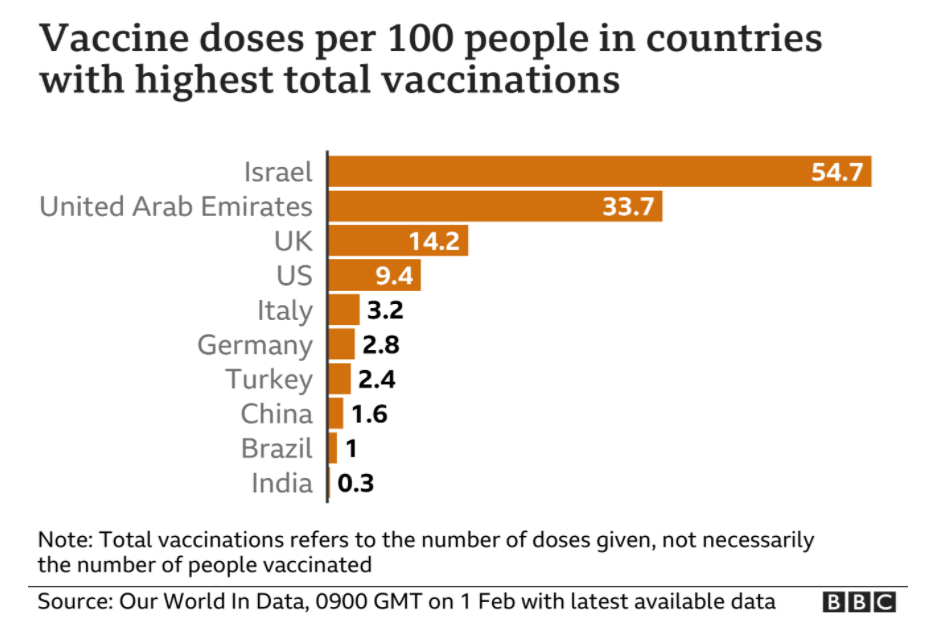
Almost 9.3 million people in the UK have now received the first dose of a Covid-19 vaccine. The country’s plan to vaccinate the most vulnerable is, remarkably, on track to meet its spring deadline. With a limited supply, the government has had to make tough decisions about who should be first in line to receive the jab. As the first phase of the vaccination programme continues at pace, one question keeps cropping up: who’s next on the list?

The UK’s current vaccination priority list was drawn up with a single goal in mind: preventing as many deaths as possible. That meant vaccinating those carrying the highest risk of mortality from Covid-19, as well as protecting the health and social care staff and systems. The government is aiming to offer a first dose to everybody in the top four priority groups by the middle of February. The rest of the list goes down incrementally in age to those aged 50 and over, and younger people with underlying conditions. All together, these groups are estimated to make up 99 per cent of preventable deaths from Covid-19.

Author: Grace Browne

Publication Date: 2 February 2021

Publication Site: Wired UK

Covid: Israel’s vaccine rollout linked to infection fall

Link: https://www.bbc.com/news/health-55706855

Excerpt:

Israel’s vaccination programme is showing signs of working to drive down infections and illness in the over-60s.

The fall appears to be most pronounced in older people and areas furthest ahead in their immunisation efforts.

This suggests it is the vaccine, and not just the country’s current lockdown, taking effect.

Israeli Ministry of Health (MoH) figures show 531 over-60s, out of almost 750,000 fully vaccinated, tested positive for coronavirus (0.07%).

Graph:

Author: Rachel Schraer

Publication Date: 1 February 2021

Publication Site: BBC News

COVID-19 Vaccine Developers Ask the SEC to Help Keep the Secret of How They Set Prices

Link: https://www.newsweek.com/covid-19-vaccine-developers-ask-sec-help-keep-secret-how-they-set-prices-1565904

Excerpt:

When the U.S. government awarded over $10 billion in contracts and advance- purchase commitments to drug companies working on COVID-19 vaccine and treatments, it did not require the recipients of government money to agree to offer their products at fair prices or share intellectual property rights to enable faster production.

Now, two of the companies awarded those contracts—Pfizer and Johnson & Johnson—are trying to prevent shareholders from voting on resolutions to require the companies to disclose information about the impact of government funding on vaccine access.

Author: Julia Rock

Publication Date: 1 February 2021

Publication Site: Newsweek