Graphic:
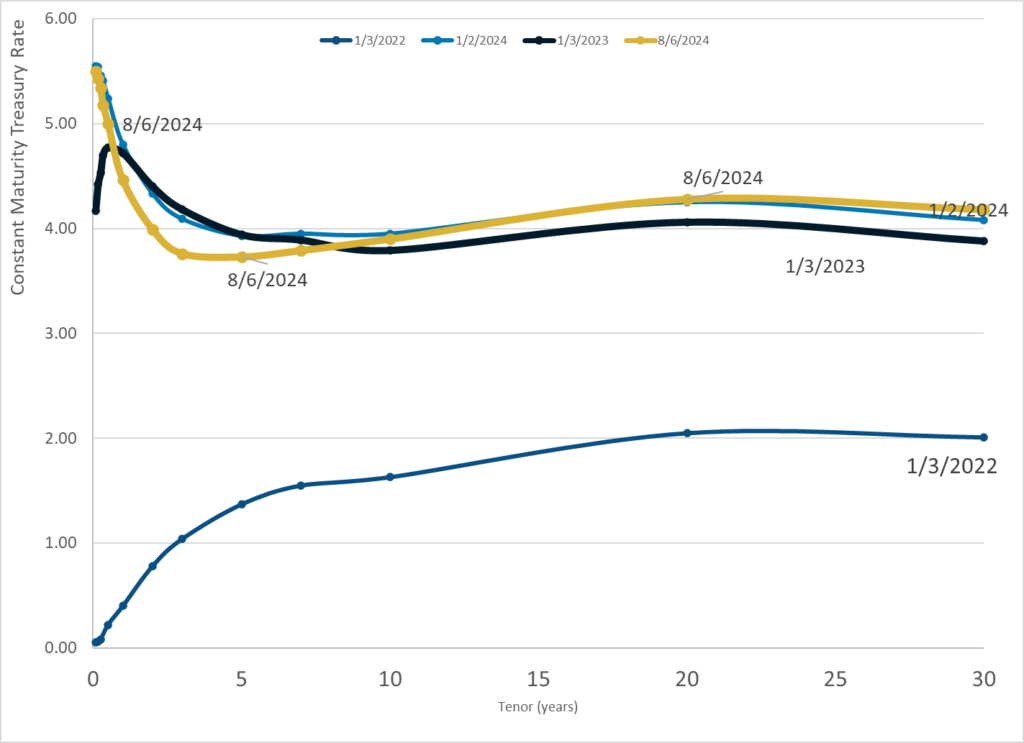
Publication Date: 6 Aug 2024
Publication Site: Treasury Dept
All about risk
Graphic:
Publication Date: 6 Aug 2024
Publication Site: Treasury Dept
Graphic:
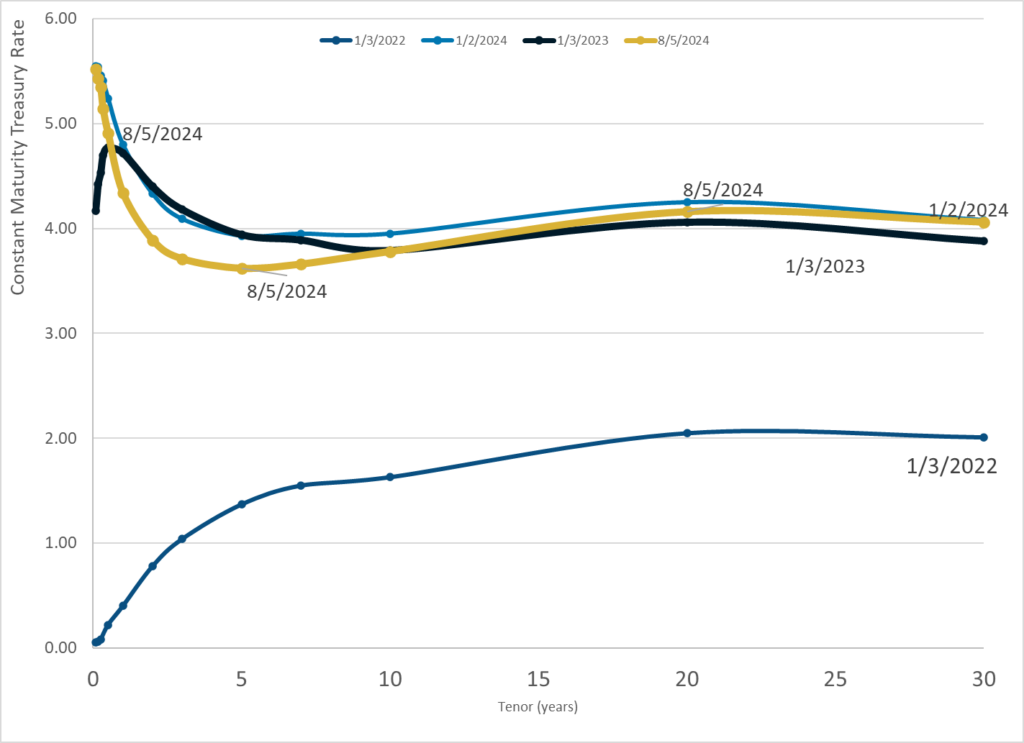
Publication Date: 5 Aug 2024
Publication Site: Treasury Dept
Link: https://mishtalk.com/economics/big-changes-in-fed-interest-rate-cut-expectations-this-year-and-next/
Graphic:
Excerpt:
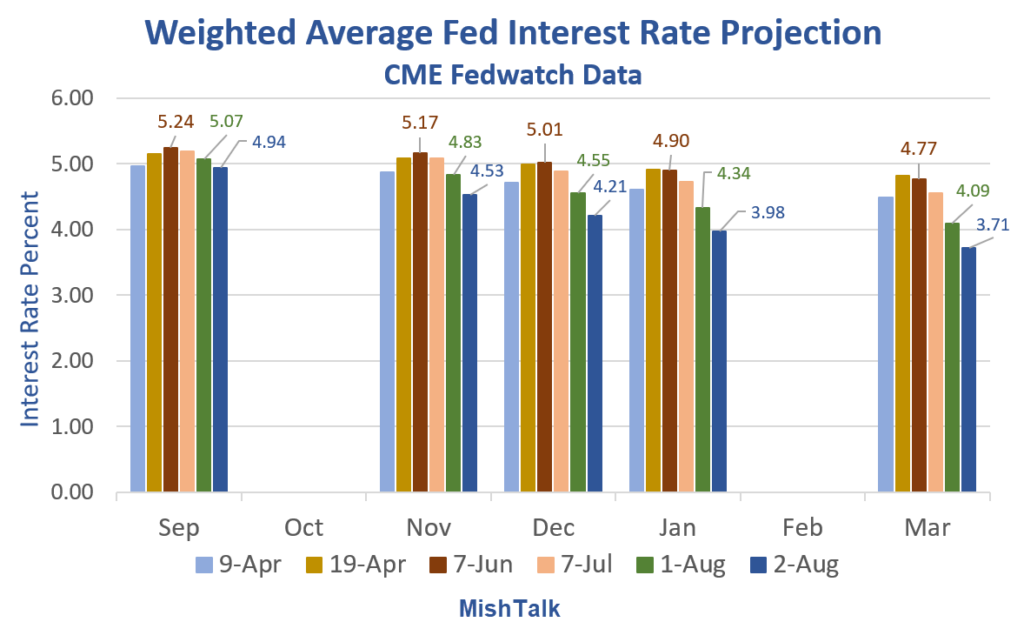
I captured rate cut expectations before and after the Friday jobs reports. Let’s take a look.
The current rate is 5.25%-5.50% effectively 5.37%.
Those odds were smack in the middle of volatility.
The CME website now shows data as of August 1 (no change on Friday), so they have something messed up.
The chart above reflects the huge volatility we saw in bond yields on Friday.
….
Are too many cuts priced in or not enough?
That’s the question. I expect two cuts in September. Looking out to next year, I think too many cuts are priced in.
Author(s): Mike Shedlock
Publication Date: 3 Aug 2024
Publication Site: Mish Talk
Graphic:
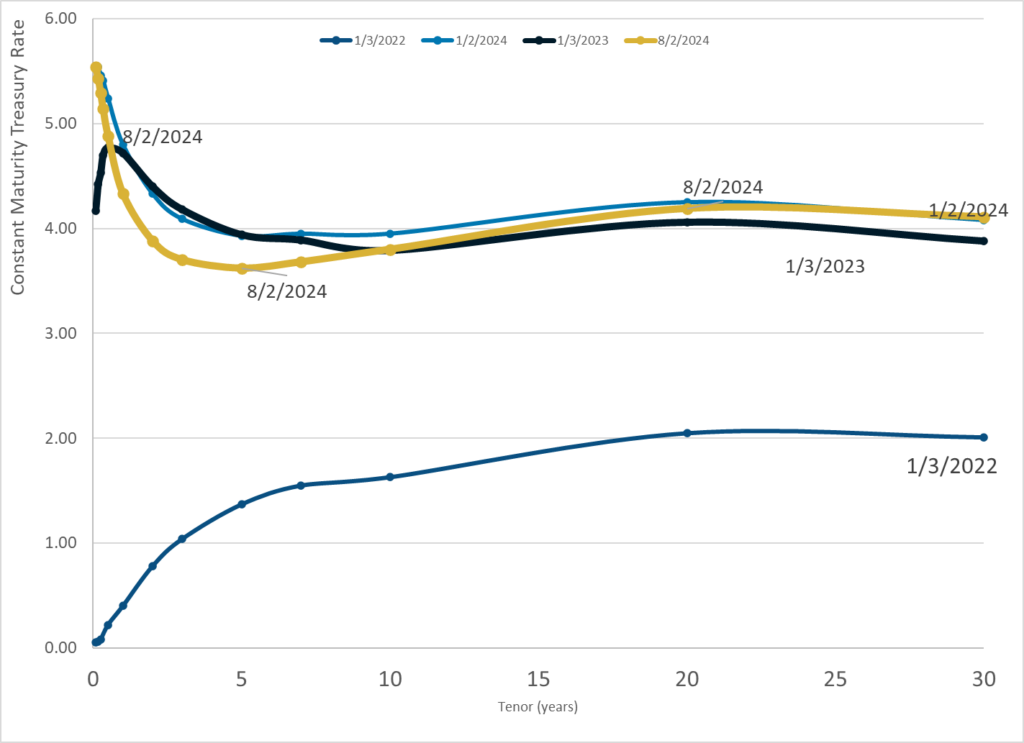
Publication Date: 2 Aug 2024
Publication Site: Treasury Dept
Graphic:
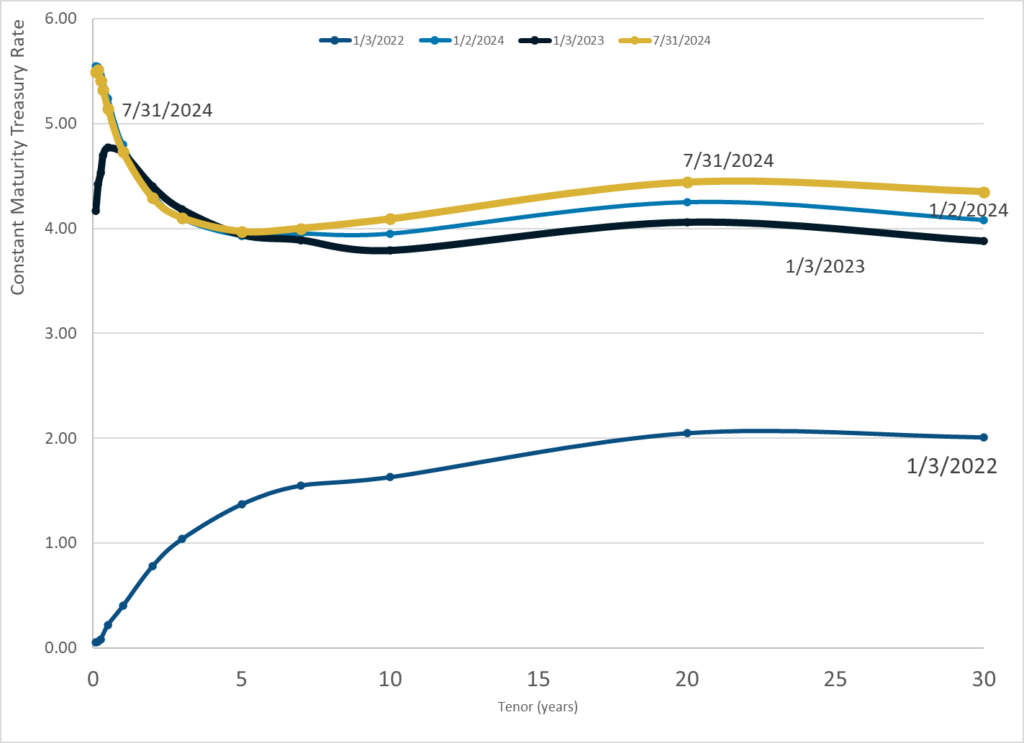
Publication Date: 31 July 2024
Publication Site: Treasury Dept
Link: https://content.naic.org/sites/default/files/capital-markets-market-buzz-private-credit-plr.pdf
Graphic:
Excerpt:
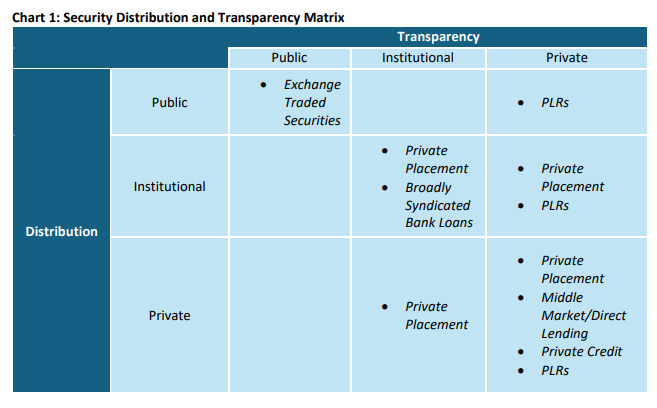
The terms private credit and private letter ratings (PLRs) have unintentionally elicited some confusion
about their respective meanings. While there is no standardized definition, and the term may be used
differently by market participants, private credit generally refers to debt, or debt-like, securities that are
not publicly issued or traded. On the other hand, PLRs refer to credit opinions that are assigned to
privately rated securities by credit rating providers and are only communicated to the issuer and a
specified group of investors.
To bring some clarity, at least with respect to how the NAIC views them, these terms can be characterized
in two dimensions: 1) distribution; and 2) transparency.
Publication Date: 30 July 2024
Publication Site: NAIC Capital Markets Bureau Market Buzz
Graphic:
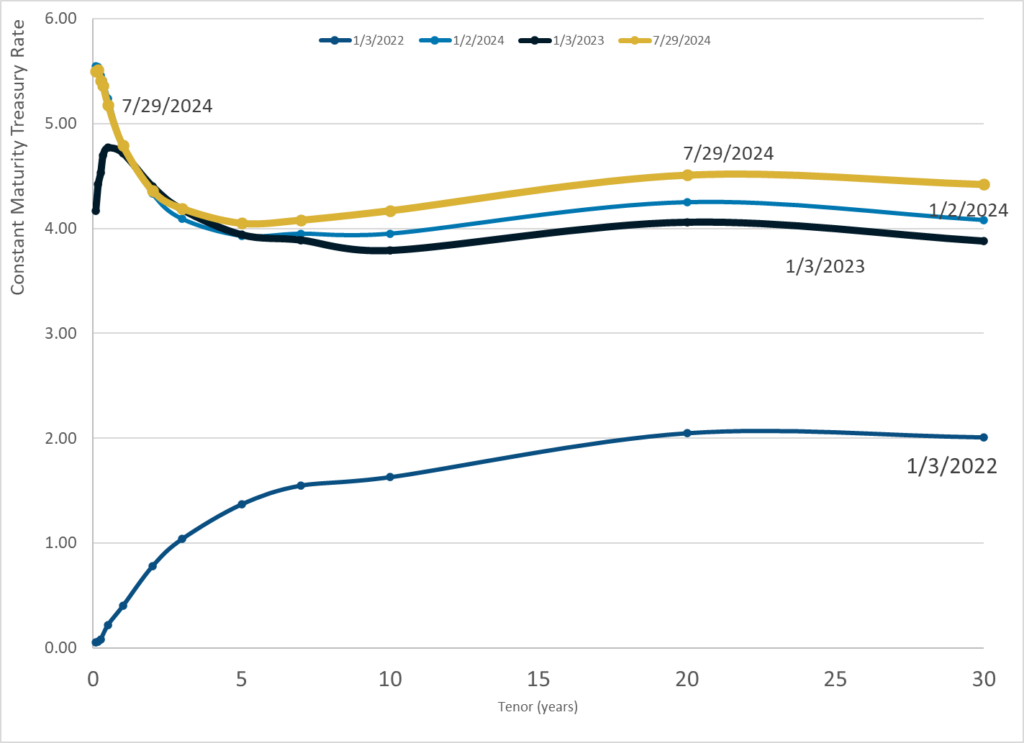
Publication Date: 29 July 2024
Publication Site: Treasury Dept
Link:
https://content.naic.org/sites/default/files/capital-markets-special-reports-bank-loans-ye2023_0.pdf
Graphic:
Executive Summary:
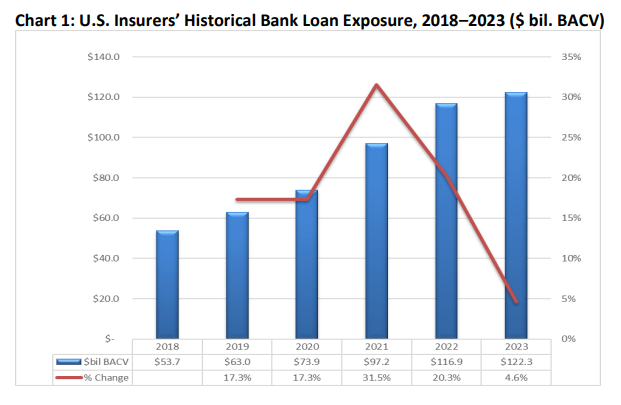
Bank loan investments increased to about $122 billion in book/adjusted carrying value (BACV)
at year-end 2023 from $117 billion at year-end 2022.Despite the 4.6% growth, bank loansremained at 1.4% of U.S. insurers’ total cash and invested
assets at year-end 2023—the same as year-end 2022.Approximately 70% of U.S. insurers’ bank loan investments were acquired, and 85% were held
by life companies.In particular, large life companies, or those with more than $10 billion in assets under
management, accounted for 82% of U.S. insurers’ bank loan exposure, up from nearly 80% in
2022.The top 25 insurance companies accounted for 75% of U.S. insurers’ total bank loan
investments at year-end 2023; the top 10 accounted for about 60%.Improvement in credit quality for U.S. insurer-bank loans continued, evidenced by a fourpercentage-point increase in those carrying NAIC 1 and NAIC 2 designations and a
corresponding four-percentage-point decrease in bank loans carrying NAIC 3 and NAIC 4
designations.
Author(s): Jennifer Johnson
Publication Date: 16 July 2024
Publication Site: NAIC Capital Markets Special Report
Graphic:
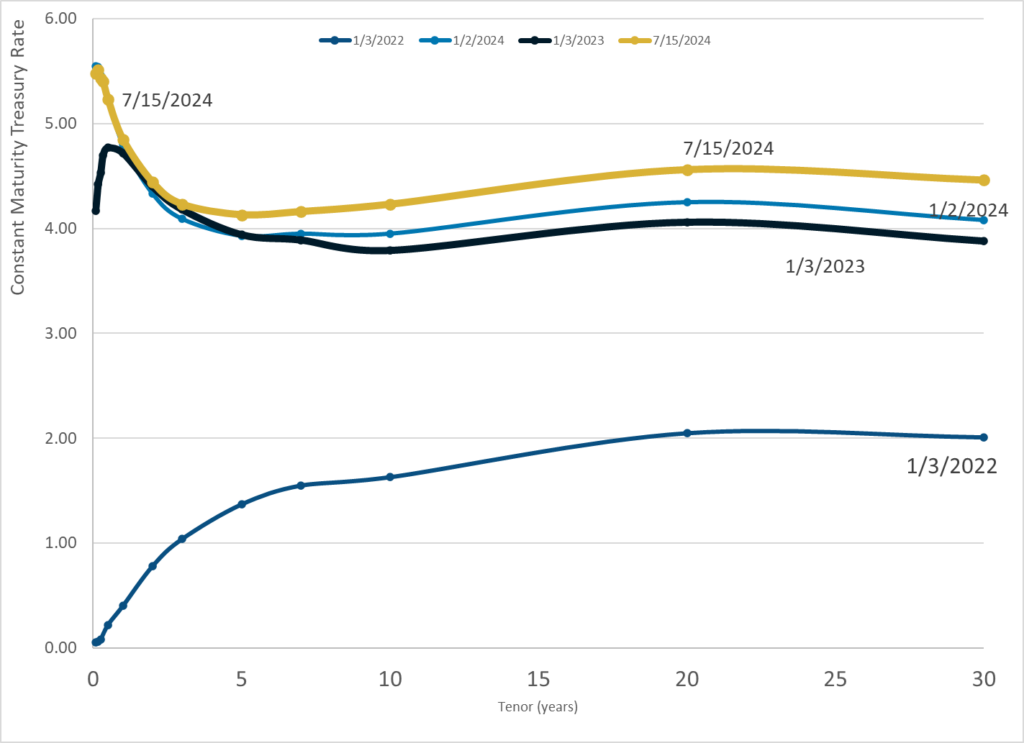
Publication Date: 15 July 2024
Publication Site: Treasury Dept
Graphic:
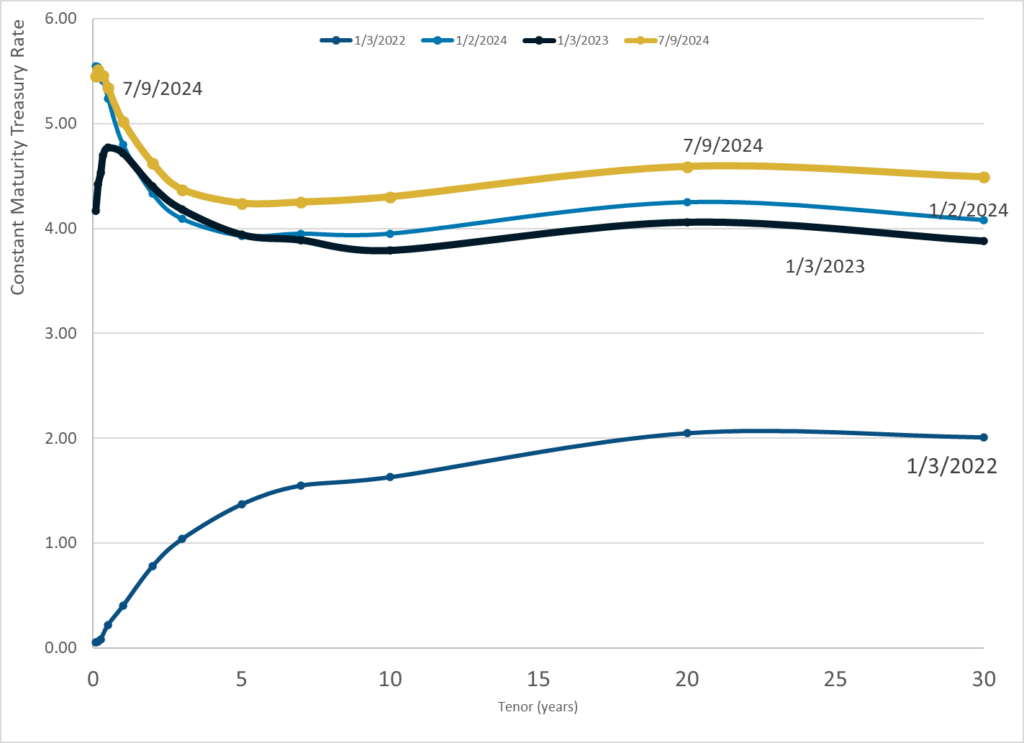
Publication Date: 9 July 2024
Publication Site: Treasury Department
Graphic:
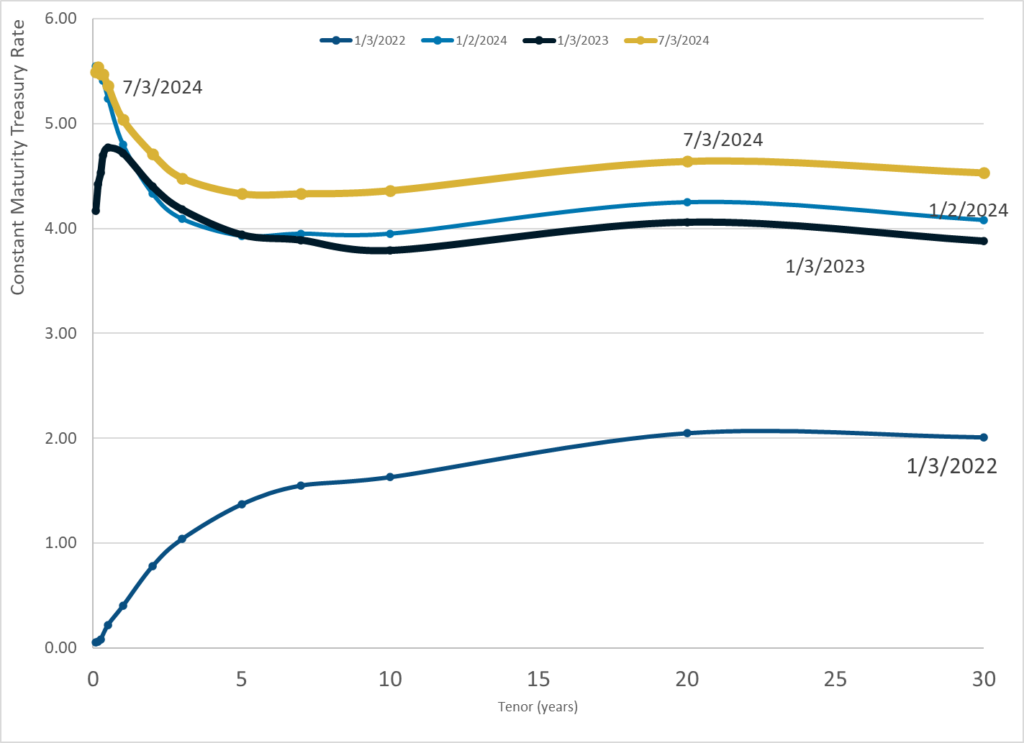
Publication Date: 3 July 2024
Publication Site: Treasury Dept
Graphic:
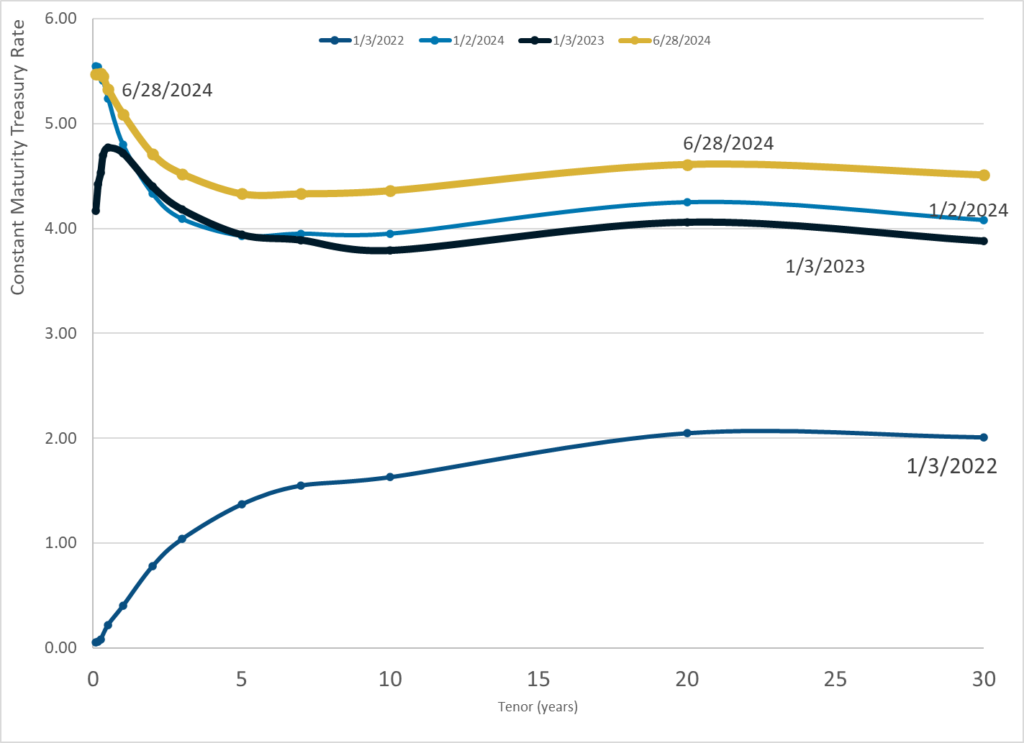
Publication Date: 28 June 2024
Publication Site: Treasury Department