Report finds Illinois holds 30% of pension obligation bond debt in nation

Link: https://www.thecentersquare.com/illinois/report-finds-illinois-holds-30-of-pension-obligation-bond-debt-in-nation/article_0ab6d148-1716-11ec-b36b-1b03ea725eeb.html#new_tab

Excerpt:

A new report shows Illinois holds 30% of the nation’s pension obligation bond debt.

A pension obligation bond is a form of debt that some states use to make payments to state-run pension funds. A pension obligation bond gets paid out by a third party and the state then pays back that loan with interest. Financial experts often advise against the use of pension obligation bonds, said Adam Schuster of the Illinois Policy Institute.

….

The interest on the pension obligation bonds continues to climb and is leaving Illinois in a worse spot than it was previously in. The state has borrowed a total of $17.2 billion since 2003, but repayment cost is now $31 billion. Pension obligation bonds can save taxpayers money if the interest rates on the bonds is lower than the rate of return on the pension investments. If the rate of return drops below the interest rate on the bonds, then taxpayers are on the hook for the difference. This is a strategy that Schuster said is the same as gambling with the state’s money.

Author(s): Andrew Hensel

Publication Date: 16 Sept 2021

Publication Site: The Center Square
Has the Pandemic Finally Peaked in the U.S.?

Link: https://reason.com/2021/09/23/has-the-pandemic-finally-peaked-in-the-u-s/?utm_medium=email

Graphic:

Excerpt:

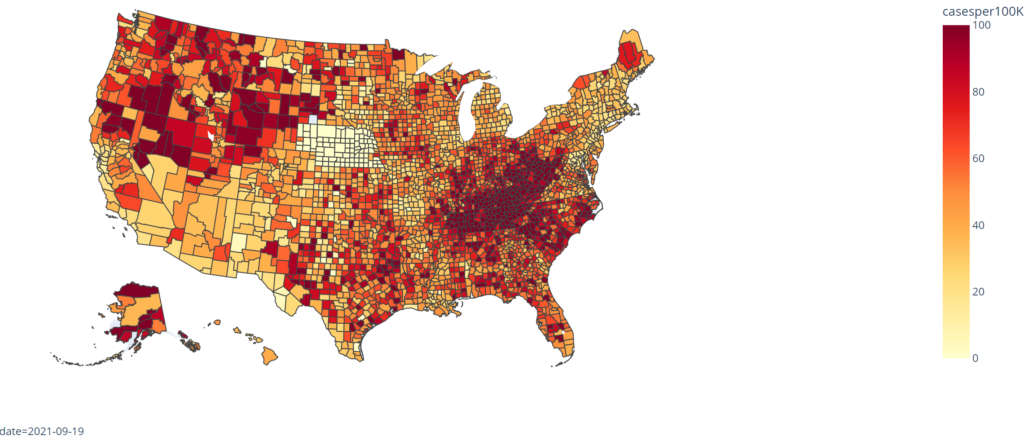
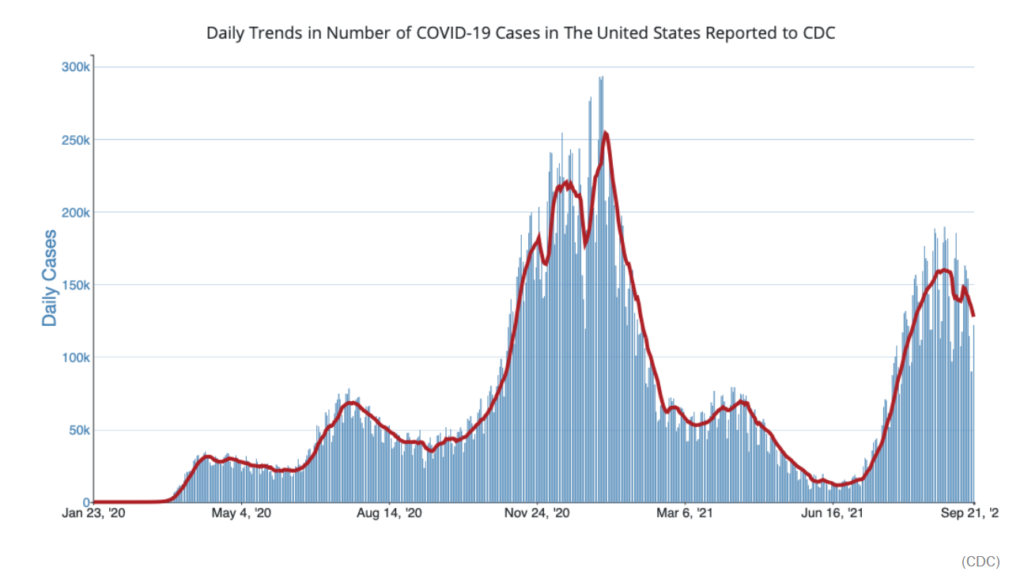
Will COVID-19 cases and deaths surge again this winter? The combined just-released results of 9 models applied to four different scenarios at COVID-19 Modeling Hub project that diagnosed cases could—using the projections of the more hopeful models—drop to around 9,000 cases per day by March. The scenarios range from the most hopeful, with childhood COVID-19 vaccinations and no new viral variant, to one with no child vaccinations and a new variant.

……

University of North Carolina epidemiologist Justin Lessler, who helps run the hub, tells NPR that the most likely scenario is that children do get vaccinated and no super-spreading variant emerges.

The good news is that about 55 percent of all Americans (181 million) are now fully vaccinated (64 percent of those age 12 and up). Given that unreported COVID-19 cases are generally thought to be considerably higher than the 42 million diagnosed cases, that suggests perhaps around 100 million Americans have developed natural immunity to the virus.

Author(s): Ronald Bailey

Publication Date: 23 Sept 2021

Publication Site: Reason

BLUF: The Military Standard That Can Make Your Writing More Powerful

Graphic:

Excerpt:

BLUF is a military communications acronym—it stands for “bottom line up front”—that’s designed to enforce speed and clarity in reports and emails.

The basic idea is simple: put the most important details first. Don’t tease or delay your main point because people are busy and their time is valuable. And make it clear—life-or-death decisions could be made using your information.

Author(s): Jan-Erik Asplund

Publication Date: 9 Sept 2019

Publication Site: Animalz

30 really is the new 20 (for some people – determining who they are will become crucial for pension plans and insurers)

Link: https://www.clubvita.us/news-and-insights/mega-trend-9-30-really-is-the-new-20-for-some-people-determining-who-they-are-will-become-crucial-for-pension-plans-and-insurers

Excerpt:

Moshe Milevsky claims that someone could be up to 20 years younger biologically than their chronological age, and that biological age is a much be a better way of determining a person’s longevity. If this is true, is there a way that organizations that specialize in longevity and/or mortality and that use mathematical calculations in order to determine risk could use biological age instead of chronological age to predict future health and longevity?

…..

There are two methods used to calculate biological age, coined by Milevsky as the “living” methodology or the “dying” methodology a.k.a. the mortality-adjusted approach.

Both methods begin with the collection of data. A researcher would first gather data from a large group of people at a wide range of ages, collecting biological samples and measurements in order to record various physiological and molecular variables (such as heart rate, blood pressure, mutations of DNA, or the presence of certain proteins in the blood). Researchers may also collect data on variables that they believe will be correlated with enhancement or deterioration of a person’s physiological condition, such as their wealth, occupation or even their appearance or number of Facebook friends!

Author(s): Nikiya Marilla

Publication Date: 16 Sept 2021

Publication Site: Club Vita

Spanish flu v. COVID-19: Comparing the Numbers and Forgetting the Lessons

Link: https://marypatcampbell.substack.com/p/spanish-flu-v-covid-19-comparing

Graphic:

Excerpt:

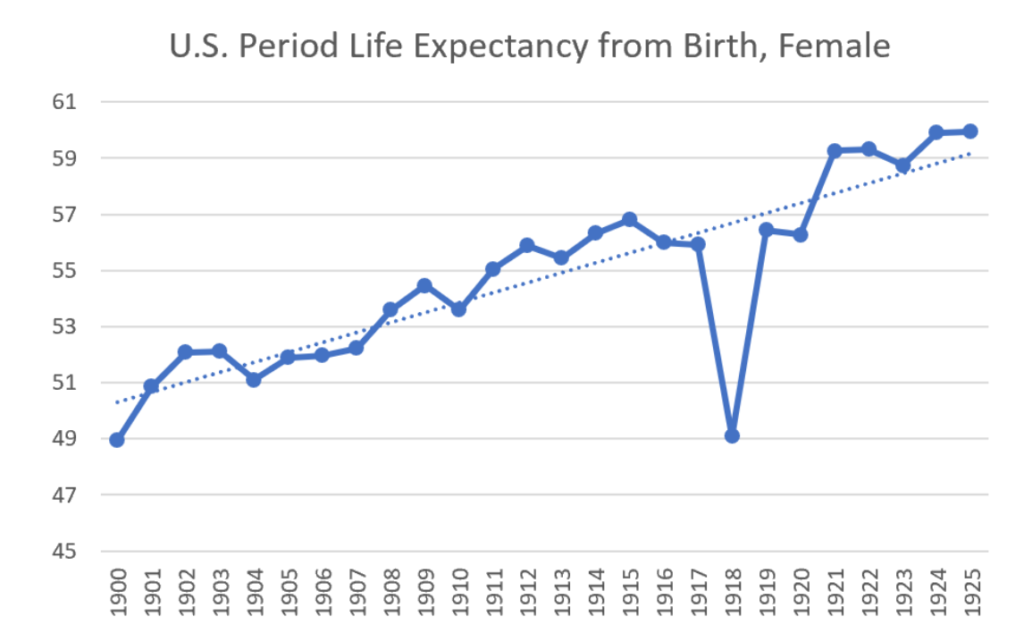
So, period life expectancy dropped about 12 – 13% in 1918 in the U.S., mainly due to the Spanish flu, because there was an outsized effect from young adults being the main group killed by the disease (also, period life expectancy was relatively short — under 60 years!). That was a drop of about 7 years.

But life expectancy dropped only about 1 year in 2020 due to COVID impacts, and that was a decrease of less than 3% compared to 2019.

So if you want to compare the effect of the Spanish flu vs. COVID-19 on the U.S. population, all of these rates —- percentage change in period life expectancy, age-adjusted death rates, or even crude death rate — are all more reasonable choices than simply number of people who died.

Author(s): Mary Pat Campbell

Publication Date: 22 Sept 2021

Publication Site: STUMP at substack

The tart truth underlying SALT repeal arguments

Link: https://www.washingtonpost.com/opinions/2021/09/18/tart-truth-underlying-salt-repeal-arguments/

Excerpt:

According to the Tax Foundation, just 13.7 percent of filers itemize their deductions — a prerequisite for deducting state and local taxes. Only at the top 10 percent of the income distribution do even a majority of taxpayers itemize. But among the top 1 percent of taxpayers, 92 percent do, and of course, their higher marginal tax rates make each deduction more valuable.

So it is these taxpayers whom the SALT deduction primarily benefits. According to Maya MacGuineas of the Committee for a Responsible Federal Budget, households in the top 0.1 percent of earners would receive an average benefit of about $150,000, while those in the middle would get closer to $15. Repealing the caps would cost about $350 billion by 2026, and an estimated 85 percent of that revenue would end up in the pockets of the richest 5 percent of Americans.

You can probably think of many better uses of taxpayer money than giving a tax break to the most affluent people in the most affluent parts of the most affluent states in the country. Unless, of course, you are someone who would benefit from a larger SALT deduction. As, I admit, I would.

Author(s): Megan McArdle

Publication Date: 18 Sept 2021

Publication Site: Washington Post

QUARTERLY REPORT ON HOUSEHOLD DEBT AND CREDIT: 2021Q2

Link: https://www.newyorkfed.org/medialibrary/interactives/householdcredit/data/pdf/HHDC_2021Q2.pdf

Graphic:

Excerpt:

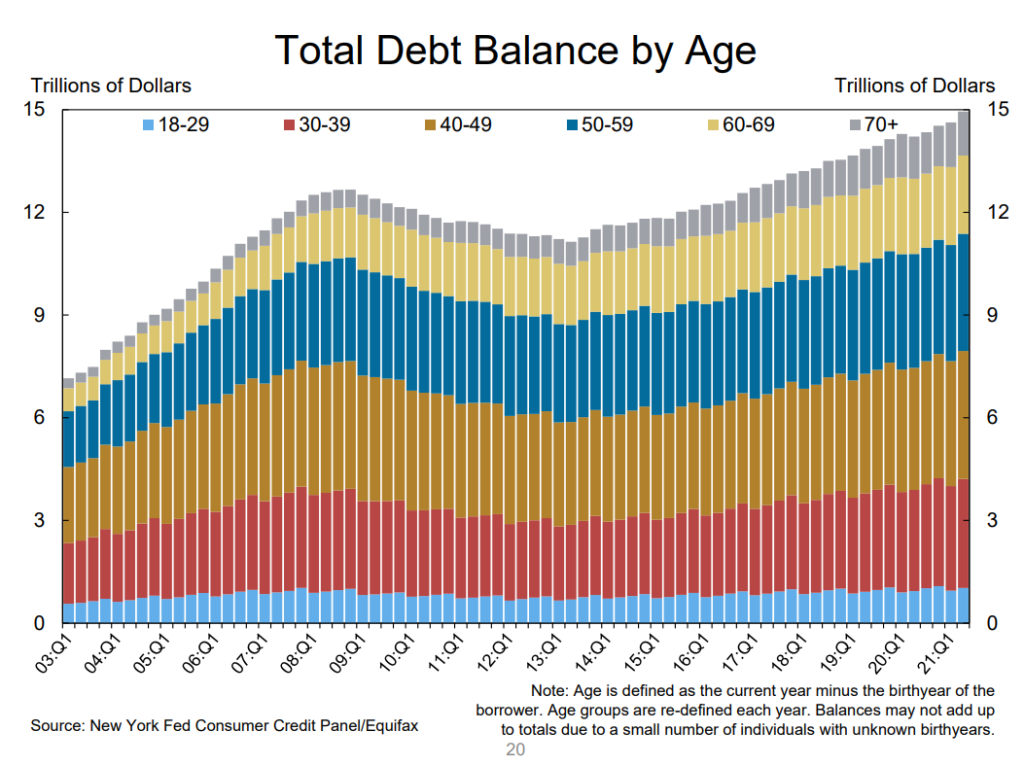
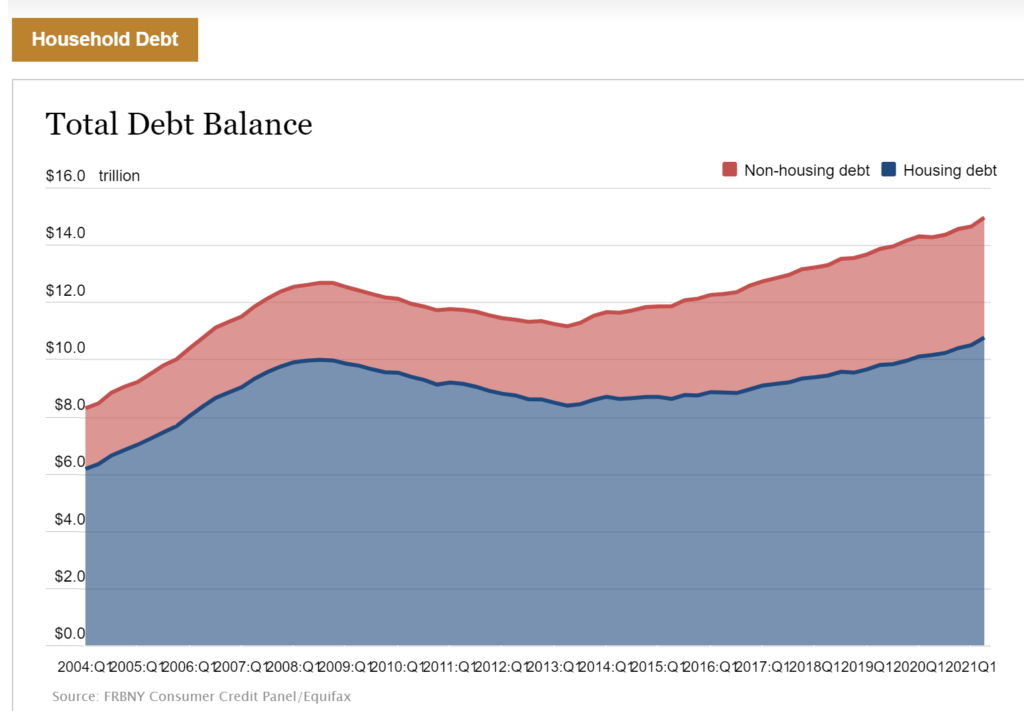
Aggregate household debt balances increased by $313 billion in the second quarter of 2021, a 2.1% rise from 2021Q1, and
now stand at $14.96 trillion. Balances are $812 billion higher than at the end of 2019 and $691 billion higher than 2020Q2. The 2.1%
increase in aggregate balances was the largest seen since 2013Q4 and marked the largest nominal increase in debt balances since
2007Q2.

Publication Date: August 2021

Publication Site: NY Fed

HOUSEHOLD DEBT AND CREDIT REPORT (Q2 2021)

Link: https://www.newyorkfed.org/microeconomics/hhdc.html

Graphic:

Excerpt:

Total Household Debt Climbs Boosted by Growth in Mortgages and Auto Loans

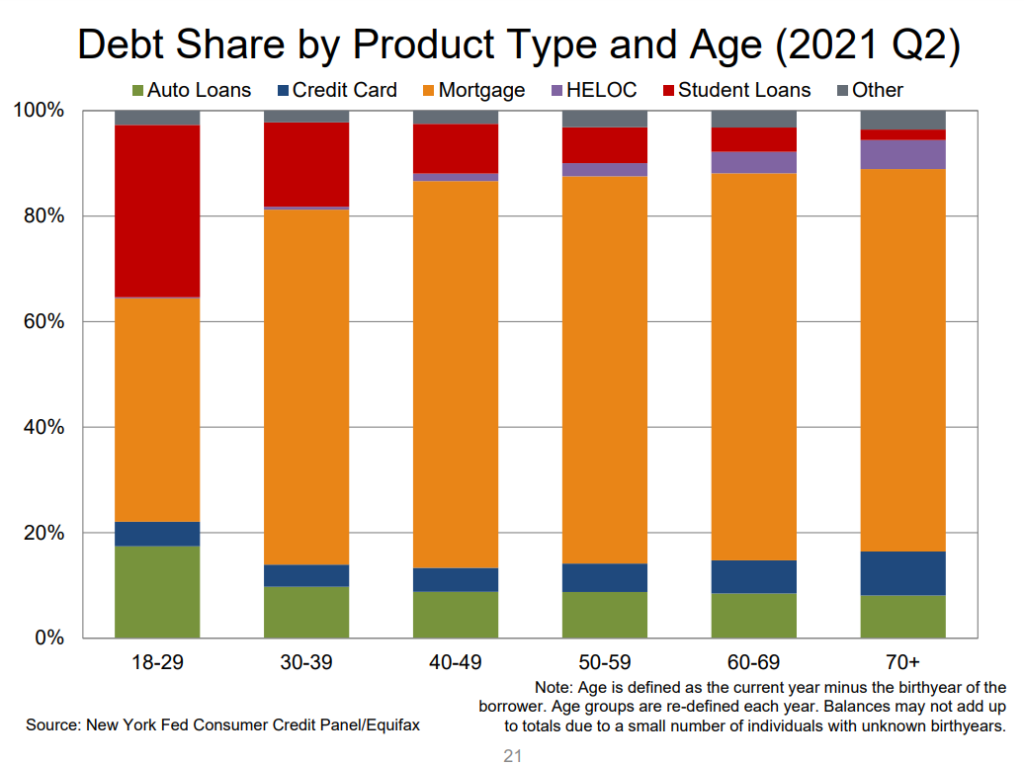
According to the latest Quarterly Report on Household Debt and Credit, total household debt rose by $313 billion (2.1 percent) to reach $14.96 trillion in the second quarter of 2021. Mortgage balances—the largest component of household debt—rose by $282 billion and auto loans increased by $33 billion. Credit card balances ticked up by $17 billion while student loan debt decreased by $14 billion. Mortgage originations, which include mortgage refinances, reached $1.2 trillion, surpassing the volumes seen in the preceding three quarters. Auto loan originations, which include both loans and leases, reached a record $202 billion.

Publication Date: Accessed 22 Sept 2021

Publication Site: NY Fed

Florida death certificate review raises questions about official number of COVID-19 deaths

Graphic:

Excerpt:

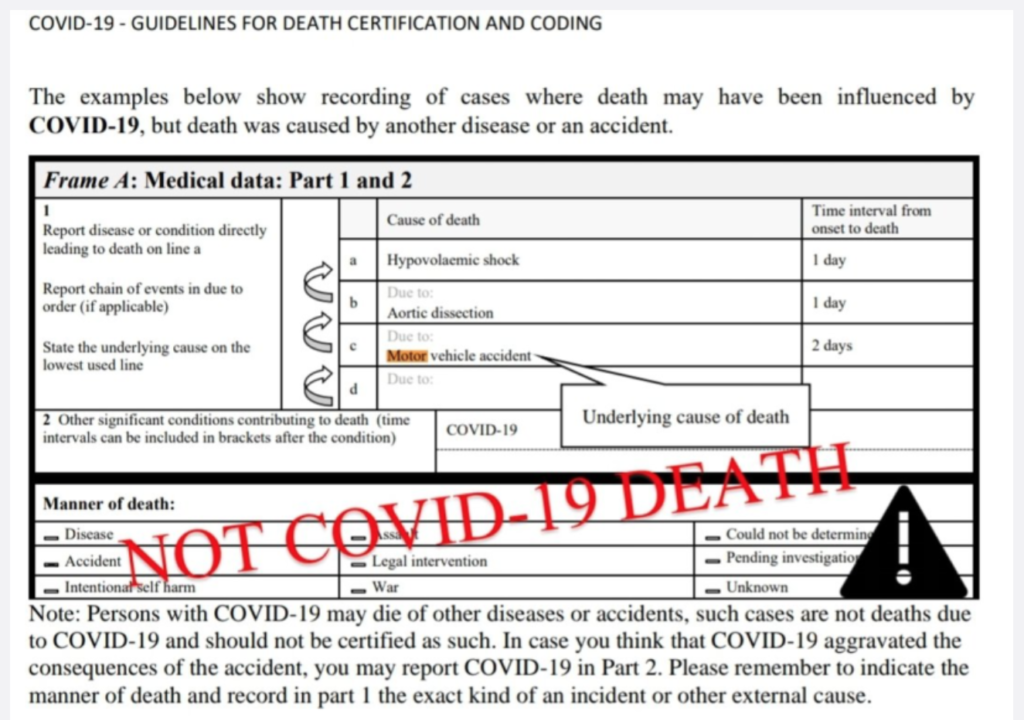
We had the opportunity to review death certificates for some of Florida’s recent COVID-19 deaths, and we can tell you definitively that Florida is counting deaths that were not directly caused by COVID-19.

Public health agencies have a goal of tracking the spread of a reportable disease, and for that reason, guidance was issued in March that any person who tested positive for COVID-19 should be counted as a COVID-19 death. However, the death count is now prominently featured in newscasts and used as a talking point to claim that some governments aren’t “doing enough” to stop the spread of COVID-19. COVID-19 metrics, including the number of reported deaths, are increasingly cited by governments as a reason to write public health recommendations into law.

……

A change in CDC guidance published on March 24, 2020 (COVID-19 Alert No.2) encouraged doctors to include COVID-19 in PART 1 “for all decedents where the disease caused or is assumed to have caused or contributed to death.” This was reinforced on April 5 (COVID-19 2020 Interim Case Definition), when the CDC said any death with COVID-19 on the death certificate is counted as a COVID-19 death, even if it was just presumed and had no confirming laboratory or clinical validation. In other words, the CDC guidance explicitly does not distinguish between deaths from COVID-19 and deaths with COVID-19. 

This is contrary to World Health Organization (WHO) guidelines, which say to count only deaths “resulting from a clinically compatible illness, in a probable or confirmed COVID-19 case, unless there is a clear alternative cause of death that cannot be related to COVID disease (e.g. trauma). There should be no period of complete recovery from COVID-19 between illness and death. A death due to COVID-19 may not be attributed to another disease (e.g. cancer).” 

Author(s): JENNIFER CABRERA AND LEN CABRERA

Publication Date: 11 November 2020

Publication Site: Rational Ground

U.S. Covid-19 Death Toll Surpasses 1918 Flu Fatalities

Link: https://www.wsj.com/articles/u-s-covid-19-death-toll-surpasses-1918-flu-fatalities-11632176583

Excerpt:

The U.S. on Monday crossed the threshold of 675,000 reported Covid-19 deaths, according to Johns Hopkins University, which tracks data from state health authorities. The Centers for Disease Control and Prevention estimates the influenza pandemic killed about that many people in the U.S. a century ago, in 1918 and 1919. Both figures are likely undercounts, epidemiologists and historians say.

There are several differences between the current pandemic and the one that claimed nearly as many lives more than 100 years ago. The U.S. at that time was roughly one-third its current size, so the flu pandemic took a proportionately bigger toll on the population. That pandemic had a devastating effect on young people, including small children and young-to-middle-aged adults, while Covid-19 has hit older people hardest, according to health officials.

Author(s): Jon Kamp and Jennifer Calfas

Publication Date: 20 Sept 2021

Publication Site: WSJ

Tax Me, I’m From New Jersey

Link: https://www.wsj.com/articles/regressive-tax-new-jersey-salt-cap-reconciliation-2017-cuts-and-jobs-act-aoc-biden-11632167030

Excerpt:

I am no billionaire. But like Mr. Buffett, I am willing to take one for the team. So as Democrats in Congress come under pressure to roll back the $10,000 cap on the federal tax deduction for state and local taxes, or SALT, this long-suffering resident of New Jersey offers his own Buffett-like message:

Don’t do it. Make me and people like me — those who choose to live in high-tax states — pay our full, fair share of federal taxes.

Such an approach accords well with what Mr. Biden has been saying about taxes and the wealthy. In his most recent remarks about his Build Back Better plan, the president said he’s “tired” of the rich not paying their “fair share.” And he attacked the 2017 tax cuts passed under Donald Trump as a “giant giveaway to the largest corporations and the top 1%.”

But that’s exactly who would benefit most from any expansion of the SALT deduction. According to the Tax Policy Center, 57% of the benefits of eliminating the cap on the SALT deduction would go to the top 1% of filers. The same researchers likewise reckon that the top 1% would get an average tax cut of more than $35,000 — against just $37 for middle-class taxpayers.

Author(s): William McGurn

Publication Date: 20 Sept 2021

Publication Site: WSJ