Iran Pensioners Protest Yet Again

Excerpt:

The 2020 census reported that there are some 18 million pensioners in Iran, who form part of the 96% of the population who live under the poverty line. Even the regime’s own statistics advise that over 75% of pensioners cannot afford the most basic goods, like food and shelter. This is because the average pension is 25 million rials per month even though some parts of the country have a poverty rate of 100 million rials after the economic crisis caused by the pandemic.

Author(s): Mostafa Aslani

Publication Date: 6 July 2021

Publication Site: Iran News Update
Fate of Pension Funds a Mystery in Latin America

Link: https://www.occrp.org/en/daily/14770-fate-of-pension-funds-a-mystery-in-latin-america

Excerpt:

A dónde va mi pensión (Where is my pension going?), an investigation by the Press and Society Institute, IPYS, the Pulitzer Center and 13 news organizations, revealed that workers from nine Latin American countries have saved around US$500 billion for their pensions but that they have no idea how and where their money was invested.

The investigation found that in some cases the money ended up in questionable companies that violated local regulations concerning the environment or worker’s safety.

In Chile, for example, 36 companies financed by pension funds accounted for nearly 3,500 fines issued by the labor regulator over the last five years.

Author(s): JULETT PINEDA SLEINAN

Publication Date: 6 July 2021

Publication Site: Organized Crime and Corruption Reporting Project

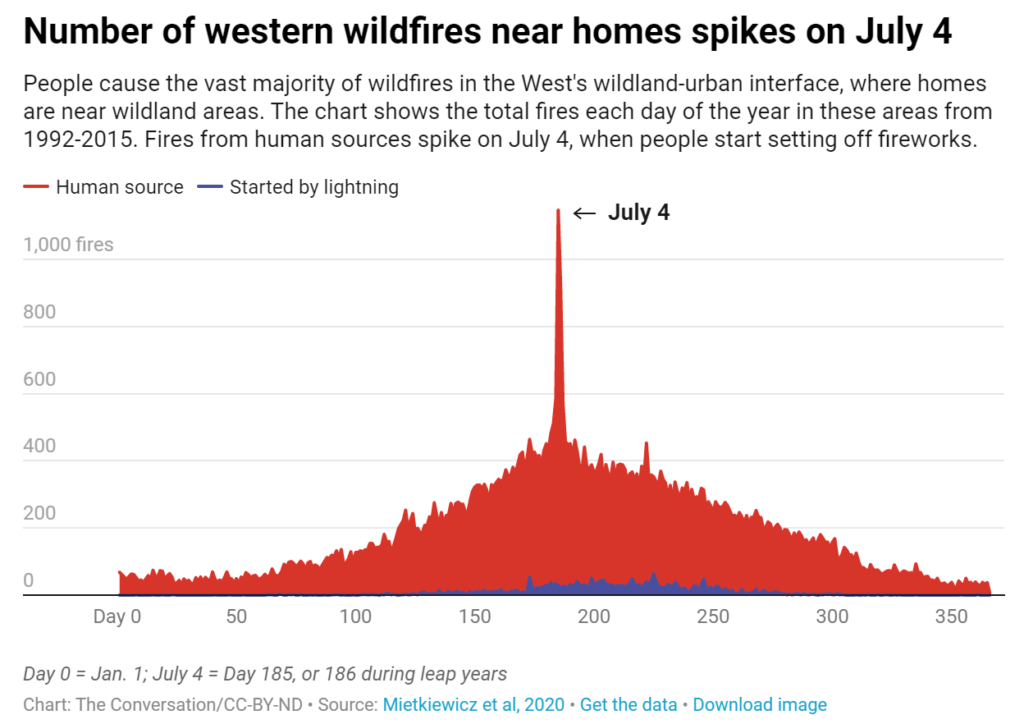
Skip the fireworks this record-dry 4th of July, over 150 wildfire scientists urge the US West

Link: https://theconversation.com/skip-the-fireworks-this-record-dry-4th-of-july-over-150-wildfire-scientists-urge-the-us-west-163561

Graphic:

Excerpt:

For decades, one of the most striking and predictable patterns of human behavior in the western U.S. has been people accidentally starting fires on the Fourth of July. From 1992 to 2015, more than 7,000 wildfires started in the U.S. on July 4 – the most wildfires ignited on any day during the year. And most of these are near homes.

Author(s): Philip Higuera, Alexander L. Metcalf, Dave McWethy, Jennifer Balch

Publication Date: 1 July 2021

Publication Site: The Conversation

Ruark Consulting Releases 2021 Variable Annuity Studies

Graphic:

Excerpt:

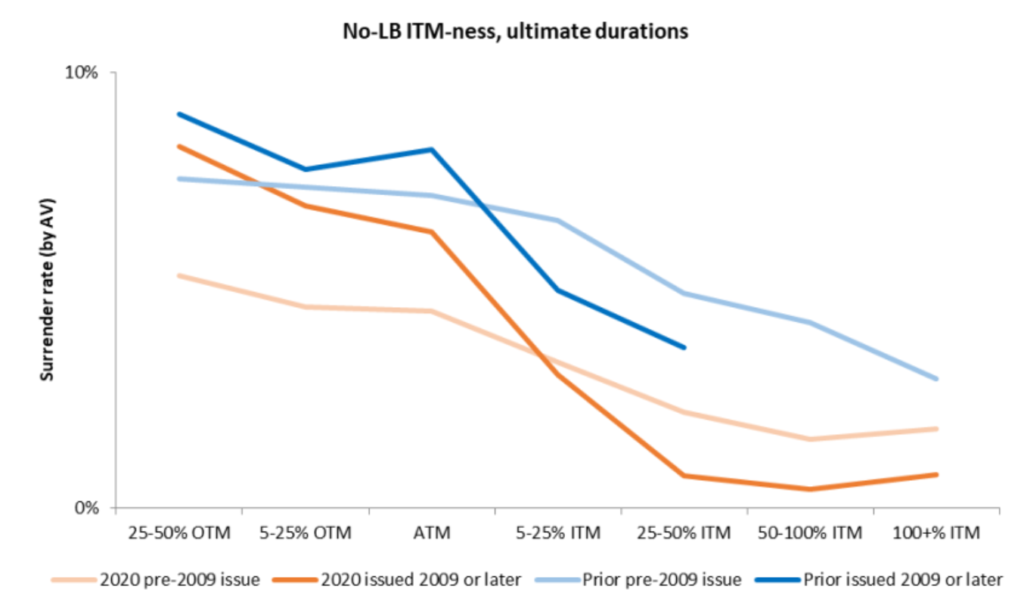
Pandemic-related factors dampened VA policyholder behavior in 2020. Extreme market activity in the first half of the year, disruption to policyholders’ usual communication patterns with advisors and agents by COVID-related social distancing, and the suspension of required minimum distributions under the CARES Act all served to depress surrender and income commencement behavior; however, the effects were not uniform, instead manifesting in specific market sectors as described below.

In the first half of 2020, declines in account values made guarantees relatively more valuable, leading to greater persistency.

As annuity sales volumes fell in 2020, VA surrender rates fell as well. However, the declines in surrender rates were concentrated among ultimate contract durations, where rates fell 1-2 percentage points independent of rider type or benefit value. Evidence suggests producers focused their attention on contracts at the shock duration (immediately following the expiration of surrender charges), leading to less turnover among the longest-dated contracts. The decline in surrenders is suggestive of a new, unique surrender regime, distinct from the regimes we observe before and after the 2008 financial crisis.

Author(s): Eric Halpern

Publication Date: 25 June 2021

Publication Site: Ruark Consulting

Without Enough Boots on the Ground, California’s Vaccination Efforts Falter

Excerpt:

Lackluster vaccination uptake drove the Newsom administration to pursue the more personal approach that public health experts favor, but the still-nascent campaign leaves out large swaths of the state. The administration launched its “Get Out the Vax” campaign in April, enlisting 70 community-based organizations and 2,000 community canvassers, now focused on Los Angeles and Central Valley neighborhoods where vaccinations have plateaued or declined.

But county public health officials say the campaign isn’t big enough to combat the vaccine misinformation that has infiltrated regions such as California’s rural north.

Author(s): Angela Hart

Publication Date: 29 June 2021

Publication Site: Kaiser Health News

5 U.S. States Where COVID-19 Slashed Birth Rates

Link: https://www.thinkadvisor.com/2021/07/06/5-u-s-states-where-covid-19-slashed-birth-rates/

Graphic:

Excerpt:

The pandemic has killed about 0.9% of Americans over age 65, and it has also reduced the number of babies born in 2020 by 4%, to 3.6 million, according to data from the National Center for Health Statistics.

That’s the biggest drop since 1973, when fear of overpopulation led many U.S. mothers to give up on the idea of having more than two children.

Author(s): Allison Bell

Publication Date: 6 July 2021

Publication Site: Think Advisor

Comparing the COVID-19 Vaccines: How Are They Different?

Link: https://www.yalemedicine.org/news/covid-19-vaccine-comparison

Excerpt:

In the United States, the number of cases and deaths that had been rising to a peak for almost a year have been flattening out, thanks, in large part, to COVID-19 vaccinations that began in December. As the weeks pass, more reports have been coming out about the effectiveness of the vaccines that are in use and the potential of those still in development. So, how do they differ? 

It’s important to keep up, but it’s also a daunting task, given the flood of information (and misinformation) coming at us from so many directions.

Vaccines from Pfizer-BioNTech, Moderna, and Johnson & Johnson are being administered in the U.S. right now, and others are on track to do the same. 

We mapped out a comparison of the most prominent COVID-19 vaccines.

Author(s): Kathy Katella

Publication Date: 1 July 2021 (originally published February 2021, updated)

Publication Site: Yale Medicine

Have Fun With Approximations!

Link: https://www.linkedin.com/pulse/have-fun-approximations-mary-pat-campbell/

Graphic:

Pdf: https://drive.google.com/file/d/0ByabEDuWaN6FNmZhTDBYeEVrNVE/view?resourcekey=0-U4GI2_9zn4UQdWza1bq95w

Excerpt:

In the pre-computer days, people used these approximations due to having to do all calculations by hand or with the help of tables. Of course, many approximations are done by computers themselves — the way computers calculate functions such as sine() and exp() involves approaches like Taylor series expansions.

The specific approximation techniques I try (1 “exact” and 6 different approximation… including the final ones where I put approximations within approximations just because I can) are not important. But the concept that you should know how to try out and test approximation approaches in case you need them is important for those doing numerical computing.

Author(s): Mary Pat Campbell

Publication Date: 3 February 2016 (updated for links 2021)

Publication Site: LinkedIn, CompAct, Society of Actuaries

What is good tax policy?

Link: https://allisonschrager.substack.com/p/known-unknowns-1c3?utm_medium=email&utm_campaign=cta

Excerpt:

So the goal of tax policy should be taking as much revenue as you can while trying to minimize distortions. Some kinds of taxes are more distortionary than others. In order of least to most harmful, it goes

1.     Consumption taxes

2.     Income taxes

3.     Wealth taxes

Cut to our current tax debate, where these concerns get no attention. The goal seems less about minimizing distortions/maximizing revenue and more about punishment, i.e., rich people for making too much in a zero-sum world and corporations for being greedy. Now, I think our tax system should be more progressive, too. But there are good and bad ways to achieve that goal.

Author(s): Allison Schrager

Publication Date: 6 July 2021

Publication Site: Known Unknowns at substack

Several Ways to Improve Your Use of Excel for Actuarial Production

Link: https://www.soa.org/sections/small-insurance/small-insurance-newsletter/2021/june/stn-2021-06-mathys/

Graphic:

Excerpt:

Create a Consistent Structure for Calculations

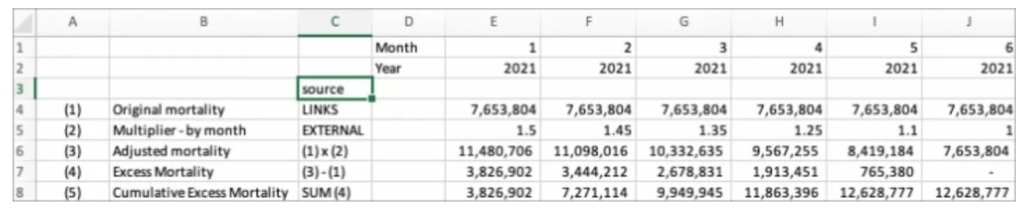
When spreadsheets are created ad-hoc, the usage of time steps tends to be inconsistent: advancing by rows in one sheet, columns in another, and even a mix of the two in the same sheet. Sometimes steps will be weeks, other times months, quarters, or years. This is confusing for users and reviewers, leads to low trust, increases the time for updates and audits, and adds to the risks of the spreadsheet.

A better way is to make all calculations follow a consistent layout, either across rows or columns, and use that layout for all calculations, regardless if it requires a few more rows or columns. For example, one way to make calculations consistent is with time steps going across the columns and each individual calculation going down the rows:

Author(s): Stephan Mathys

Publication Date: June 2021

Publication Site: Small Talk at the Society of Actuaries

Note to Bernie: The 8 arguments for restoring the SALT deduction, and why they’re all wrong

Graphic:

Excerpt:

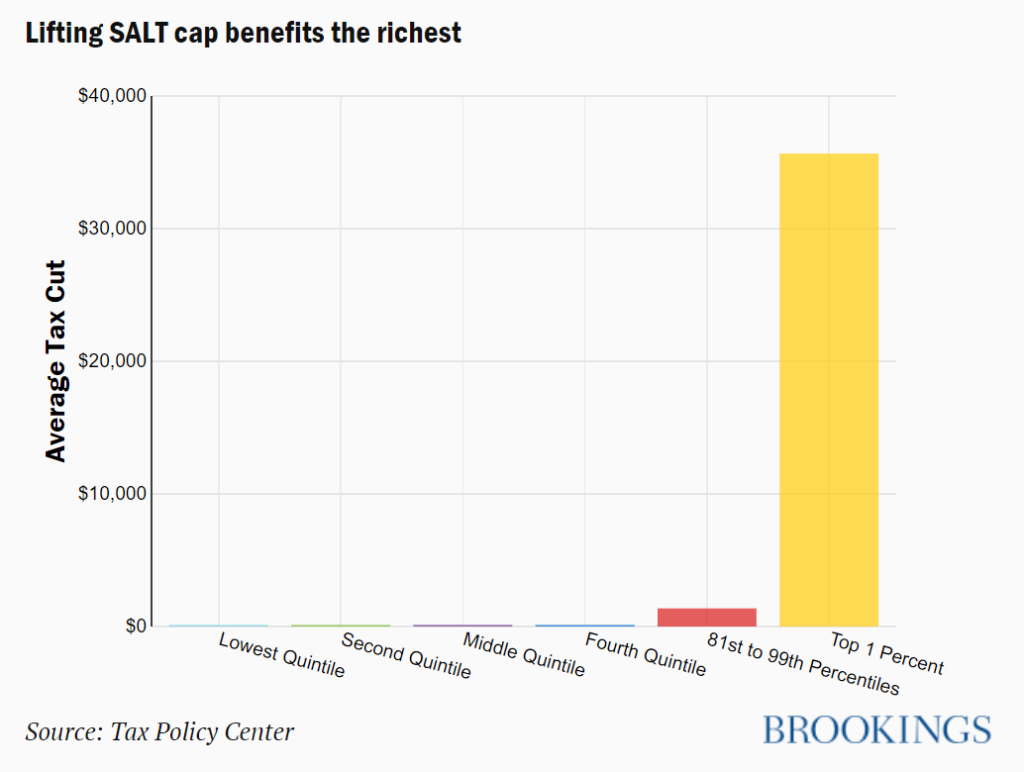
We have argued against lifting the $10,000 cap in the New York Times, the Washington Post, and in a short analysis for Brookings. Our case is quite straightforward: the benefits of repeal would flow to the rich and affluent, who now have a disproportionate influence on the Democratic Party. To be specific, the top 1 percent would get an average tax cut of over $35,000. The middle class would get an average tax cut of about $37 (note that our analyses here relate to full repeal, since we do not know yet what alternative Sen. Sanders has in mind):

Author(s): Richard V. Reeves, Christopher Pulliam

Publication Date: 24 June 2021

Publication Site: Brookings

What’s the Impact of Early Retirements on Plans?

Link: https://www.ai-cio.com/in-focus/shop-talk/whats-the-impact-of-early-retirements-on-plans/

Excerpt:

Take the California State Teachers’ Retirement System (CalSTRS), which in February reported that it had its second-highest year for retirements in 2020, behind the fallout from the Great Recession. The pension fund reported a steep 26% jump in the second half of 2020 from the same time a year before. 

When the pension fund for educators surveyed roughly 500 of these retirees, about 62% said they retired earlier than they planned. More than half said the challenges of teaching during the pandemic pushed them to seek an early out. Still, a CalSTRS spokesperson said this week that the fund does not expect the retirements to have a “material impact” on the funding levels.  

Broadly speaking, any damage from early retirements is going to be “fairly muted,” according to Kevin McLaughlin, head of liability risk management for North America at Insight Investment. 

Author(s): Sarah Min

Publication Date: 1 July 2021

Publication Site: ai-CIO