Fitch Downgrades U.S. Credit Rating

Link: https://www.wsj.com/articles/fitch-downgrades-u-s-credit-rating-56c73b89?mod=hp_lead_pos1

Excerpt:

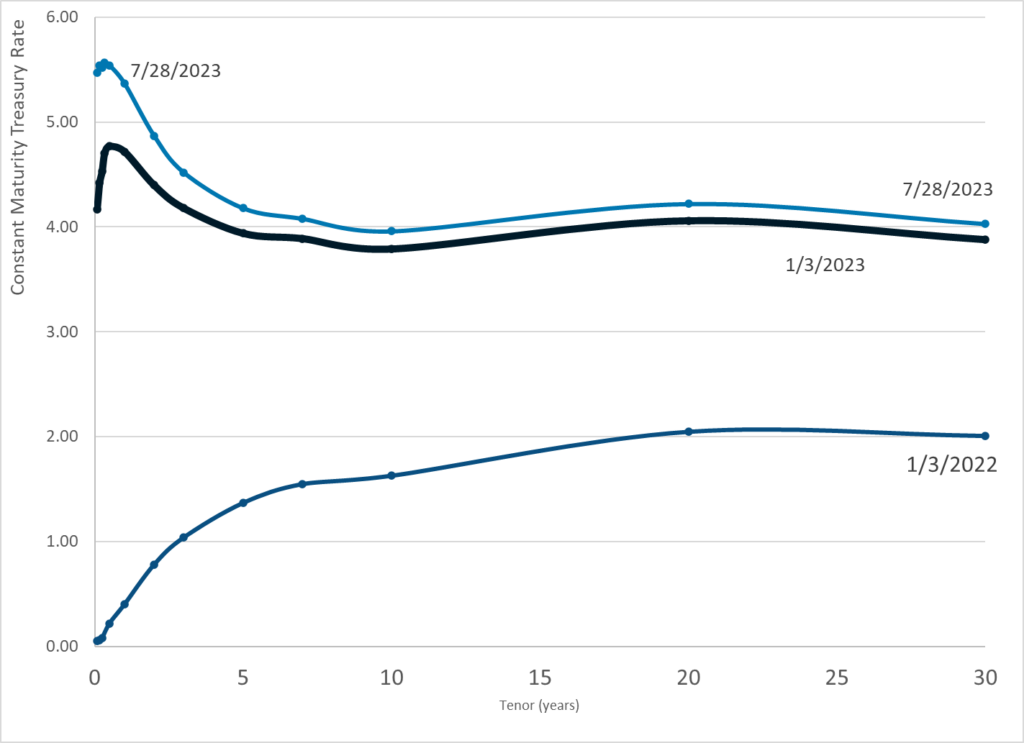
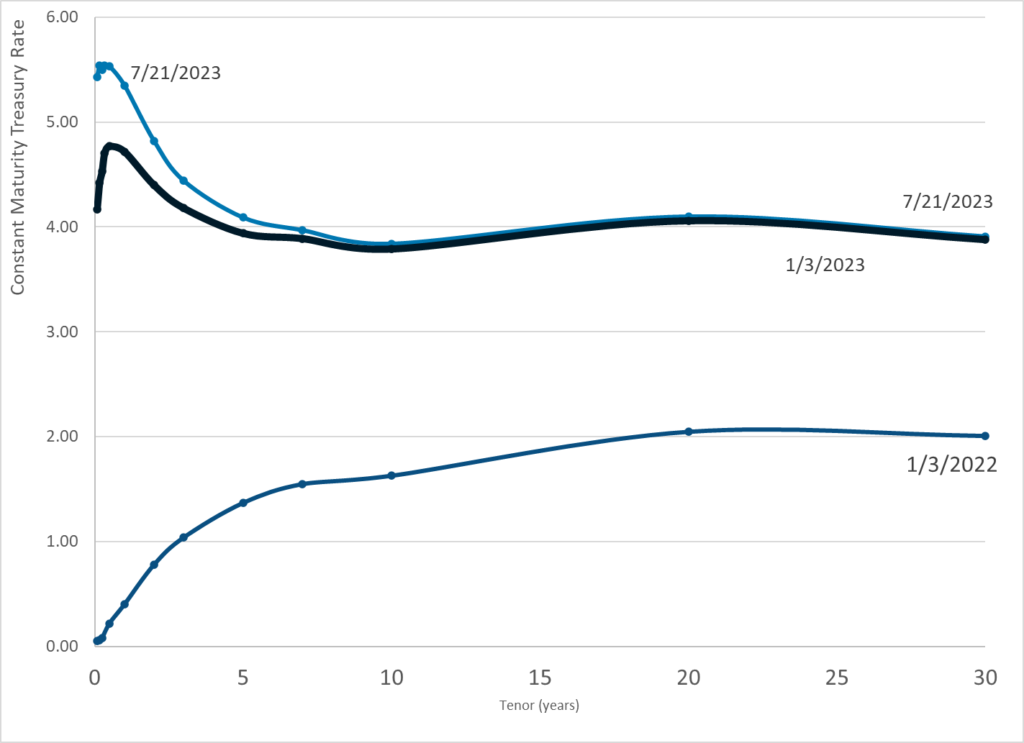
Fitch Ratings downgraded the U.S. government’s credit rating weeks after President Biden and congressional Republicans came to the brink of a historic default, warning about the growing debt burden and political dysfunction in Washington.

The downgrade, the first by a major ratings firm in more than a decade, is evidence that increasingly frequent political skirmishes over the U.S. government’s finances are clouding the outlook for the $25 trillion global market for Treasurys. Fitch’s rating on the U.S. now stands at “AA+”, or one notch below the top “AAA” grade.

….

Few investors believe that Fitch’s downgrade will immediately challenge that role. Still, it is the first time a ratings firm lowered its headline assessment of the U.S. government’s propensity to pay its bills on time since Standard & Poor’s in 2011 lowered its rating one notch below the top grade. That decision followed another tense debt-ceiling standoff in Congress.

Moody’s, the other member of the three big U.S. ratings firms, continues to give the U.S. its strongest assessment.

Fitch said Tuesday that the downgrade reflects an “erosion of governance” in the U.S. relative to other top-tier economies over the last two decades.

“The repeated debt-limit political standoffs and last-minute resolutions have eroded confidence in fiscal management,” Fitch said.

Author(s): Matt Grossman and Andrew Duehren

Publication Date: 1 Aug 2023

Publication Site: WSJ

Statement from Matthew Edwards

Link: https://www.linkedin.com/posts/matthew-edwards-84a082145_actuaries-ifoa-activity-7089144129007300608-0zr2/?utm_source=share&utm_medium=member_desktop

Excerpt:

Attention #actuaries: with voting underway for the #ifoa Council elections, I share in this short video some thoughts and concerns about the Institute and Faculty of Actuaries. I touch on current problems, what I learned from my time with the Continuous Mortality Investigation and the COVID-19 Actuaries Response Group, and I stumble into the elephant in the room – the recent media coverage of the IFoA (with implications of procedural subterfuge).

Whoever you decide to vote for, please do take the time to engage with the election process, consider what each candidate can contribute to move the profession forwards, and whether you want an active council or a passive council: make your vote count for the sake of your profession.

Author(s): Matthew Edwards

Publication Date: 26 July 2023

Publication Site: LinkedIn

Real Personal Spending Rises Twice as Much as Income in June

Link:https://mishtalk.com/economics/real-personal-spending-rises-twice-as-much-as-income-in-june/

Graphic:

Excerpt:

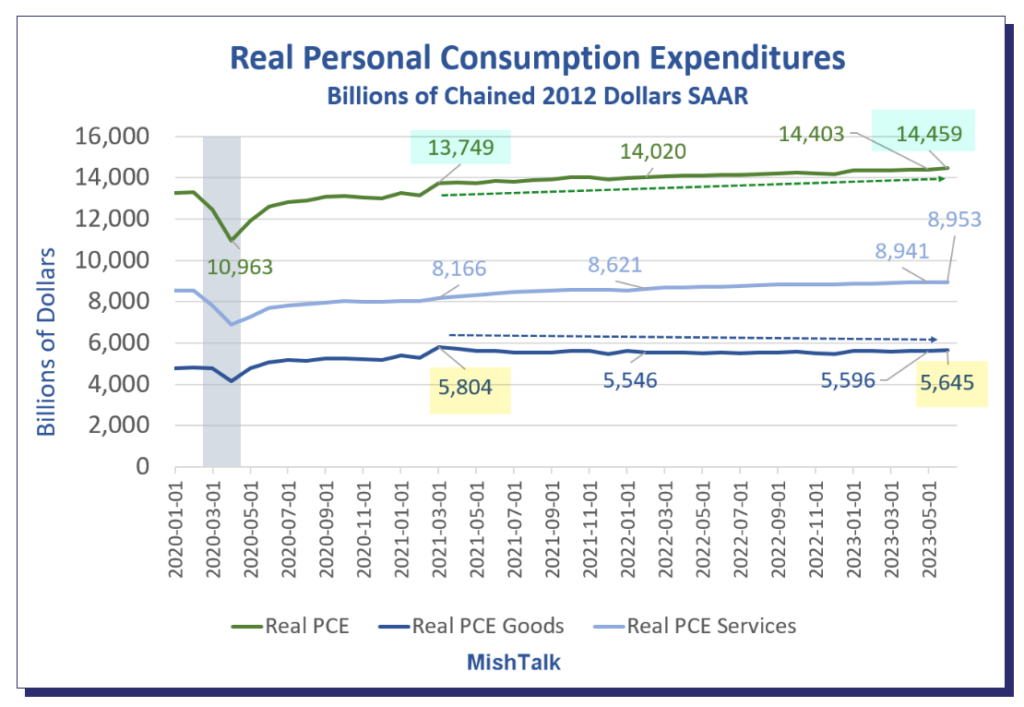
Real (inflation-adjusted) consumer spending rose 0.4 percent in June. Real disposable income rose 0.2 percent.

….

Real PCE goods peaked in March of 2021. All of the growth in consumer spending for 27 months is due to an increase in demand for services.

Author(s): Mike Shedlock

Publication Date: 28 July 2023

Publication Site: Mish Talk

Tracking the Population Crisis

Link:https://www.nextbigfuture.com/2023/07/tracking-the-population-crisis.html

Graphic:

Excerpt:

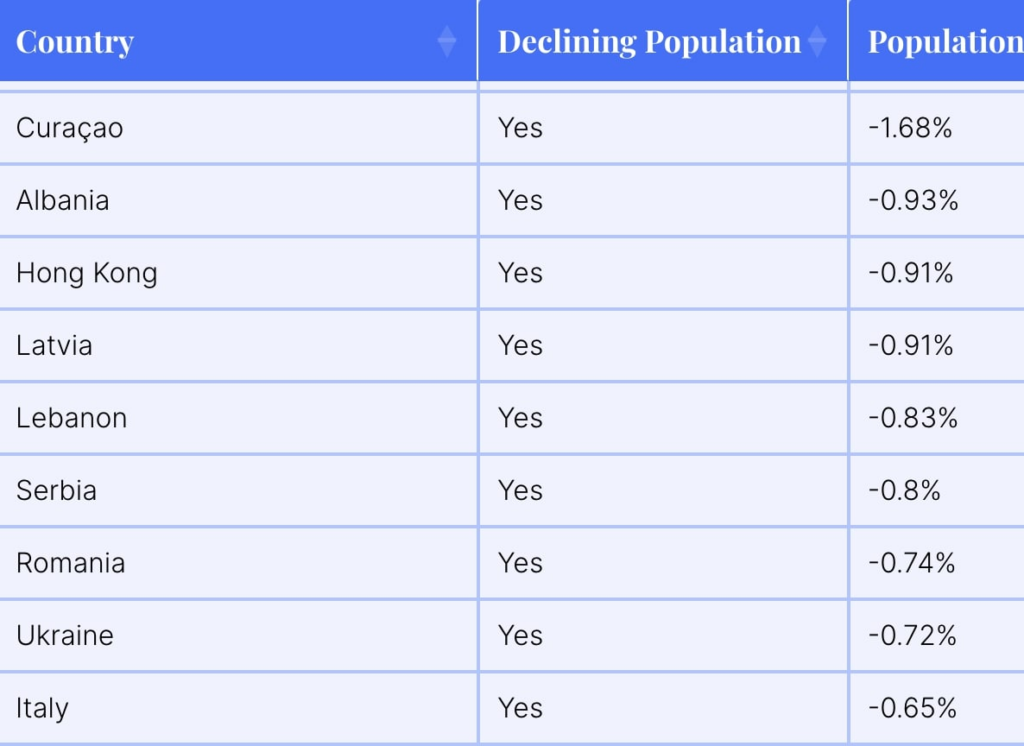
South Korea only had 18,988 births in May, 2023 which is the lowest births since the agency started compiling the data in 1981. This was a drop of over 5% from May 2022. The number of deaths in the country moved up 0.2 percent over the period to 28,958, resulting in a natural decrease in population by 9,970. South Korea is losing about 120,000 people per year and the total birth is about 230,000 per year which is down from 705,000 from 1990 to 1994 and 669,000 from 1995 to 1999. However, after the 1997-98 Asian Economic Crisis, the number plummeted to an average of 500,000 in the early 2000s.

Korea’s fertility rate dropped to a new low of 0.78, the lowest among countries in the Organization for Economic Cooperation and Development, and possibly the world.

Korea would need to triple its annual births to 700,000 per year to maintain and stabilize its population.

Statistics Korea expected people aged 65 and above will take up 20 percent of the population in 2025, marking a sharp rise from 18.4 percent estimated for this year.

The Korean government sees the next five years as critical to increasing fertility and salvaging the country.

Korea’s government is considering easing the burden of gift taxes exclusively for newlywed couples, by raising the minimum amount of cash they can receive from parents without being taxed to either 100 million won ($76,000) or 150 million won.

Several municipalities have also introduced similar programs. Seongnam, Gyeonggi Province, held two couple matchmaking events in July for unmarried men and women who either live or work in the region. As a result, 39 couples found a match.

….

Japan is the world’s first “hyper-aged” country, where at least 21 percent of the population is older than 65, with projections predicting 40 percent of the population will be over retirement age by 2050.

Author(s): Brian Wang

Publication Date: 26 July 2023

Publication Site: Next Big Future

Japan’s average life expectancy continued to fall in 2022

Link:https://www.japantimes.co.jp/news/2023/07/28/japan/science-health/japans-average-life-expectancy-continued-to-fall-in-2022/?utm_source=pianoDNU&utm_medium=email&utm_campaign=72&tpcc=dnu&pnespid=.OSLjdNc5ajLp.m_r0X2sv8P_x4boCkkhVA4AlsotBCV3z1GVBtRNwqnyK4YG0tktTnV

Excerpt:

The average life expectancy fell for both Japanese men and women for the second consecutive year in 2022, a health ministry survey showed Friday.

The average life expectancy last declined for both sexes two years in a row in 2010 and 2011.

In 2022, the average life expectancy for men fell 0.42 years from 2021 to 81.05 years, and that for women dropped 0.49 years to 87.09 years. The drops were “largely due to the COVID-19 pandemic,” a ministry official said.

According to the ministry, the reported number of people who died after getting infected with the coronavirus rose to 47,635 in 2022 from 16,766 in 2021.

The pandemic is seen to have shortened the average life expectancy in 2022 by 0.12 years for men and 0.13 years for women, larger than 0.10 years and 0.07 years, respectively, in 2021.

….

In 2022, Japanese women had the highest average life expectancy in the world.

Japanese men ranked fourth, down by one place from the preceding year. Switzerland ranked first, followed by Sweden and Australia.

Of Japanese men born in 2022, 75.3% are expected to live until 75, 25.5% until 90 and 8.7% until 95. The proportion of Japanese women who are expected to live until 75, 90 and 95 stands at 87.9%, 49.8% and 25%, respectively.

Publication Date: 28 July 2023

Publication Site: The Japan Times

Many Pennsylvania state retirees say they can’t afford inflation on their stagnant pensions

Link: https://www.spotlightpa.org/news/2023/07/pennsylvania-pension-public-school-state-worker-sers-psers-inflation-retirement/

Graphic:

Excerpt:

Enrollees in Pennsylvania’s two public sector pension funds — the State Employees’ Retirement System (SERS) and the Public School Employees’ Retirement System (PSERS) — haven’t seen a cost of living adjustment, or COLA, since 2004. Nearly 40 other states grant some sort of COLA to retirees.

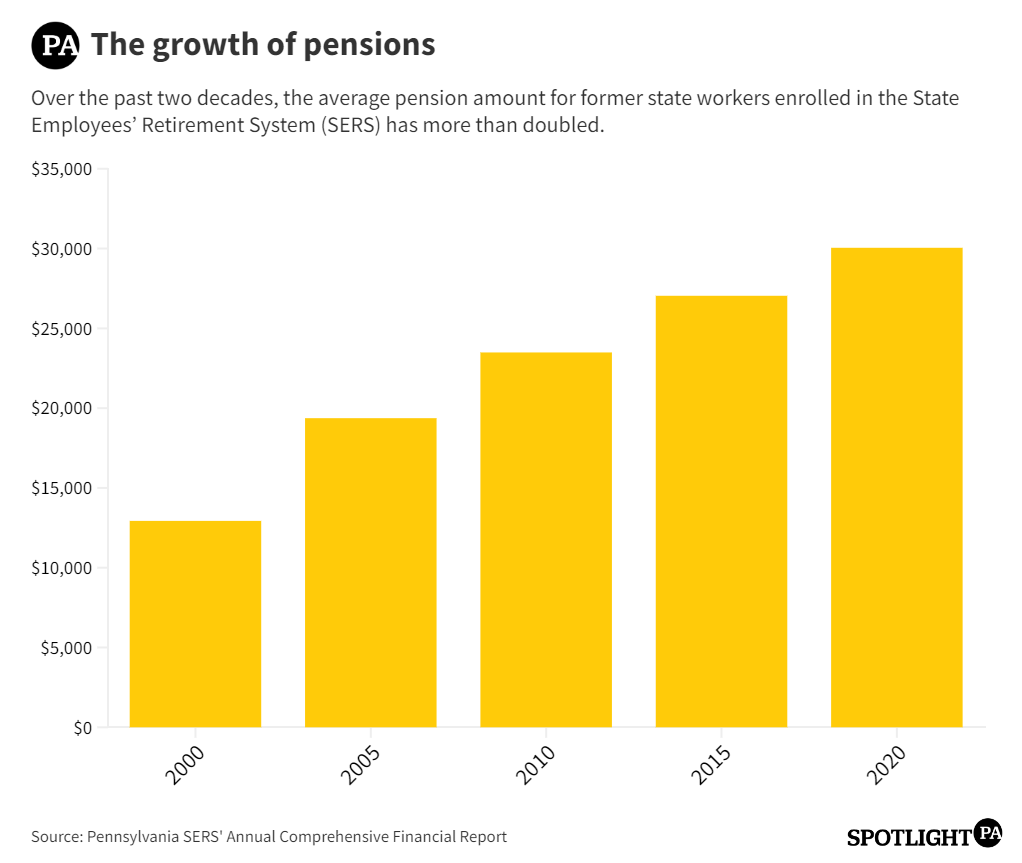
Particularly hard hit by this lack of a COLA are the almost 69,000 former public school teachers, state government workers, and other public sector employees who retired before 2001, like McVay. On average, these retirees are in their early 80s.

They retired before the legislature increased pension benefits by 25%. The average pension for a SERS enrollee who retired before 2001 is under $15,000 annually, according to the system. That number for a 2022 retiree is more than $30,000, thanks to the increase as well as a rise in average salaries for workers.

There’s a similar gap for PSERS enrollees. A person who worked for 30 years and ended with a $30,000 salary would have a pension of $18,000 if they retired pre-2001, according to Chris Lilienthal, a spokesperson for the Pennsylvania State Education Association. Under the same circumstances, a person who retired post-2001 would have a pension of $22,500.

Author(s): DaniRae Renno

Publication Date: 27 July 2023

Publication Site: Spotlight PA

Fiduciary principles need to be reaffirmed and strengthened in public pension plans

Link: https://reason.org/policy-brief/fiduciary-principles-need-to-be-reaffirmed-strengthened-public-pension-plans/

Executive Summary:

Fiduciaries are people responsible for managing money on behalf of others. The fundamental fiduciary duty of loyalty evolved over centuries, and in the context of pension plans sponsored by state and local governments (“public pension plans”) requires investing solely in plan members’ and taxpayers’ best interests for the exclusive purpose of providing pension benefits and defraying reasonable expenses. This duty is based on the notion that investing and spending money on behalf of others comes with a responsibility to act with an undivided loyalty to those for whom the money was set aside.

But the approximately $4 trillion in the trusts of public pension plans may tempt public officials and others who wish to promote—or, alternatively, punish those who promote— high-profile causes. For example, in recent years, government officials in both California and Texas, political polar opposites, have acted to undermine the fiduciary principle of loyalty. California Gov. Gavin Newsom’s Executive Order N-19-19 describes its goal “to leverage the pension portfolio to advance climate leadership,” and a 2021 Texas law prohibits investing with companies that “boycott” energy companies to send “a strong message to both Washington and Wall Street that if you boycott Texas Energy, then Texas will boycott you.” Both actions and others like them, attempt to use pension assets for purposes other than to provide pension benefits, violating the fundamental fiduciary principle of loyalty.

The misuse of pension money in the public and private sectors has a long history. The Employee Retirement Income Security Act (ERISA), signed into law by President Gerald Ford in 1974, codified fiduciary principles for U.S. private sector retirement plans nearly 50 years ago and is used as a prototype for pension fiduciary rules in state law and elsewhere. Dueling sets of ERISA regulations issued within a two-year period during the Trump and Biden administrations consistently reinforced the principle of loyalty. State legislation and executive actions, however, have weakened and undermined it, even where it is codified elsewhere in state law.

Thirty million plan members rely on public pension funds for financial security in their old age. The promises to plan members represent an enormous financial obligation of the taxpayers in the states and municipalities that sponsor these plans. If investment returns fall short of a plan’s goals, then taxpayers and future employees will be obligated to make up the difference through higher contribution rates.

The exclusive purpose of pension funds is to provide pension benefits. Using pension funds to further nonfinancial goals is not consistent with that purpose, even if it happens to be a byproduct. This basic understanding has been lost in the recent politically polarized public debates around ESG investing—investing that takes into account environmental, social, and governance factors and not just financial considerations.

It is critically important that fiduciary principles be reaffirmed and strengthened in public pension plans. The potential cost of not doing so to taxpayers, who are ultimately responsible for making good on public pension promises, runs into trillions of dollars. Getting on track will likely require a combination of ensuring the qualifications of plan fiduciaries responsible for investing, holding fiduciaries accountable for acting in accordance with fiduciary principles, limiting the ability of nonfiduciaries to undermine and interfere with fiduciaries, and separating the fiduciary function of investment management from settlor functions like setting funding policy and determining benefit levels.

Author(s): Larry Pollack

Publication Date: 11 May 2023

Publication Site: Reason
Report Highlights Public Health Impact of Serious Harms From Diagnostic Error in U.S.

Link:https://www.hopkinsmedicine.org/news/newsroom/news-releases/report-highlights-public-health-impact-of-serious-harms-from-diagnostic-error-in-us#:~:text=Results%20of%20the%20new%20analysis,of%20the%20public%20health%20problem.

Excerpt:

Improving diagnosis in health care is a moral, professional and public health imperative, according to the U.S. National Academy of Medicine. However, little is known about the full scope of harms related to medical misdiagnosis — current estimates range widely. Using novel methods, a team from the Johns Hopkins Armstrong Institute Center for Diagnostic Excellence and partners from the Risk Management Foundation of the Harvard Medical Institutions sought to derive what is believed to be the first rigorous national estimate of permanent disability and death from diagnostic error.  

The original research article was published July 17 by BMJ Quality & Safety. Results of the new analysis of national data found that across all clinical settings, including hospital and clinic-based care, an estimated 795,000 Americans die or are permanently disabled by diagnostic error each year, confirming the pressing nature of the public health problem.  

….

To identify their findings, researchers multiplied national measures of disease incidence by the disease-specific proportion of patients with that illness who experience errors or harms. Researchers repeated this method for the 15 diseases causing the most harms, then extrapolated to the grand total across all dangerous diseases. To assess the accuracy of the final estimates, the study’s authors ran the analyses under different sets of assumptions to measure the impact of methodological choices and then tested the validity of findings by comparing them with independent data sources and expert review. The resulting national estimate of 371,000 deaths and 424,000 permanent disabilities reflects serious harms widely across care settings, and it matches data produced from multiple prior studies that focused on diagnostic errors in ambulatory clinics and emergency departments and during inpatient care.  

Vascular events, infections and cancers, dubbed the Big Three, account for 75% of the serious harms. The study found that 15 diseases account for 50.7% of the total serious harms. Five conditions causing the most frequent serious harms account for 38.7% of total serious harms: stroke, sepsis, pneumonia, venous thromboembolism and lung cancer. The overall average error rate across diseases was estimated at 11.1%, but the rate ranges widely from 1.5% for heart attack to 62% for spinal abscess. The top cause of serious harm from misdiagnosis was stroke, which was found to be missed in 17.5% of cases.  

Author(s):  David Newman-Toker 

Publication Date: 17 July 2023

Publication Site: Johns Hopkins, press release