Graphic:
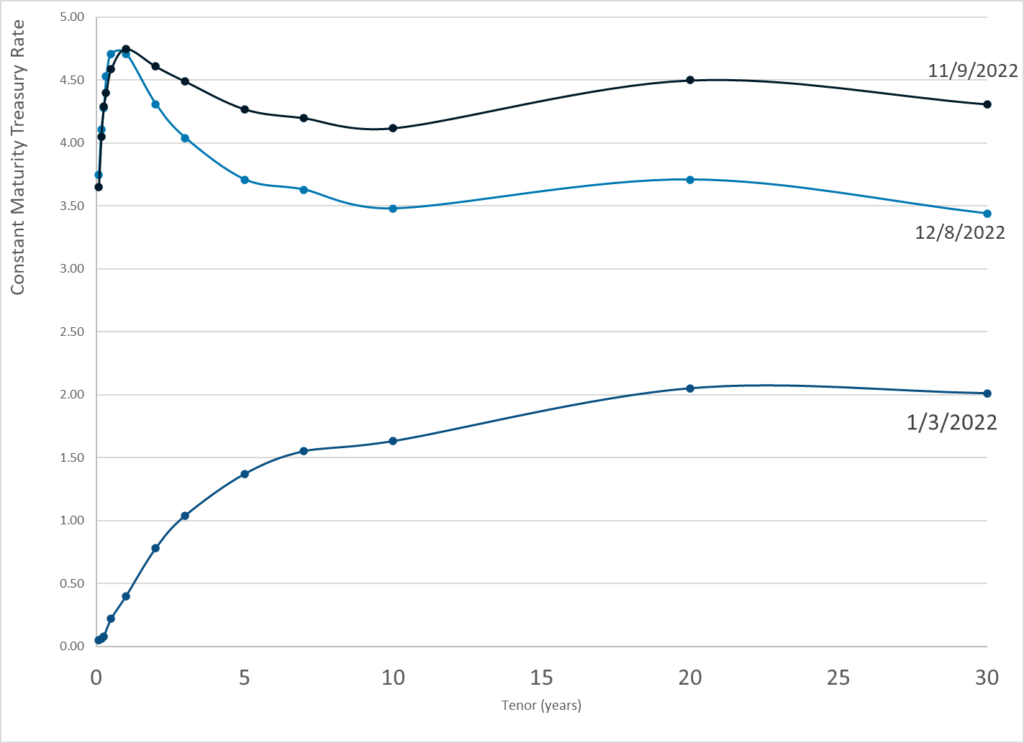
Publication Date: 8 Dec 2022
Publication Site: Treasury Dept
All about risk
Graphic:
Publication Date: 8 Dec 2022
Publication Site: Treasury Dept
Link: https://www.soa.org/resources/research-reports/2022/mort-improve-survey/
Report PDF: https://www.soa.org/4ad811/globalassets/assets/files/resources/research-report/2022/mort-improve-survey.pdf
Graphic:
Excerpt:
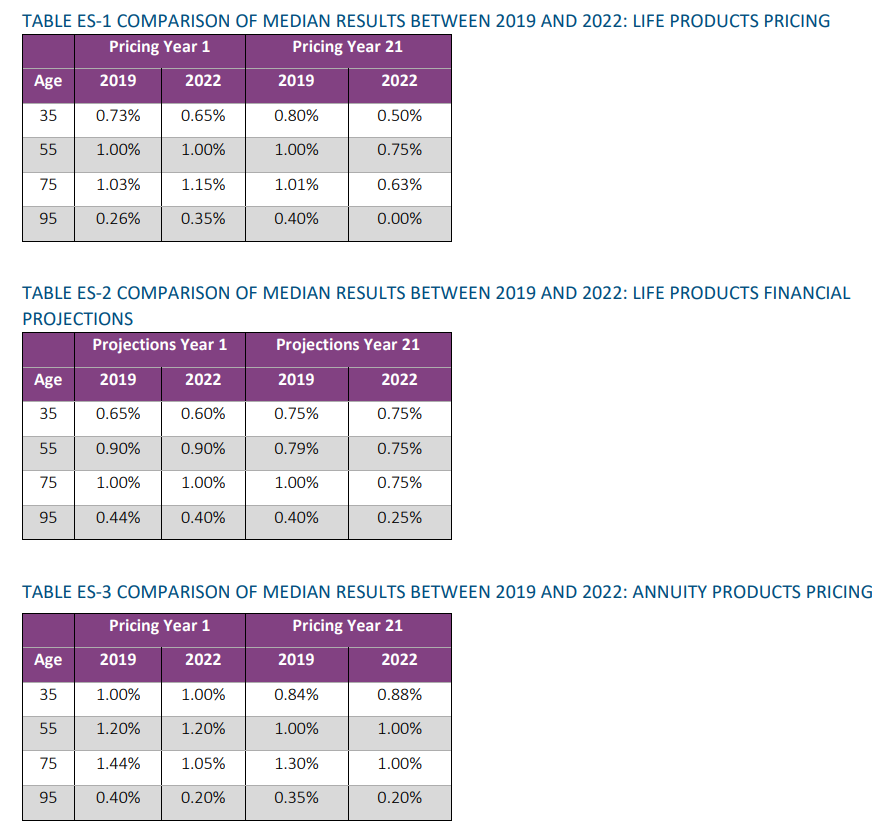
The Committee on Life Insurance Mortality and Underwriting Surveys of the Society of Actuaries sent
companies a survey in May of 2019 on mortality improvement practices as of year-end 2018. The survey
results were released in January 2022. The survey was completed by respondents prior to the onset of
COVID-19. The present report provides an opportunity to update the results for pandemic-based changes
and compare the before and after surveys.
The 2022 survey was opened in March 2022 and closed by the end of April. Thirty-five respondent
companies participated in this survey, with 29 from the U.S. and six from Canada. This group was further
divided between direct writers (26) and reinsurers (nine).
This survey focused on the use of mortality improvement and how it has changed for financial projection
and pricing modeling following the initial stages of COVID-19. Details regarding assumptions and opinions
on mortality improvement in general were asked of the respondents.
National Association of Insurance Commissioners discussions on mortality improvement factors due to
COVID-19 for reserving purposes have taken place, but this survey was conducted before any adjustments
reacting to them.
Seventy-four percent (26 of 35) of respondents indicated using durational mortality improvement
assumptions in their life and annuity pricing and/or financial projections. Moreover, of those that used
durational mortality improvement assumptions, attained age and gender were the top two characteristics
in which assumptions varied.
Respondents were asked to indicate the different limitations when applying durational mortality
improvement assumptions. The Survey found that the most common lowest and highest attained age to
which durational mortality improvement was applied were 0 and about 100, respectively. The lowest and
highest durational mortality improvement rate ranged from -1.50% (deterioration) to 2.80%
(improvement). The time period in which the mortality improvement rates were applied ranged from 10 to
120 years, but this varied between life (10/120) and annuities (30/120). The most common time period was
20 to 30 years for life; less consensus was seen for annuities. Analysis is provided in Appendix C for
instances when highlights are shared in the body of the report.
Author(s): Ronora Stryker, Max Rudolph
Publication Date: December 2022
Publication Site: SOA Research Institute
Link: https://taxfoundation.org/cigarette-taxes-cigarette-smuggling-2022/
Graphic:
Excerpt:
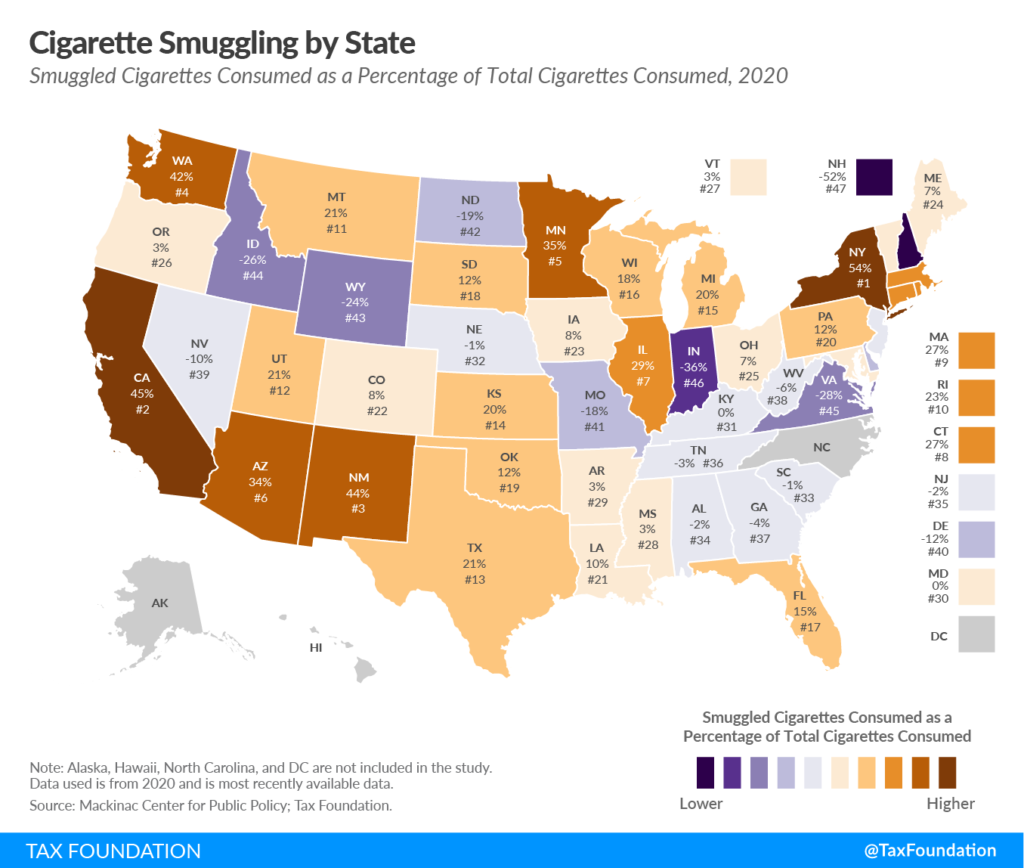
Author(s): Adam Hoffer
Publication Date: 6 Dec 2022
Publication Site: Tax Foundation
Excerpt:
The first actuarial report is out for an Illinois pension for fiscal year 2022, which ended on June 30. It’s for the TRS, the Teachers Retirement System, which accounts for well over half of Illinois state-level pension debt.
Unfunded liabilities grew about $6 billion from $74.7 billion to $80.7 billion on a fair asset value basis. Its funded ratio worsened from 46.2% to 43.8%. The drop occurred despite a one-time, special contribution by taxpayers to the fund of $173 million that was in addition to their annual, scheduled contributions.
Expect Illinois’ other pensions to suffer similarly dismal results as their 2022 reports are published.
Author(s): Mark Glennon
Publication Date: 7 Dec 2022
Publication Site: Wirepoints
Graphic:
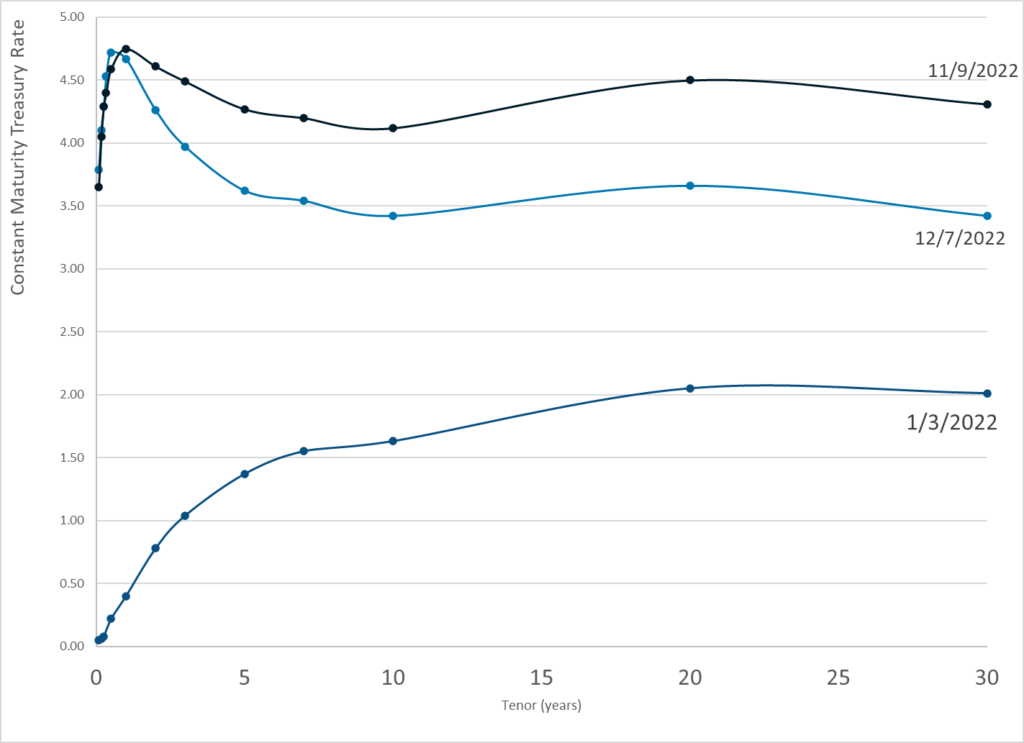
Publication Date: 7 Dec 2022
Publication Site: Treasury Dept
Graphic:
Excerpt:
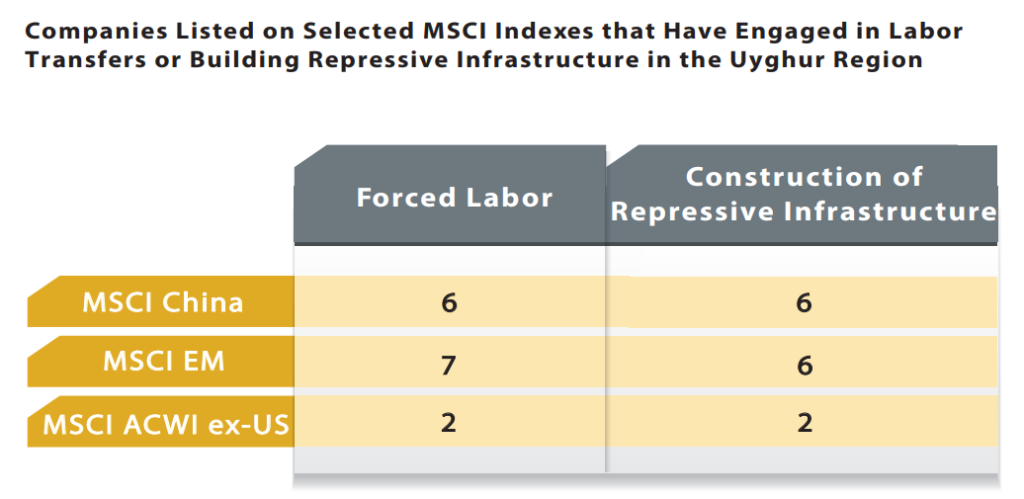
A new report by Hong Kong Watch have found that a number of pension funds may be passively invested in at least 13 China based companies where there is credible evidence of involvement in Uyghur forced labour programs and construction of internment camps in Xinjiang.
As part of the report, Hong Kong Watch found that major asset managers are exposed passively to these companies as a result of their inclusion on Morgan Stanley Capital International’s Emerging Markets Index, China Index and All World Index ex-USA.
….
Commenting on the release of the report, Johnny Patterson, co-founder and a research fellow at Hong Kong Watch, said:
“13 companies on MSCI’s emerging markets index are either known to have directly used forced labour through China’s forcible transfer of Uyghurs, or been involved in the construction of camps. Given this Index is the most widely tracked Emerging Markets index in the world, it raises serious questions about how seriously international financial institutions take their international human rights obligations or the ‘S’ in ESG.
Our view is that firms known to use modern slavery or known to be complicit in crimes against humanity should be classed alongside tobacco as ‘sin stocks’, or stocks which investors do not touch. Governments have a duty to signal which firms are unacceptable, but international financial institutions must also be doing their full due diligence. It is unacceptable that enormous amounts of the money of ordinary pensioners and retail investors is being passively channelled into firms that are known to use forced labour.”
Publication Date: 5 Dec 2022
Publication Site: Hong Kong Watch
Link: https://www.ai-cio.com/news/blackrocks-red-state-woes-continue-as-florida-divests/
Excerpt:
State Chief Financial Officer Jimmy Patronis announced Thursday that the Florida Treasury will begin divesting $2 billion worth of assets currently under management by BlackRock.
BlackRock managed $1.43 billion of Florida’s long duration portfolio, which includes investments such as corporate bonds, asset-backed securities and municipal bonds. Additionally, BlackRock managed $600 million of Florida funds in a short-term treasury fund, which invests in short-term and overnight investments.
Patronis cited efforts by BlackRock and its CEO, Larry Fink, to embrace environmental, social and governance investment principles as the reason Florida will pull the funds from the manager.. In the wake of the announcement, the state will freeze the $1.43 billion in long-term securities at its custodial bank.
….
“It’s my responsibility to get the best returns possible for taxpayers,” Patronis said in the statement. “The more effective we are in investing dollars to generate a return, the more effective we’ll be in funding priorities like schools, hospitals and roads. As major banking institutions and economists predict a recession in the coming year, and as the Fed increases interest rates to combat the inflation crisis, I need partners within the financial services industry who are as committed to the bottom line as we are – and I don’t trust BlackRock’s ability to deliver. As Larry Fink stated to CEOs, ‘Access to capital is not a right. It is a privilege.’ As Florida’s CFO, I agree wholeheartedly, so we’ll be taking Larry up on his offer.”
Author(s): Dusty Hagedorn
Publication Date: 2 December 2022
Publication Site: ai-CIO
Excerpt:
On Tuesday, Hong Kong Watch’s co-founder and trustee, Aileen Calverley, and Director of Policy and Advocacy, Sam Goodman, gave evidence to the Special Committee on the Canada–People’s Republic of China Relationship on the exposure of Canadian pension funds to Chinese stocks and bonds.
Hong Kong Watch has previously written extensively on the question of ESG, business, human rights, and Canadian pension funds exposure to Chinese companies linked to gross human rights violations, including the internment camps in Xinjiang.
In his remarks, Sam Goodman, discussed why China should be considered an ESG investment risk, recommending that:
In her remarks, Aileen Calverley discussed the risk of pension fund investments in China in the event of sanctions, recommending that the Government:
The full committee hearing can be watched here.
Publication Date: 1 Dec 2022
Publication Site: Hong Kong Watch
Graphic:

Publication Date: 5 Dec 2022
Publication Site: Treasury Department
Graphic:
Excerpt:
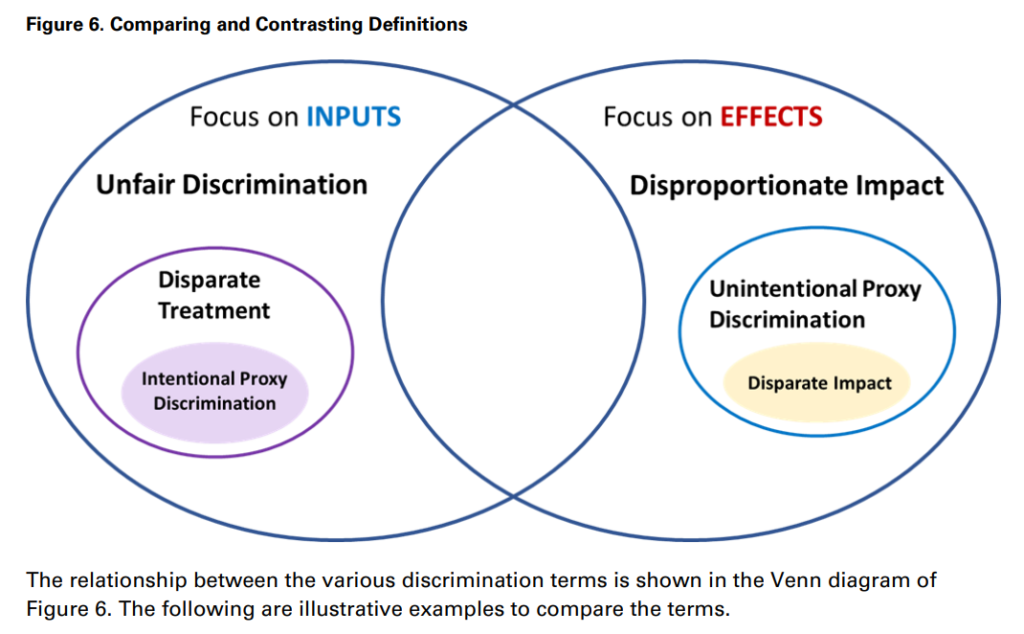
Unfair Discrimination without Disproportionate Impact. As previously defined, unfair discrimination occurs when rating variables that have no relationship to expected loss are used. A hypothetical example could be if an insurer decided to use rating factors that charged those with red cars higher rates, even if the data did not show this. In this case, there would be no disproportionate impact, assuming protected classes do not own a large majority of red cars.
Disparate Treatment. Disparate treatment and unfair discrimination are not directly related if we use the Fair Trade Act definition of unfair discrimination. However, in states where rating on protected class is defined to be unfair discrimination, disparate treatment would be a subset of unfair discrimination. In such cases, an insurer would explicitly use protected class to charge higher rates, with the intention of prejudicing against that class.
Intentional Proxy Discrimination. If proxy discrimination is defined to require intent, it would be a subset of disparate treatment, whereby an insurer would deliberately substitute a facially neutral variable for protected class for the purpose of discrimination. Redlining is an example of this type of discrimination, given the use of location characteristics as proxies for race and social class.
Disproportionate Impact. Disproportionate impact focuses on effect on protected class, even if there is a relationship to expected loss. An example of this is the one mentioned in the AAA study, whereby a rating plan that uses age could disproportionately impact a minority group if those in that minority group tend to have higher risk ages. This disproportionate impact is not necessarily the same as proxy discrimination, since it is likely that even after controlling for minority status, age would have a relationship to
expected costs.Unintentional Proxy Discrimination. If proxy discrimination is defined to be unintentional, the focus is more on disproportionate outcomes and the variables used to substitute for protected class. Several variables are being investigated by regulators to potentially be proxy discrimination and include criminal history for auto insurance rating. In order to prove proxy discrimination, an analysis would have to be performed to understand the extent to which criminal history proxies for minority status, and whether its predictive power would decrease when controlling for protected class. It is important to note once
again that terms like “unintentional proxy discrimination” may be subsumed by “disparate impact,” but they are included in this paper to show how various stakeholders use the term differently.
Disparate Impact. Disparate impact is unintentional discrimination, where there is disproportionate impact, but also other legal requirements, such as the existence of alternatives. To date, no disparate impact lawsuits against insurance companies have been won. An example of potential disparate impact (although it was not litigated as a lawsuit) is from health care. Optum used an algorithm to identify and allocate additional care to patients with complex healthcare needs. The algorithm was designed to create a risk score for each patient during the enrollment period. Patients above the 97th percentile were automatically enrolled in the program and thus allocated additional care. Upon an independent peer review of the model, researchers found that the model was in fact allocating artificially lower scores to Black patients, even though the model did not use race. The reason behind this was the model’s use of prior healthcare costs as an input. Black patients typically spend less than white patients on health care, which artificially allocated better health to Black patients.18
Unfair Discrimination and Disproportionate Impact. In this case, an insurer would use a variable that both has no relationship to expected loss, but also has an outsized effect on protected classes. An example of this could be the same red car case above, but where protected classes also owned almost all the red cars. In this case, higher rates would create a disproportionate effect on protected classes, while also having no relationship to expected loss.
Author(s): Kudakwashe F. Chibanda, FCAS
Publication Date: 2022
Publication Site: Casualty Actuarial Society
Link: https://www.cnn.com/2022/12/03/asia/south-korea-worlds-lowest-fertility-rate-intl-hnk-dst/index.html
Excerpt:
South Korea recently broke its own record for the world’s lowest fertility rate. Figures released in November showed the average number of children a South Korean woman will have in her lifetime is down to just 0.79.
That is far below the 2.1 needed to maintain a stable population and low even compared to other developed countries where the rate is falling, such as the United States (1.6) and Japan – which at 1.3 reported its own lowest rate on record.
And it spells trouble for a country with an aging population that faces a looming shortage of workers to support its pension system.
Author(s): Paula Hancocks
Publication Date: 3 Dec 2022
Publication Site: CNN
Link: https://reason.com/2022/12/01/as-the-monkeypox-spread-recedes-there-are-lessons-to-learn/
Graphic:
Excerpt:
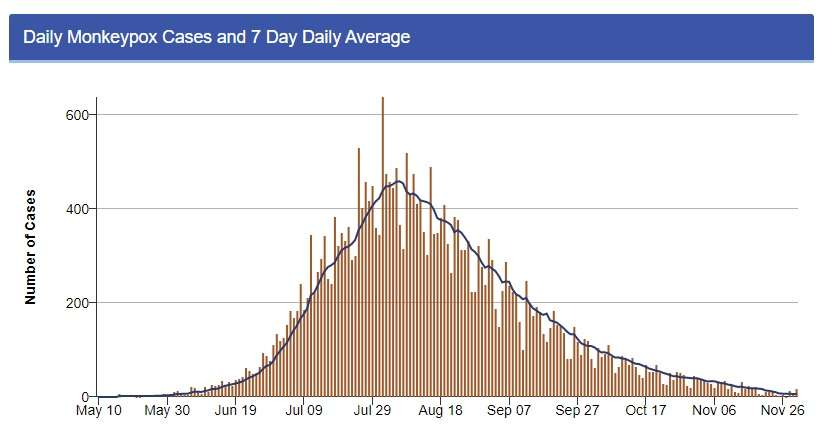
After close to 30,000 infections, 15 reported deaths, and more than one million doses of vaccine, it appears as though the widespread nature of the U.S. monkeypox outbreak may be nearing an end.
The most recent data from the Centers for Disease Control and Prevention (CDC) show a seven-day average of seven new monkeypox cases per day. This is a massive decline from the more than 400 cases per day reported during the height of the outbreak in late July and early August. Though, to be clear, it may be some time before we have no cases of monkeypox in the U.S. at all.
There are several explanations for this success, some more obvious than others. The most obvious: This strain of monkeypox was overwhelmingly spread between men who have sex with other men. While monkeypox is technically not a sexually transmitted infection—it can be spread through physical contact with rashes and sores of an infected person—this particular strain seemed stubbornly resistant to nonsexual spread. Los Angeles County data, for example, shows that only 43 of the 2,388 confirmed cases were in women. So, the number of demographic groups at risk of infection was much lower than the number at risk of catching COVID-19.
Author(s): SCOTT SHACKFORD
Publication Date: 1 Dec 2022
Publication Site: Reason